The John Wick suit: who made it, how it's cut, and what 'tactical lining' means
Updated September 2026 · Sam’s Menswear editorial team
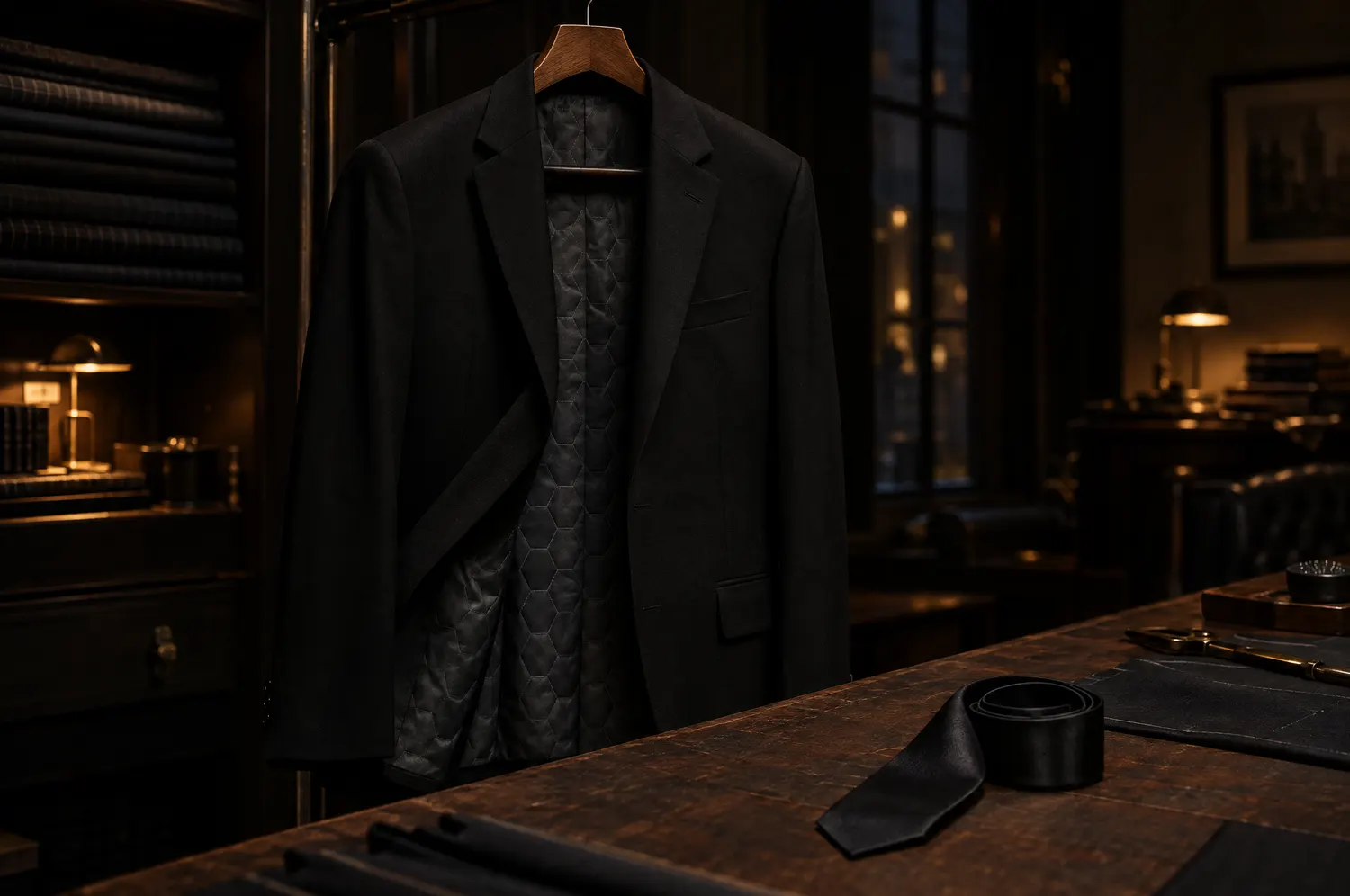
The John Wick films have done something unusual for action movies: they made a suit the costume, the armour and a plot point all at once. Keanu Reeves spends four films fighting through Manhattan, Rome, Osaka and Paris in the same basic silhouette, and by the end the suit is as recognisable as the character.
This is part one of a four-part series. Here, the suit itself. Next, whether a suit can actually stop a bullet, whether wearing one is legal in Canada, and how to get the look made without the Kevlar.
Who made it
The costume designer for the first three films was Luca Mosca, a New York couture designer and, by then, Reeves’ own tailor. In John Wick: Chapter 2 (2017) Mosca appears on screen as Wick’s tailor in Rome, in the suit-up montage before the catacombs sequence, where Wick asks for a lining that is “tactical”. The scene made it into the trailer.
For John Wick: Chapter 4 (2023), Paco Delgado took over and kept the franchise’s language intact. He found a cloth called Diamond Dust, woven with real diamond particles that give it an iridescent sheen under light.
How it’s cut
From Chapter 2 on, the look settles into a uniform:
- Near-black cloth, solid, with a slight texture or sheen rather than a pattern.
- Slim and narrow: narrow lapels, a trim jacket, trim trousers with little break.
- High armholes. Counter-intuitively, a higher, smaller armhole lets the arm move without dragging the whole jacket up with it. A low, loose armhole does the opposite.
- Double vents, so the jacket stays flat when he moves, sits or kicks.
- Extra give built in for the fight choreography, according to Delgado.
- Shirts in white, black or dark grey, with a solid black tie.
What the “tactical lining” is
In the films, the lining is bulletproof: Wick holds a jacket up as a shield and bullets bounce off it. That is fiction. Real ballistic clothing uses rigid or semi-rigid panels in pockets, not a flexible lining that stops rounds while flapping in the air. Part two goes into what real bullet-resistant tailoring is and what it can and cannot do.
What is real
Almost everything else. The high armhole, the double vent, the slim but mobile cut and the discipline of one colour are all sound tailoring, and they are the reason the suit looks right while Reeves is moving. A suit that lets you move is not a movie idea; it is what a good fitting is for.
Sam does not make ballistic garments. He does make the cut. Part four covers exactly how.
Where the details come from: Film Independent on Luca Mosca, SlashFilm, WWD on Paco Delgado and From Tailors With Love.