Can a suit stop a bullet? What ballistic tailoring really is
Updated September 2026 · Sam’s Menswear editorial team
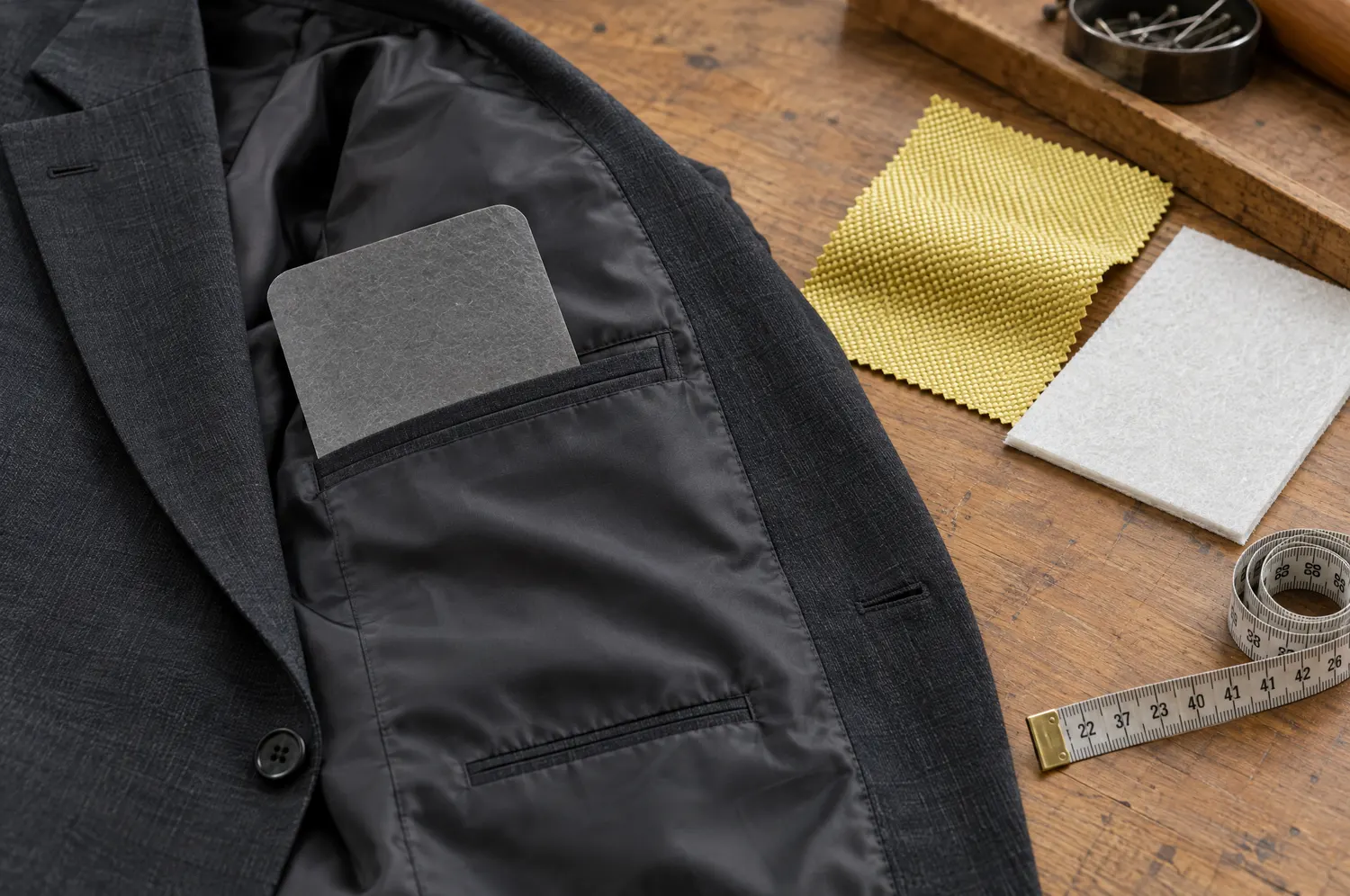
In John Wick: Chapter 2, Keanu Reeves asks his tailor for a “tactical” lining, and for the rest of the franchise his jackets stop bullets. It is one of the most asked-about details in the films, and the answer to “is that real?” is: partly, and not the way the films show it.
This is part two of four. Part one covers the suit itself.
Bullet-resistant clothing is real
There is a small specialist industry making clothes with protection hidden inside. The best-known name is Miguel Caballero, a Bogotá company founded in 1992 that makes everything from jackets and blazers to T-shirts with protection built in. Its garments are, in essence, finely made clothes with pockets in the lining holding thin, lightweight ballistic panels of fibres such as Dyneema and Twaron or Kevlar. The panels can be taken out so the garment can be cleaned.
A suit from a maker like this has reportedly cost somewhere between six and eight thousand US dollars, before anyone talks about tailoring.
How the protection works
The cloth does nothing. Wool, however fine, does not stop anything. All of the protection is in the panels.
Panels are made from very strong fibres. Aramids (the family Kevlar and Twaron belong to) and ultra-high-molecular-weight polyethylene (Dyneema) are woven or laid in layers. A bullet’s energy is spread across many fibres and absorbed as the layers deform.
Protection comes in rated levels. In North America the usual reference is the US National Institute of Justice standard, with levels running from IIA through II and IIIA for soft armour, up to III and IV, which need rigid plates. Soft, concealable panels of the kind that fit in a jacket are made for handgun rounds. Rifle protection needs hard plates that no tailored jacket can hide.
What no suit can do
- Cover everything. Protection stops at the edge of the panel. A panel in the chest and back leaves the arms, the neck, the sides and the legs.
- Remove the impact. A stopped round still hits hard. Soft armour prevents penetration; it does not prevent bruising or worse behind the panel.
- Work as a shield. A jacket held up by its collar, flapping, with panels sliding about inside, is movie physics. In the films it looks great. In life it would not work.
- Stay light and cool. Panels add weight and trap heat. A protected jacket is warmer, heavier and stiffer than the suit it looks like.
That is why the honest word is bullet-resistant, not bulletproof.
Should anyone want one?
For most people, no. It is a niche garment for people with specific, professional reasons, such as security work or living in genuinely dangerous places, and it comes with legal questions too. Part three covers the law in Canada, which varies by province.
For everyone else, the thing worth taking from the John Wick suit is the cut, not the armour. Sam does not make ballistic garments. Part four covers the cut.
Where the details come from: Miguel Caballero (company) on Wikipedia, RECOIL OFFGRID and Racked.