Accounting & tax-season armour
Updated July 2026 · Sam’s Menswear editorial team
Accountants and CPAs should dress conservative and quiet: navy or charcoal suits, clean white or light-blue shirts, no loud patterns. The job is trust with someone’s money, so your clothes should read reliable, precise, and calm, never flashy. And because busy season means long hours at a desk, the suit has to be comfortable enough to live in.
Accounting asks for a wardrobe that survives tax season: long days at a desk, a client meeting you didn’t plan for, and nobody noticing the suit, which is the point. Here’s how to build one.
What should an accountant wear to work?
Navy or charcoal suit, white or light-blue shirt, a plain or subtly patterned tie. That’s the whole formula, and it works because it disappears. The client remembers the advice, not the outfit.
Accounting is business-professional territory by default. Firms have relaxed a little over the years, but when you’re across the table from a client trusting you with their books, “quietly sharp” beats “casual” every time. Two or three good suits in rotation covers you for the whole year. If you want the case for why navy comes first, I made it in The navy suit.
What suit color says “trust me with your money”?
Navy and charcoal. Navy reads calm and approachable; charcoal reads steady and serious. Both say the same thing your work says: careful, dependable, no surprises.
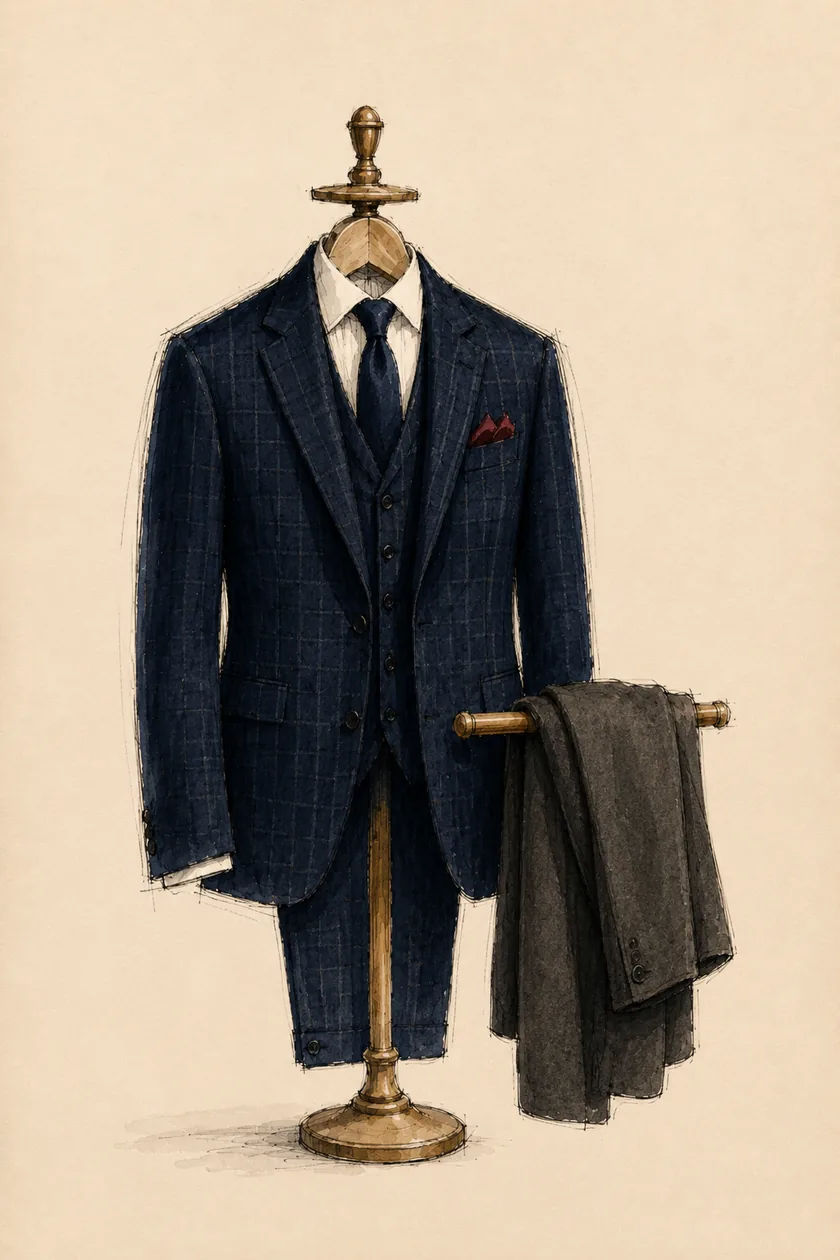
Stick to the conservative end. The advice across the profession is consistent: dark neutrals, avoid bright colours and loud patterns, because they distract and read unserious. A restrained chalk stripe or a faint check in charcoal is fine and adds a little interest. Save the bold stuff for the weekend. When a client hands you their financial life, you want the suit whispering “meticulous,” not shouting “look at me.”
How do I stay comfortable through a 60-hour busy season?
Comfort in a suit is a fit-and-fabric problem, not a “wear sweatpants” problem. A properly cut jacket and a breathable fabric let you sit at a desk for twelve hours without feeling wrapped in cardboard.
A few things I build in for the long-hours crowd:
- A little stretch or a high-twist wool. Moves with you when you’re hunched over a laptop, springs back instead of bagging at the knee and elbow.
- A slightly higher armhole cut right. Sounds backwards, but a well-placed armhole actually lets your arm move freely without the whole jacket shifting.
- Half-canvas or full-canvas construction. It breathes and moulds to you over time instead of the stiff, sweaty fused feeling.
- Trousers with a hair more room in the seat and thigh. You’re sitting most of the day; nobody should be doing month-end in trousers that pinch.
Off-the-rack rarely nails all of that at once, which is exactly what made-to-measure and bespoke are for: we cut it to how you actually sit and move.
Do I need a tie every day anymore?
No, and most accounting offices don’t demand one daily now. But keep a couple of good ties on hand for client meetings, audits, and anything client-facing where you want the extra note of respect.
The move is a suit that works both ways: sharp with a tie for the client-facing days, and just as clean open-collar for heads-down desk days. A jacket you can throw over an open shirt and still look pulled-together is the workhorse of a modern accountant’s wardrobe. For the fuller professional breakdown, see Dressing for finance and Dressing for law, neighbouring worlds with the same trust rules.
How many suits does a working accountant actually need?
Start with two (one navy, one charcoal) and add a third once you know your week. Rotate them so no single suit gets worn to death, and they’ll all last years longer.
Two suits, five shirts, three ties, and a solid pair of black and brown shoes will carry you through any normal week, busy season included. Rotation isn’t just about looking fresh. Resting a suit a day between wears lets the wool recover, which is half of why bespoke fabric outlasts the cheap stuff. Care matters too: brush it, hang it properly, steam don’t over-dry-clean. I put the whole routine in How to care for your suit.
What should a new CPA or junior wear their first year?
One good navy suit, cut to fit you properly. A junior in a sharp, correctly-fitted navy suit outclasses a partner in an expensive one that fits like a tent.
Fit is the whole game early on, and it’s the cheapest thing to get right; most guys are just wearing the wrong size. Shoulders that sit flat, sleeves that show a little shirt cuff, trousers that break clean. If you’re heading into interviews or your first firm, The interview suit walks through exactly that, and How a suit should fit shows you what “right” actually looks like.
What fabric holds up to travel and long days?
A mid-weight worsted wool in the 250–300g range with a tight, high-twist weave. It resists wrinkles, breathes at a desk, and survives a laptop bag on the way to a client site.
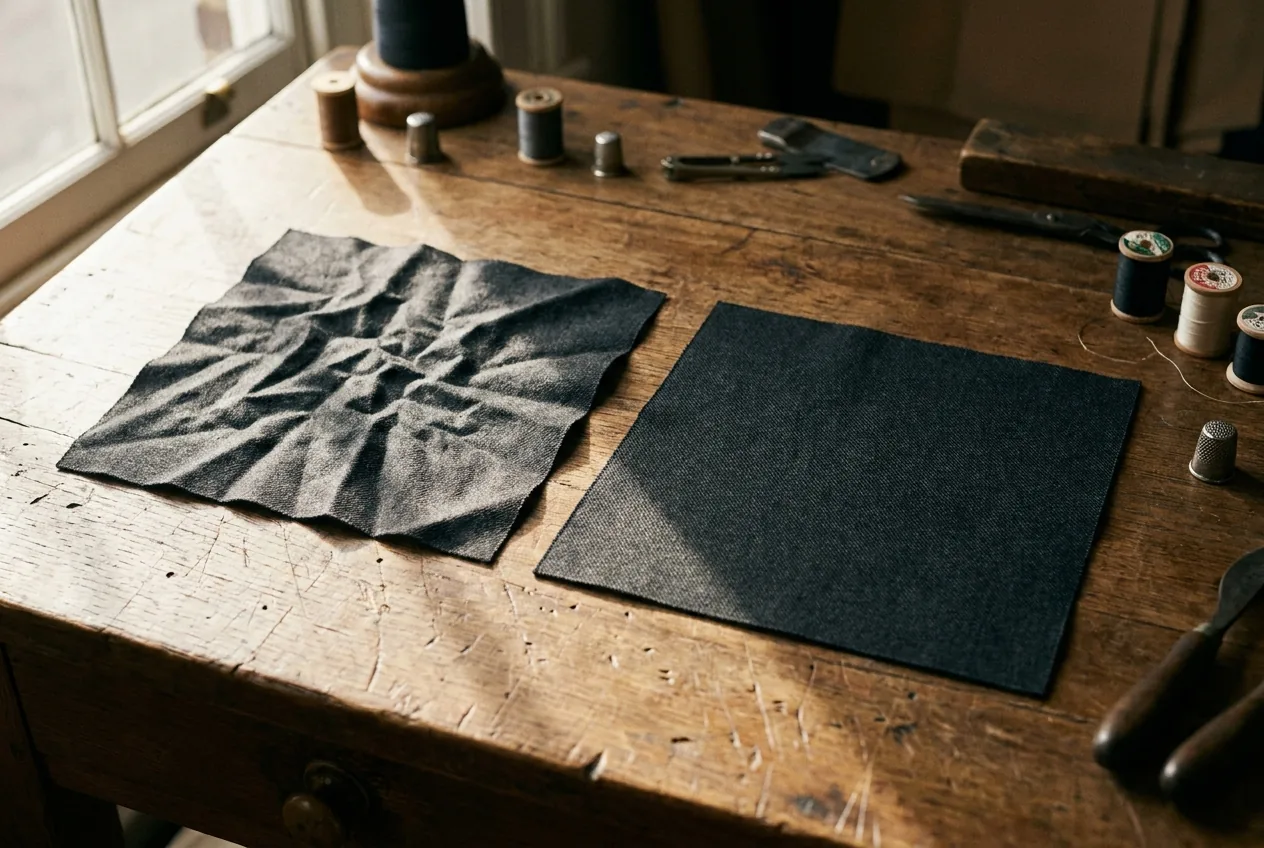
Avoid anything too soft or too shiny: soft fabric creases and looks tired by 3pm, shiny fabric reads cheap under office lighting. A good matte worsted stays crisp through a full day and a commute. Come feel the difference between a wrinkle-prone fabric and one built for the grind; that’s what the fabric library is for.
If you’re a CPA who lives in your suits three months a year, it’s worth having them built for it. Book before the fall filing crunch and you’ll have the rotation hanging in your closet when busy season hits. We’ll talk through your week, how you actually sit and move, and put together suits that read sharp and wear easy. Book an appointment or start to design your suit whenever you’re ready.