Consulting: the client-facing uniform
Updated July 2026 · Sam’s Menswear editorial team
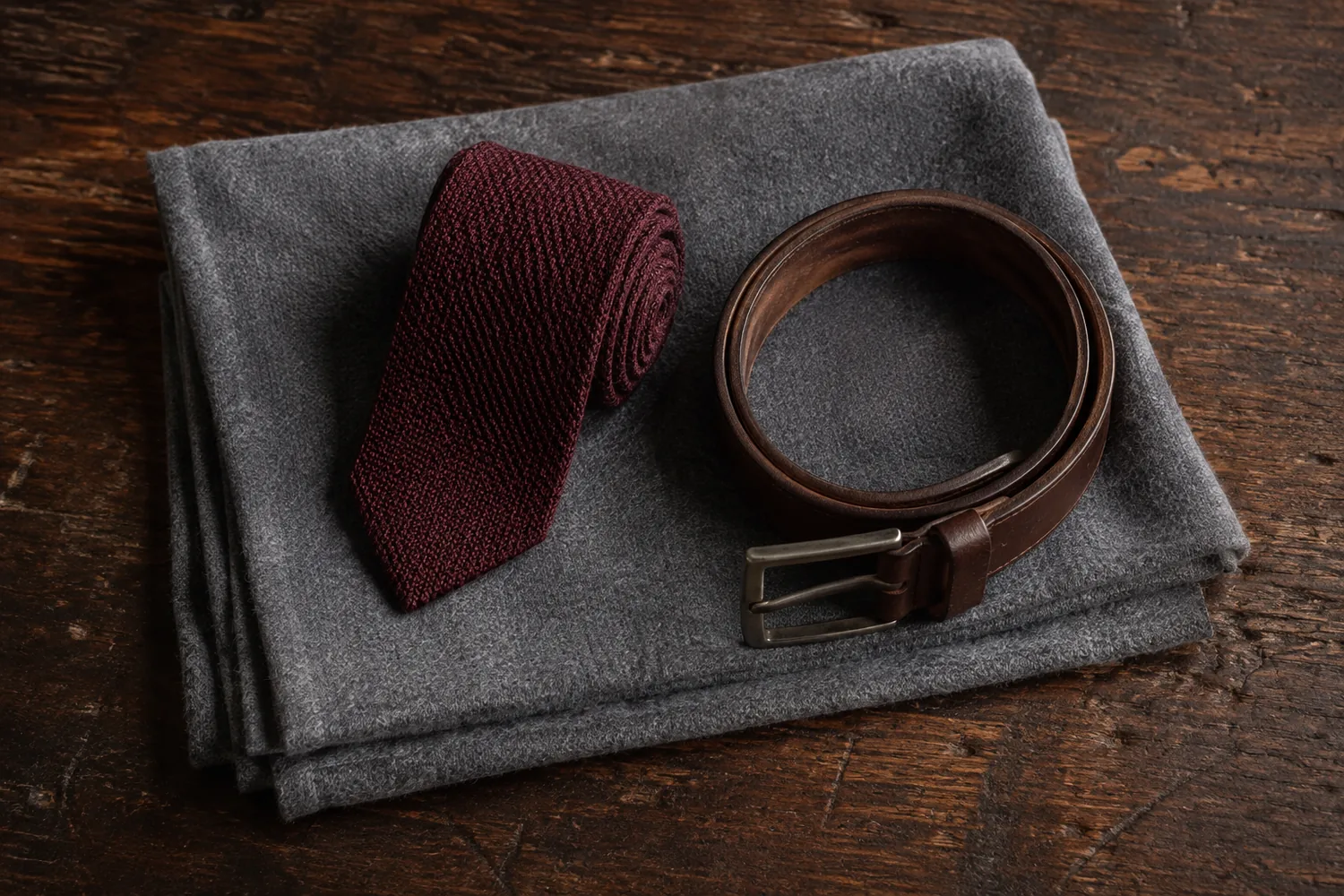
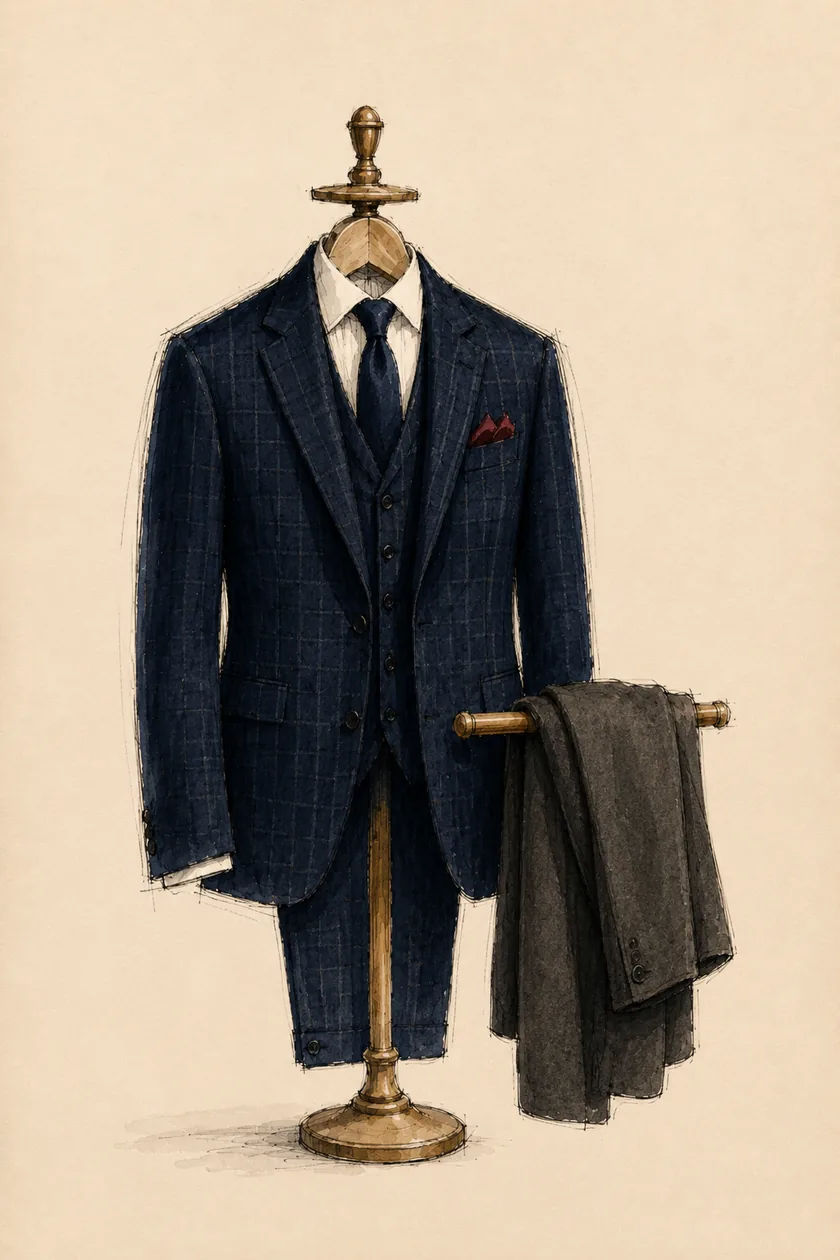
Consulting is the one profession where you don’t get to pick the dress code. The client does. The safe play is a well-cut navy or charcoal suit, quiet shirt, polished shoes, and the judgment to dial it up or down to match whoever’s in the room. Conservative but sharp, easy to travel in, and never the loudest thing at the table.
Consulting can mean flying out of Pearson every Monday, six months parked at a bank on Bay Street, or a factory floor and a boardroom in the same week. The wardrobe that survives all of that is smaller and plainer than most people expect. Here’s how to build it.
What should a consultant actually wear?
A navy or charcoal suit, white or pale-blue shirt, dark polished shoes, and the sense to read the client before you decide on the tie. That’s the whole engine. Everything else is calibration.
Consulting has no fixed uniform because you’re a guest in someone else’s building. A bank wants a suit and tie. A tech client will look at a tie like you’re wearing a costume. So you keep a genuinely versatile core (dark suit, plain shirt, good shoes) and adjust the formality up or down depending on where you’re sitting that day.
Buy quality over quantity. Two suits that fit beautifully beat five that don’t. When everyone in the room is in a dark suit, the only thing separating you is whether yours actually fits.
How do I match the client’s dress code?
Aim to sit one notch above the room, never below it. You’re advising them, so you should look at least as put-together as the people paying you, ideally a touch sharper.
Do the homework before you show up. Ask your engagement lead, look at the client’s own people, notice how the senior partners on your team dress. A government or financial client means full suit and tie. A startup means you lose the tie and maybe swap the suit for a blazer and trousers so you don’t look like an auditor who wandered in.
The rule that never fails: when in doubt, dress up. It’s far easier to take a tie off in the elevator than to conjure one you didn’t bring. And keep a blazer and a spare pair of dress shoes in your bag for the day the client’s board turns up unannounced.
What suits survive constant travel?
Wool that resists wrinkles, dark enough to hide a long day, and a palette tight enough that everything mixes. Travel is hard on tailoring, so buy for it deliberately.
- High-twist worsted wool. It springs back after a flight and a taxi and a full day of sitting. This is the single most important choice for a road warrior; see choosing your fabric for what to look for.
- A three-colour discipline. Navy, charcoal, grey. Two suits, a handful of shirts, one or two ties, and every combination works. That’s a week of meetings in a carry-on.
- Half-canvas or full-canvas construction. A fused jacket bubbles and dies after enough dry-cleaning; a canvassed one holds its shape for years.
Hang the jacket the second you land, give the trousers a light steam, and a good travel wool looks fresh with almost no effort. More on keeping it sharp in how to care for your suit.
Navy or charcoal: which first?
Navy first. It works for more of your week and reads as trustworthy and approachable, which is most of what a consultant is selling. Charcoal second, for the heaviest boardrooms.
Navy is the relationship colour: the client consult, the workshop, the working lunch. It says capable but human, someone they can actually talk to. Charcoal carries more gravitas, so it’s your steering-committee, present-to-the-CEO suit. Own both and you’ve covered nearly everything. Skip black for daily work; it reads formal-event, not advisor. More on why navy earns its keep in the navy suit.
What’s the shirt-and-tie play for the boardroom?
Understated. White or pale-blue shirt, a solid or small-patterned tie, nothing that pulls focus from what you’re saying. You want them listening to your recommendation, not reading your tie.
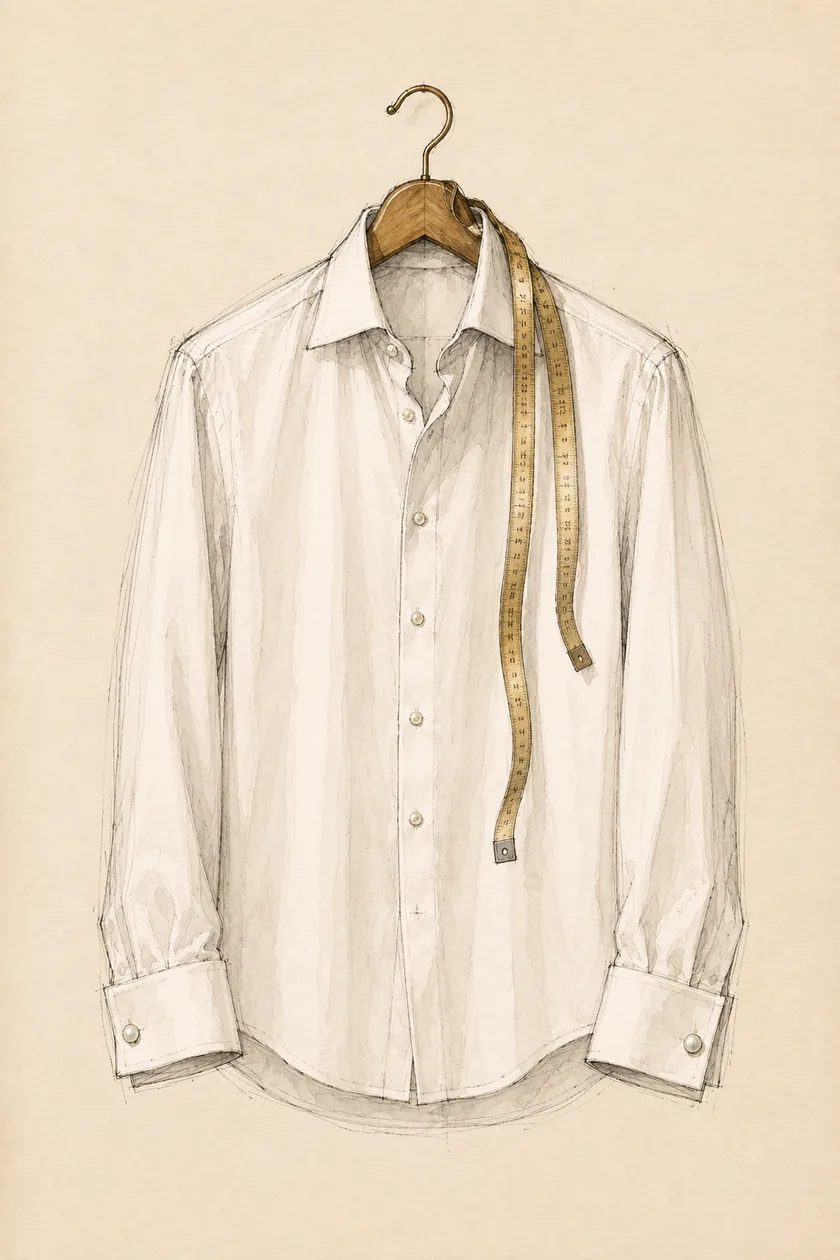
No novelty patterns, no shine, no two-tone collars. A crisp white shirt is your most versatile piece. It works under any suit, in any client’s building, in any city. Pale blue is your everyday second. Add one or two ties in a muted register and you can walk into a bank or a boardroom without a second thought. When the tie comes off for a casual client, you still look intentional rather than underdressed.
Why does fit matter more than the price tag?
Because in a room full of dark suits, fit is the entire signal. A $900 suit cut to your shoulders beats a $3,000 one that doesn’t.
The shoulder has to sit flat, no divot, no overhang. The jacket closes without straining at the button. The collar hugs your neck when you stand and doesn’t gap when you sit, and consultants sit for hours, in workshops and on planes. The trouser breaks once, cleanly. The sleeve shows a little cuff.
Off-the-rack rarely delivers all of that on a real body: a longer torso, an athletic build, one shoulder lower than the other. That’s the work a tailor does. See how a suit should fit for exactly what to check on yourself in the mirror.
The short version
Two suits, navy and charcoal, in a wool built for travel, plus a few plain shirts, a couple of muted ties, dark polished shoes. Dress one notch above the client, never below. Keep the palette tight so everything packs and mixes. Conservative but sharp, and let the fit do the talking. This is the same logic behind dressing for finance and dressing for senior management: authority without flash.
If you’re on the road more than you’re home, call and say so: appointments run into the evening Monday to Thursday and all day Sunday, and the first visit can be fitted around a travel week. Book a first appointment and we’ll build a two-suit travel core that survives a Monday flight and a Thursday steering committee, or start from the fabric and design the suit around your route.