Architects & creative professionals
Updated July 2026 · Sam’s Menswear editorial team
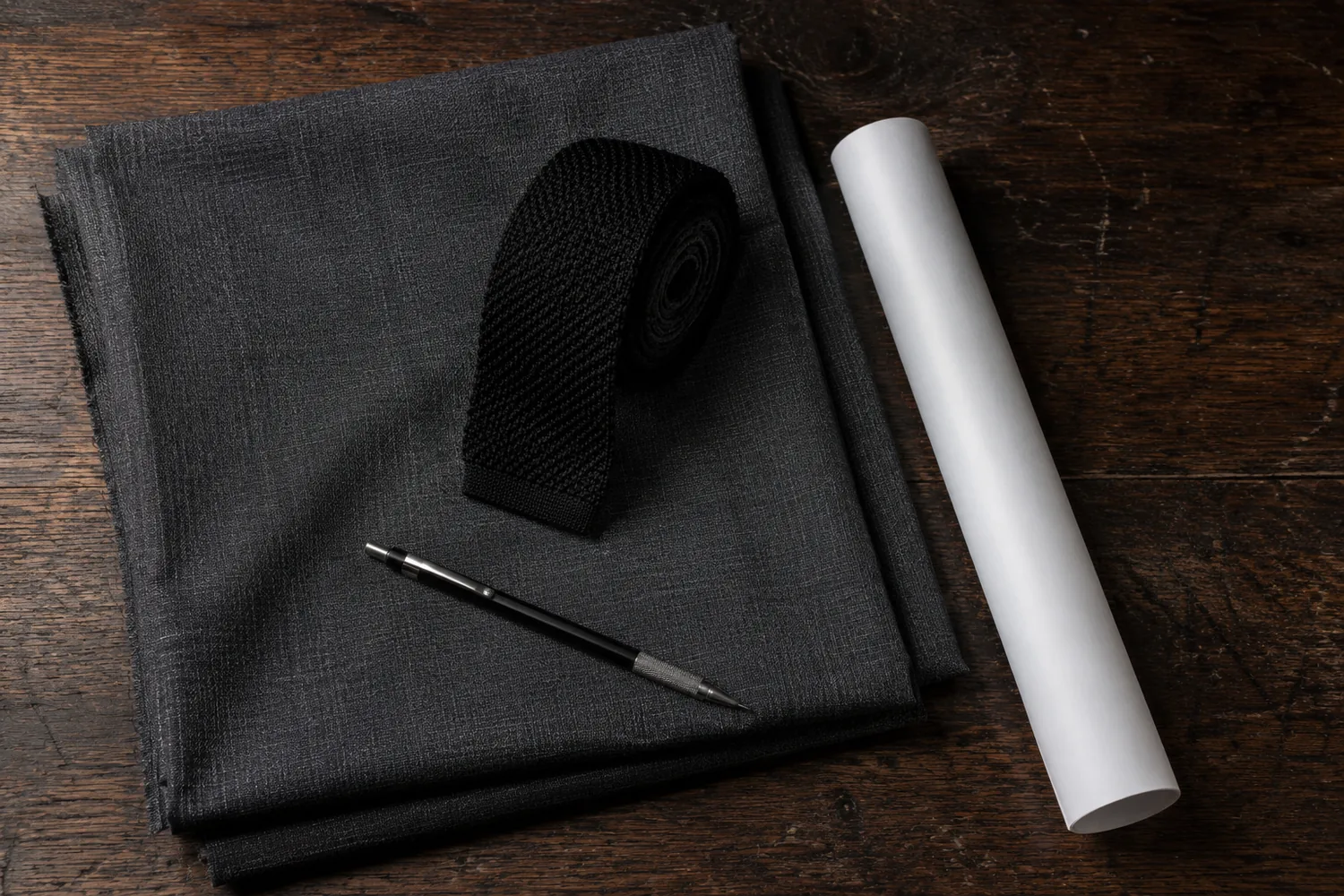
If you design for a living, your clothes are part of your portfolio. People read them the way they read your work. The move isn’t loud; it’s texture and restraint. One soft blazer in an interesting fabric, a couple of good trousers, and a fit that’s clearly considered will say “I have taste” far better than any statement piece.
Architects, designers, agency principals, gallery people: the creatives who look best aren’t the ones wearing the boldest thing in the room. They’re the ones where every choice looks deliberate. Here’s how to get there.
What should an architect or designer actually wear?
A soft, unstructured blazer in a textured fabric, dark trousers that fit clean, and quiet, well-made shoes. That’s the base. You express taste through fabric and fit, not colour or logos.
Most studios run business-casual or looser, so you rarely need a full matched suit day to day. What earns its keep is a small set of separates that recombine:
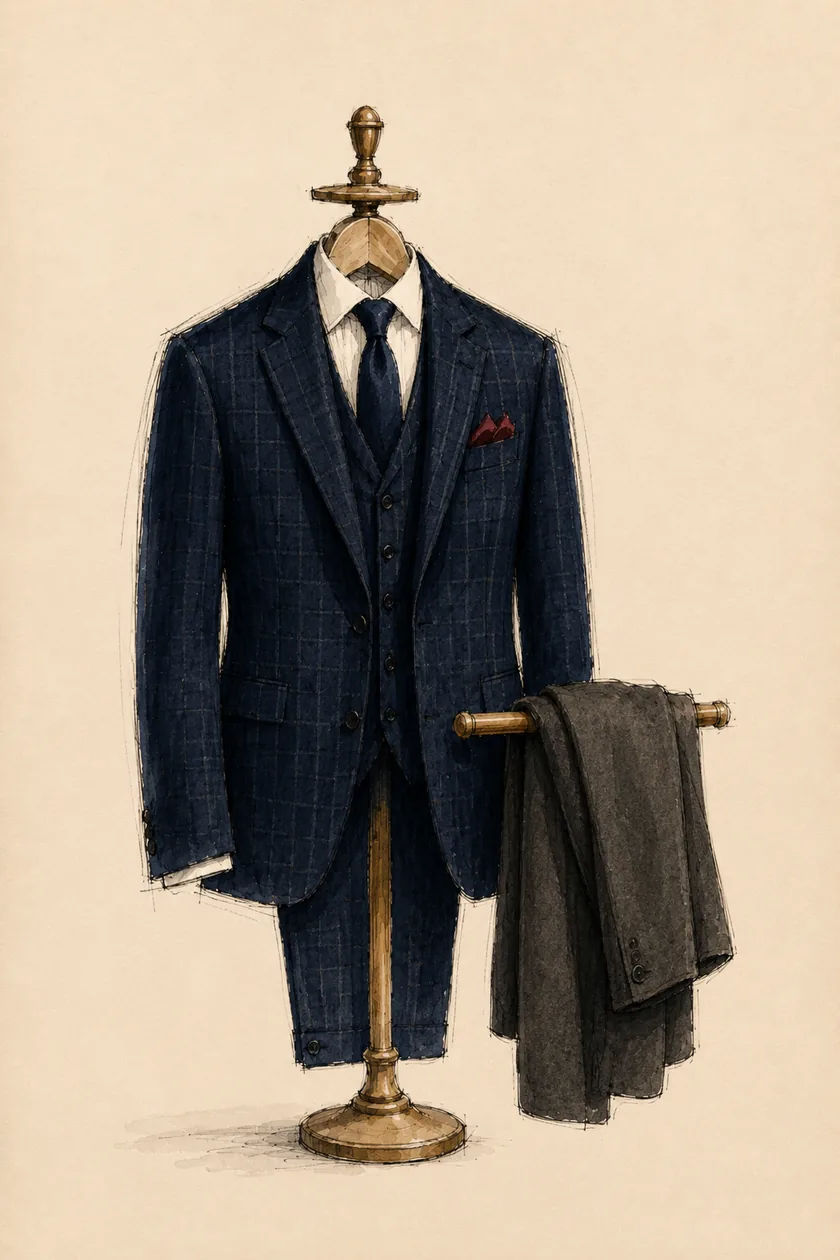
- One soft blazer in a tweed, hopsack, or textured wool: navy, charcoal, or a muted earth tone.
- Two trousers, grey wool and a stone or olive cotton, that pair with the blazer and stand alone.
- A couple of fine knits and good shirts, mostly solid, in tones that sit next to each other.
- Clean leather shoes or minimal sneakers. People read your shoes first.
Six or seven pieces, dozens of looks. That’s the whole game.
How do I look creative without looking like I’m trying too hard?
Let the fabric do the talking, not the colour or the cut. A textured fabric reads as considered up close and quiet from across the room. Loud patterns and gimmick pieces do the opposite: they shout before you’ve said anything.
The trap for creative people is thinking “stand out” means “be seen.” It doesn’t. The most stylish person in the studio is usually wearing something deceptively plain that happens to fit beautifully and feel expensive to the eye. That’s restraint, and it’s the harder, better move.
Skip the costume. Don’t dress as your discipline: no architect-in-all-black cliché unless it’s genuinely you, no “designer” novelty. Pick one interesting element per outfit and let everything else stay calm around it. A great textured jacket over plain trousers. A rich knit under a simple coat. One thing sings; the rest supports.
What fabrics say “creative but credible”?
Texture over pattern, matte over shine. Tweed, hopsack, flannel, brushed cotton, and knitted or raw-silk ties all read as tactile and intentional. That’s the language of taste without the volume of colour.
Winter 2026 tailoring is leaning hard into texture for exactly this reason: bouclé, tweed, suede-touch finishes, and wool blends where the surface carries the interest rather than a bright colour or bold check. That plays perfectly for creatives, because texture is credible in a client meeting and expressive at the same time.
On fabric, think about how it behaves in Toronto:
- A mid-weight wool hopsack (around 260–300g). Breathable weave, holds a soft shape, works most of the year.
- Tweed or flannel for the colder months: genuinely tactile, rich without any shine.
- Brushed cotton or moleskin trousers. A warmer hand than smooth wool, more “studio” than “boardroom.”
Browse what that feels like in the Fabric Library. Running your hand over a hopsack next to a worsted tells you more than any photo.
How do I dress for a client pitch versus the studio?
Match the room. For a client presentation, add structure and formality: blazer on, sharper trousers, polished shoes. In the studio, the jacket comes off and the knit takes over. Same wardrobe, one layer of formality.
Creative work has range built in: you might present to a corporate client at 10am and be back at the desk with your team by 2pm. You don’t need two wardrobes for that. You need pieces that dress up and down.
- Client / pitch. Blazer on over a plain shirt or fine knit, your best trousers, clean shoes. You want them thinking about the work, not wondering if you can be trusted with a budget. Credibility buys you the room.
- Studio / day-to-day. Jacket off or swapped for a knit, trousers or dark denim, comfortable shoes. Still put-together, just not performing.
The same logic runs through the founder’s uniform. Different job, identical principle: dress for the room, not a rulebook.
Does the fit really matter if the vibe is relaxed?
More than anything else. Relaxed and sloppy are not the same thing, and the eye knows the difference instantly. A soft, unstructured jacket still has to sit clean on the shoulders; that’s what separates “effortless” from “didn’t try.”
People who work in visual fields notice proportion whether they mean to or not, so an ill-fitting jacket lands harder on you than on an accountant. The shoulders are everything: if they fit, you look considered; if they don’t, no fabric saves it. Then the jacket should close without strain and the trousers should break just once at the shoe. That’s the how a suit should fit checklist, and it applies just as much to soft tailoring.
This is where a bench beats a rack. Off-the-rack “relaxed” fits are often just shapeless. Made for your body, an unstructured blazer looks intentional instead of accidental.
What small details signal taste?
The small ones. A knitted or raw-silk tie, interesting-but-restrained eyewear, one good watch, shoes with nothing to prove. Small tactile choices read as taste; loud accessories read as trying.
A few that work for creative professionals:
- Texture in the small things. A knit tie, a wool-silk scarf, a matte-finish shoe.
- Eyewear as your one statement, if you want one. It’s the most natural place for a creative to show personality.
- Restraint everywhere else. One good watch, no stacked jewellery, no logos doing the talking.
The principle is simple: pick one place to be interesting, and keep the rest calm. See choosing your fabric for how the fabric itself becomes that one interesting thing.
Book an appointment
If you’re an architect, designer, or creative professional in Vaughan, Thornhill, or across the GTA, come see me. We’ll build a soft blazer in a fabric with genuine character, get the shoulders right, and set you up to look considered in the studio and credible in front of a client, all with the same few pieces. Book an appointment or start to design your suit, and bring the jacket you already reach for most; what you actually wear tells me more than any mood board.