The John Wick suit: who made it, how it's cut, and how to have it made without the Kevlar
Updated October 2026 · Sam’s Menswear editorial team
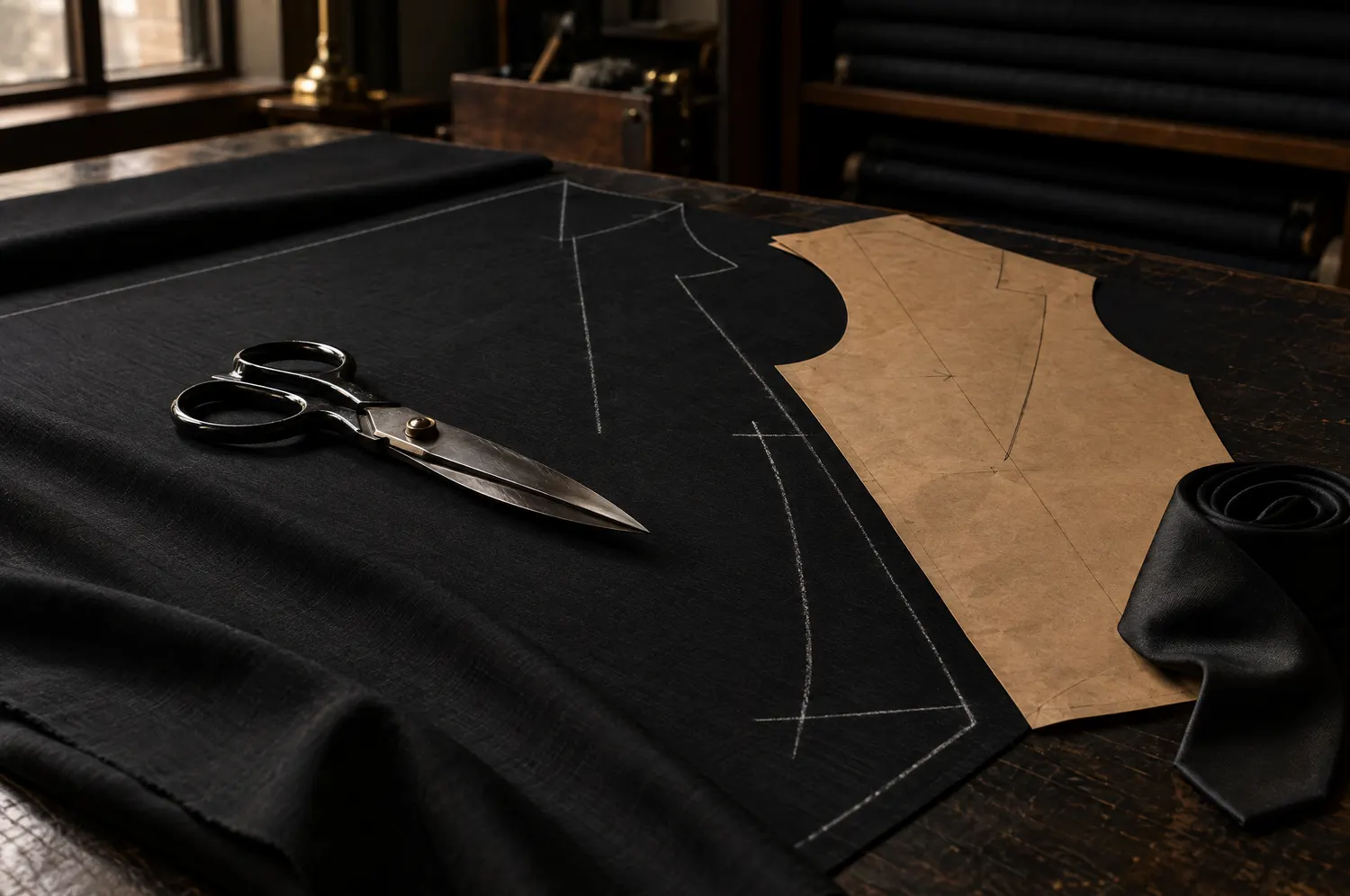
Plenty of men would like to copy John Wick’s suit, and the worry behind the copy is usually the same: will it look like a Halloween costume the moment you walk into a room that isn’t a nightclub? It needn’t. The John Wick suit is a plain, very dark, well-cut suit worn with discipline, and the parts that make it work are ordinary tailoring.
Who made John Wick’s suits?
The costume designer for the first three films was Luca Mosca, a New York designer who was also Keanu Reeves’ own tailor. In John Wick: Chapter 2 (2017) Mosca plays Wick’s tailor in Rome, in the scene where Wick is fitted for suits with a “tactical” lining, and the scene made the trailer. For John Wick: Chapter 4 (2023), Paco Delgado took over and kept the look. He chose a cloth with a faint inner shine for the camera, and told Screen Rant he looked for materials that pass for normal suiting but have elastic fibres in them, because the suits had to survive motorbikes and windows. Off screen, most of a suit’s movement comes from the cut.
What is the suit, exactly?
The first film (2014) sets the template, and BAMF Style has documented it closely:
- The cloth is a lightweight wool in a very dark grey. It reads as black on screen, but it is charcoal.
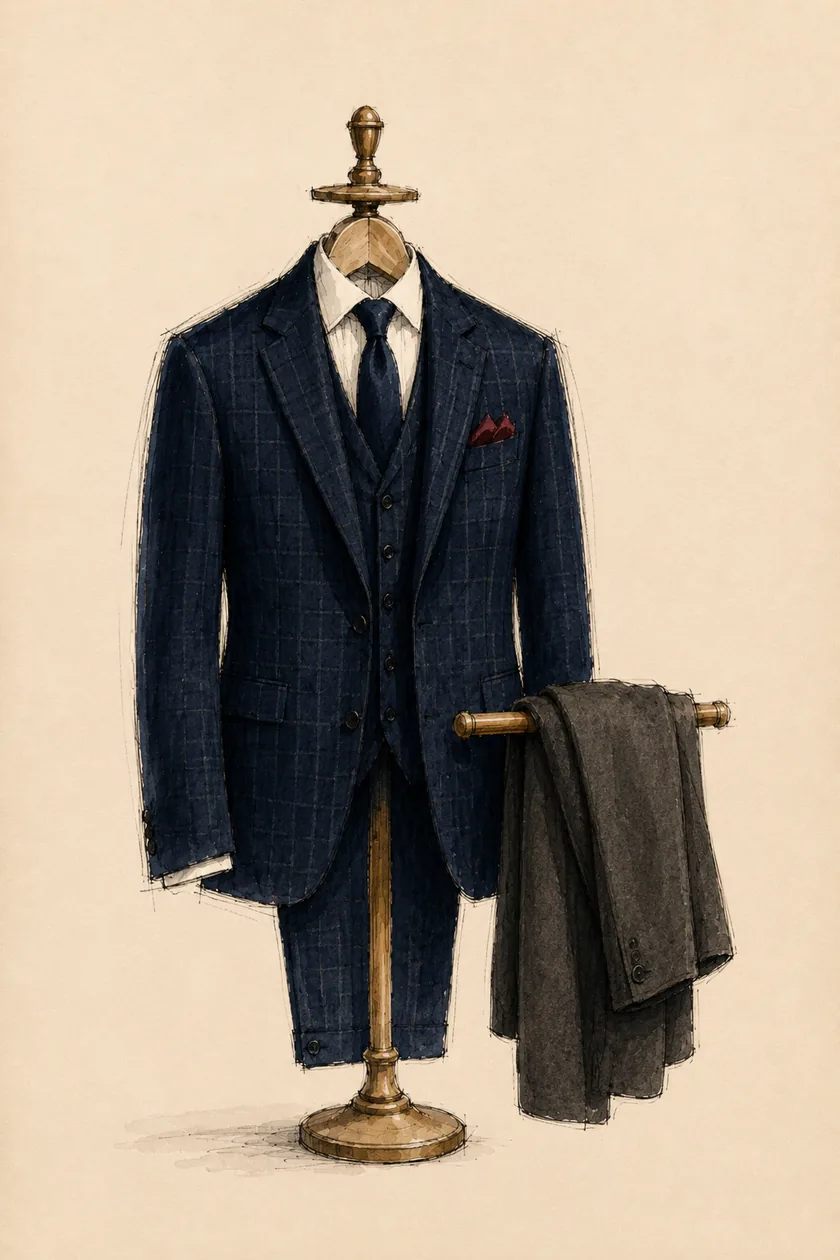
- The jacket is single-breasted with two buttons, slim notch lapels, natural shoulders, flapped hip pockets and double vents, which also gave quick access to the holsters underneath.
- The waistcoat, four buttons and no lapels, appears in a few early scenes and then disappears.
- The trousers are flat-fronted and plain-hemmed with a short break, high enough over the shoe not to trip him up.
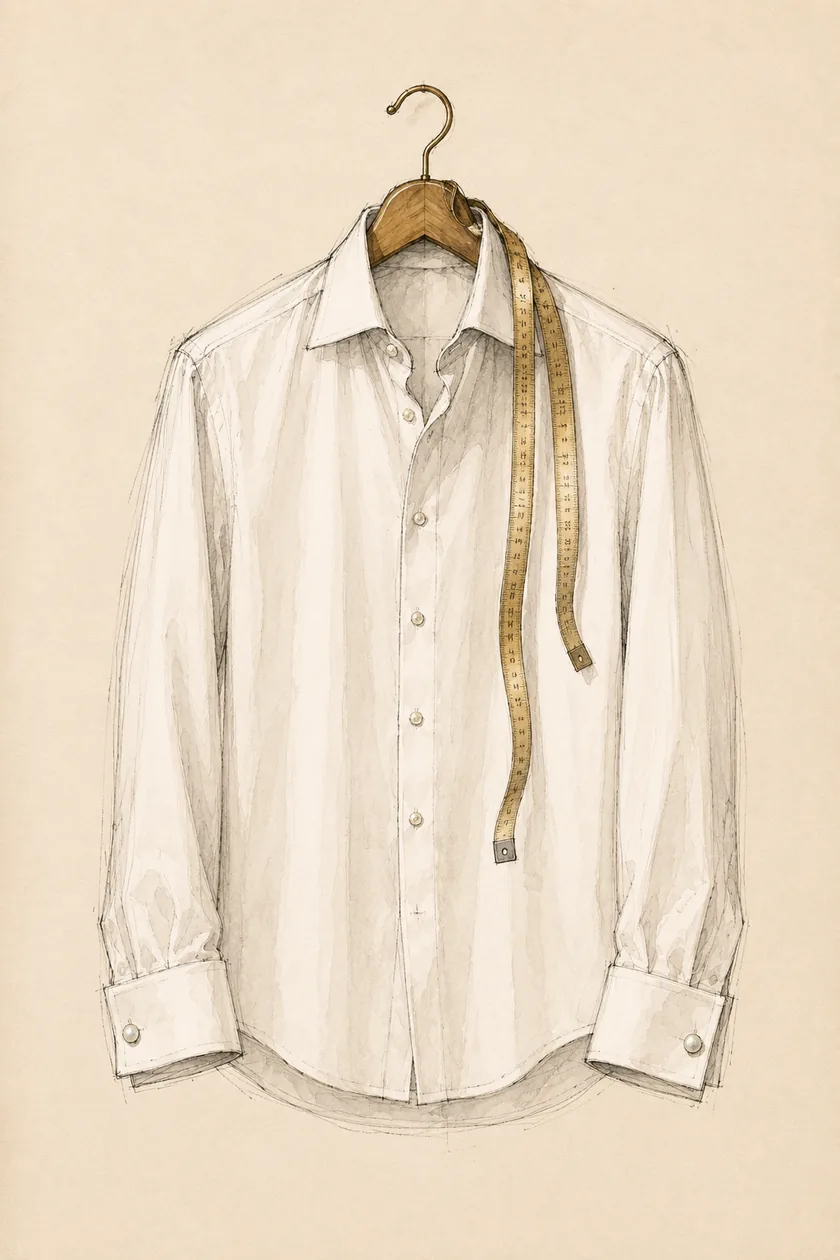
- The shirts come in a dark metallic grey, plain white and black, all with French cuffs.
- The ties are dark grey or solid black silk.
The detail most copies miss is that nothing in the outfit is quite the same shade. A dark grey suit with a black tie and a slightly lighter shirt has depth. True black on true black on true black goes flat, especially in photographs.
Is the tactical lining real?
Partly. Mosca has said the fabric the films imagine exists, and that while a bullet would not get through, the hit would still break ribs. Real bullet-resistant clothing uses removable panels in the lining, and no lining can be held up as a shield. Can a suit stop a bullet? covers what it really does, and which provinces require a permit to own it.
Sam does not make ballistic or protective garments. What he makes is the cut, which is the part of the John Wick suit that looks good on a real man.
Where can you actually wear it?
A near-black suit worn with a black shirt and a black tie is an evening look, and a strong one. In daylight, at the office or at a summer wedding, the same outfit can read as a costume. The suit itself is fine almost everywhere; the shirt decides where you can go.
- Evening, the full look: the suit, a black or charcoal shirt, a black tie. For an evening party or a night out, not black tie, which wants a tuxedo.
- Everyday: the same suit with a white shirt and a black or charcoal tie. Sharp, and nobody asks about your dog.
- Office: the cut in a deep charcoal with a little texture, a white or pale grey shirt, and a tie with some pattern. All of the line and none of the menace.
The dark suit with a white shirt and a black tie also does for a funeral, which helps a near-black suit earn its place in the closet. Black suit combinations and charcoal suit combinations go further.
How should it fit a body that isn’t Keanu Reeves’?
Wick’s suits are trim and still let him move. Copy the trim and skip the movement, and the suit pulls every time you reach for something. Three things make the difference.
A high, close armhole. It sounds backwards, but a smaller armhole that sits close under the arm gives you more movement. The sleeve moves with the arm and the body of the jacket stays put. A low, roomy armhole feels comfortable on the hanger, and then the whole jacket rides up when you lift your arm.
Room across the back. When you reach forward your shoulder blades spread and your back gets wider. A jacket with a little room across the back lets that happen; a jacket cut tight there pulls at the button and the collar.
Unbutton when you move. Fans ask why Wick fights with his jacket open. A fastened jacket pulls the two fronts together at the waist, so every reach drags on the button and across the back. Fasten it when you stand and talk, and open it when you sit, drive or dance.
On a heavier man the same rules apply, and the colour helps: a single dark column from collar to shoe is about as forgiving as tailoring gets. Ask for clean rather than tight, and keep the trouser rise high enough to hold the shirt in.
What should you ask the tailor for?
| The Wick cut | |
|---|---|
| Cloth | Near-black or deep charcoal worsted, year-round weight, with a slight texture (a birdseye, a sharkskin or a fine twill) rather than a flat, shiny black |
| Jacket | Single-breasted, two buttons, slim notch lapels, natural shoulder, trim through the body |
| Armholes | High and close, with room across the back |
| Vents | Double, so the back stays flat when you move and sit |
| Trousers | Trim, flat front, a short break or none |
| Shirt | Black or dark grey for evening; white for every day; French cuffs if you like them |
| Tie | Solid black or charcoal silk |
How do you get it made?
Sam measures and fits every client personally, at the studio in Vaughan or at your office or home on request, and a suit takes three to four weeks with one fitting on the finished suit. Tell him at the first appointment that you want to move in it, and the armholes, back and trousers will be cut for it. Custom suits has the rest, and the dress shirts page covers the dark shirts and French cuffs.
Sketch the evening version first, black cloth, charcoal shirt, black tie: draw the Wick suit. Then try it in charcoal birdseye with a white shirt and see which one you would wear more: the office version. Bring whichever sketch wins to your appointment, and book a time.
Where the details come from: BAMF Style on the first film’s suit, Film Independent on Luca Mosca, SlashFilm on the tailor cameo, WWD on Paco Delgado and Screen Rant’s interview with Delgado.