Politics & public life: dressing to be trusted on camera
Updated July 2026 · Sam’s Menswear editorial team
On camera, trust is read before you say a word. Wear a well-fitted navy suit in a solid, matte fabric, a crisp white or pale blue shirt, and a tie with no tight stripe or check. Fit is everything: the camera adds weight, so clean shoulders and a defined waist do more for your credibility than any logo.
What color suit reads as most trustworthy on camera?
Navy. It’s the most trusted color for public life because it reads as competent, steady, and honest without looking severe.
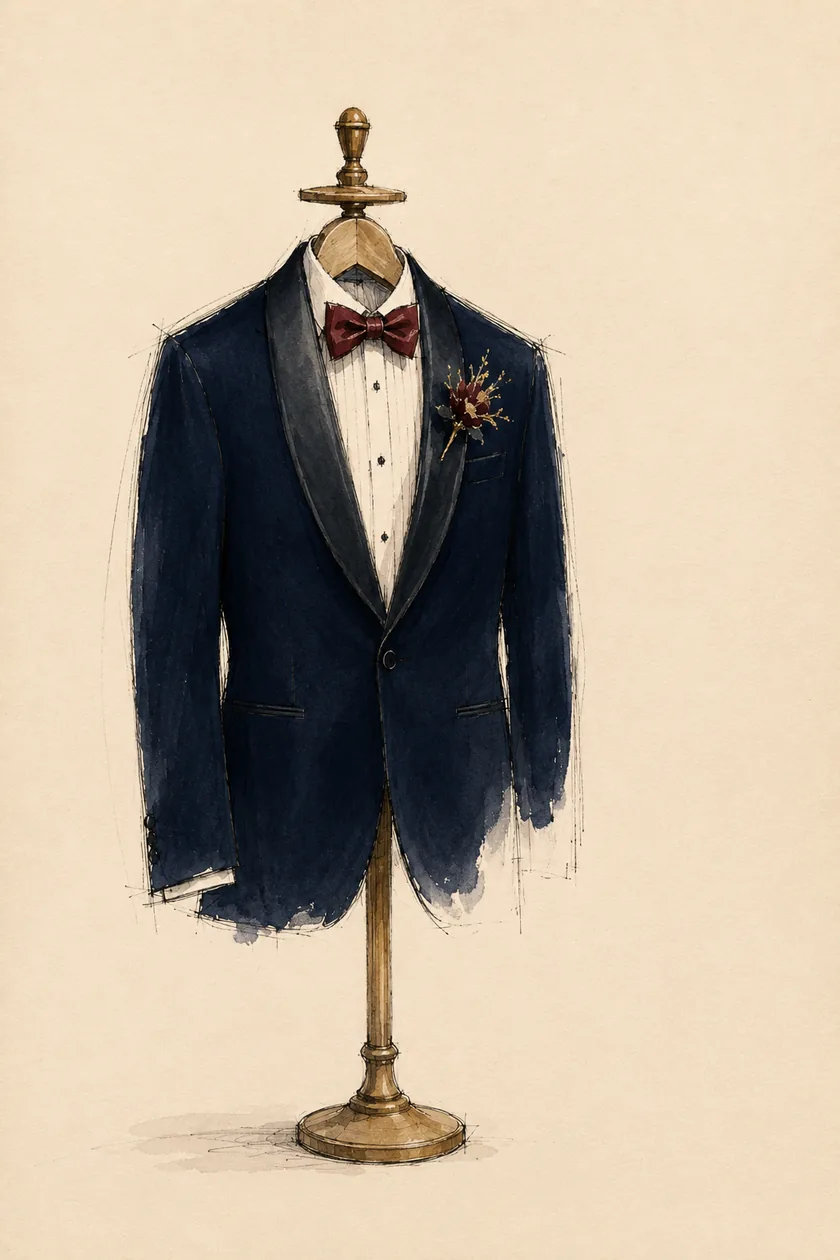
Blue signals composure and dependability, which is exactly what a voter, viewer, or board wants to see. Charcoal grey is the strong second choice, reading as serious and neutral. Black is for evening and funerals, not daytime cameras, where it flattens into a dark blob under studio lights and can read as cold or funereal.
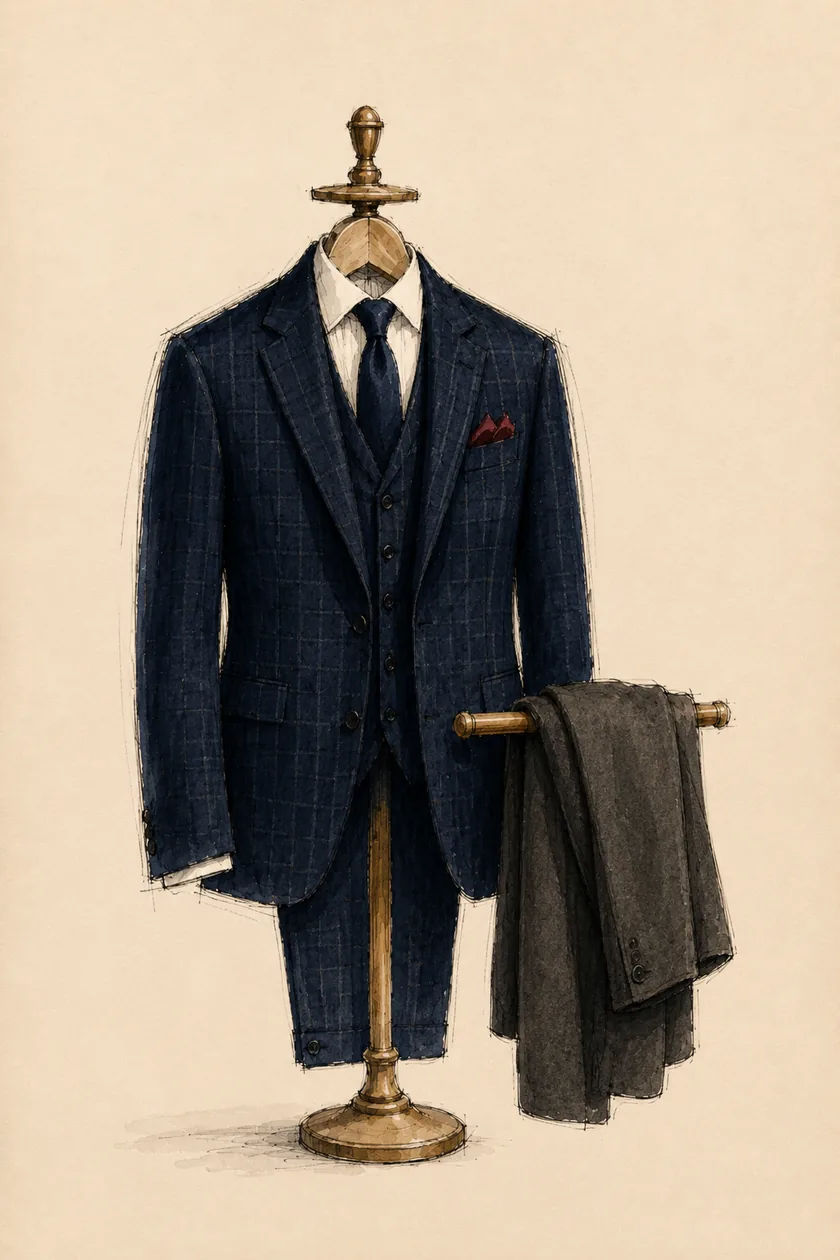
Stick with a mid-to-deep navy. Very bright or electric blues can vibrate under LED panels. If you’re on camera constantly, a couple of navies and a charcoal in rotation will carry you through almost any appearance. See the navy suit for why it earns its keep.
Why does fit matter more than the suit on screen?
Because the camera flattens you against the background and adds visible weight, so a loose or boxy suit looks bigger and softer than you are in the room.
A monitor shows only you, with nothing beside you to give scale, so anything shapeless reads as lumpy. A suit cut close through the shoulder and gently shaped at the waist gives the camera a clean vertical line, which the eye reads as taller, sharper, and more in control.
The fit details that matter most on camera:
- Shoulder: the seam sits where your shoulder ends. A clean shoulder is the single biggest credibility cue.
- Jacket length and button: the button stance shapes your torso; too low and you look heavy through the middle.
- Collar: the jacket collar hugs your neck with no gap. A gapping collar is what makes a suit look borrowed.
This is what off-the-rack rarely gets right on a real body. It’s the whole reason made-to-measure exists. Start with how a suit should fit.
What should I avoid wearing on camera?
Avoid tight stripes, small checks, herringbone, and busy patterns. They cause the moiré effect, where the fabric appears to shimmer or crawl on screen.
A pinstripe or fine check that looks handsome in a mirror can strobe and flicker once a camera sensor hits it, and it pulls every eye away from your face. On camera you want the viewer looking at your eyes, not fighting a vibrating jacket.
Also skip anything with a hard sheen. High-shine “shark-skin” and slick synthetics throw hot spots under studio lights. Choose a matte, mid-weight worsted wool that photographs flat and even. If you want texture, keep it subtle and tonal, nothing high-contrast. Our fabric library is sorted with exactly this in mind.
What shirt and tie work best for trust cues?
A crisp white or pale blue shirt with a solid or subtly textured tie. Clean, high, and simple beats loud every time.
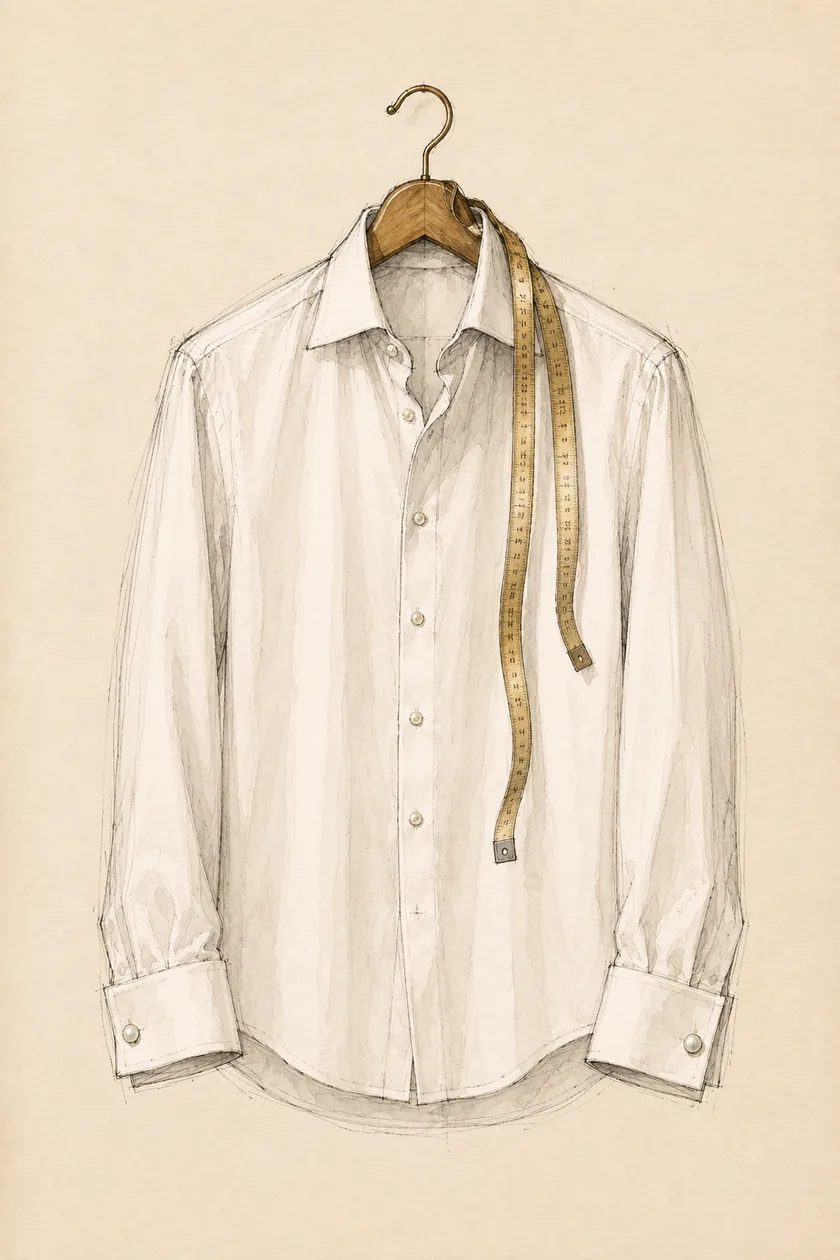
White reads clean and formal; pale blue is softer and photographs beautifully against navy. Both give your face contrast so you don’t wash out under lights. Keep the tie a solid or a very quiet texture, in a tone that sits calmly against the suit. A burgundy or deep blue tie reads steady and sincere. Save the bold red “power tie” for when you genuinely want to dominate a moment, not for building trust.
Make sure the shirt collar frames your neck properly and the tie knot fills the collar gap. On camera, a floppy knot or a gapping collar reads as sloppy before you’ve said a word.
How do I dress for a podium or a seated interview?
Dress for the format. Standing at a podium, the top half is the whole story; seated, the jacket must stay clean when you sit and lean.
At a podium, the camera frames you from roughly the chest up, so shoulder, collar, lapel, and tie do all the work. A jacket that fits the shoulders cleanly is non-negotiable. Button the top button when you stand so the front stays flat.
Seated for an interview, unbutton the jacket as you sit so it doesn’t pull and pucker across the button. This is where fit really shows: a well-cut jacket falls back into shape the moment you stand. A cheap one crumples and rides up around your neck. A tailor cuts the seated line into the garment on purpose, which no rack suit accounts for.
Do women in public life follow the same rules?
Yes, the same principles apply. Solid, matte, structured, well-fitted, with navy and charcoal doing the trust work. A tailored jacket gives the camera the same clean line it wants on anyone.
The mechanics are identical: avoid tight patterns and shine, keep colors calm near the face, and let real fit define the shape. Structure is what the camera rewards, on any body.
Building a public-life wardrobe
You don’t need ten suits, you need three or four that photograph flawlessly and never let you down. A navy and a charcoal as your workhorses, one more navy for rotation, and a darker suit for evening events.
Because you’ll wear these under lights and pressure, fabric and fit matter more than for the average wardrobe. Built for you, in the right weight and the right colors, they simply work every time you step in front of a lens. That’s the case for investing in custom, and it’s the same discipline we bring to every professional wardrobe we build.
For 30-plus years in Vaughan, on the Thornhill line, Sam has fit people who live and work under scrutiny across the GTA. If your job puts you on camera or at a podium, bring your next appearance date and we’ll build a suit that earns trust before you open your mouth. Book an appointment or start your design whenever you’re ready.