What is a kittel? Meaning, fabric and when it's worn
Updated September 2026 · Sam’s Menswear editorial team
A kittel is a simple white robe worn over your clothes on a handful of the year’s most meaningful days: Yom Kippur, the Passover seder, and by many grooms under the chuppah. In Ashkenazi custom it’s traditionally married men who wear it, and its white stands for purity, a clean slate, and a new beginning. It’s a plain garment on purpose, but a good one fits clean, launders well, and lasts for decades.
What does a kittel actually mean?
The kittel is white to signal purity and a fresh start, the same reason a bride wears white. On Yom Kippur it’s worn as you ask forgiveness; under the chuppah it marks the groom stepping into a new life.
The white also carries a quieter meaning. A kittel is the garment many are buried in, so wearing it on the holiest days is a reminder to live plainly and humbly. That’s why it stays simple: no lining, no flash, sometimes a little lace or a simple belt, and nothing more. It’s one of the few garments in a man’s wardrobe where less is the whole point.
When is a kittel worn?
Three main occasions in Ashkenazi tradition: Yom Kippur (and by the leader on the first nights of Rosh Hashanah in some communities), the Passover seder, and the wedding, where the groom wears it under the chuppah.
Quick rundown:
- Yom Kippur: worn in shul through the day, over your suit or a light shirt.
- Passover seder: worn by whoever leads, symbolizing freedom.
- The chuppah: the groom wears it during the ceremony, often removing it after.
- Some also wear one at Hoshana Rabbah or when serving as prayer leader on the High Holidays.
Custom varies by community and family. If you’re unsure whether it’s married men only or what your minhag is, ask your rav. That part isn’t the tailor’s call.
What fabric is a kittel made from?
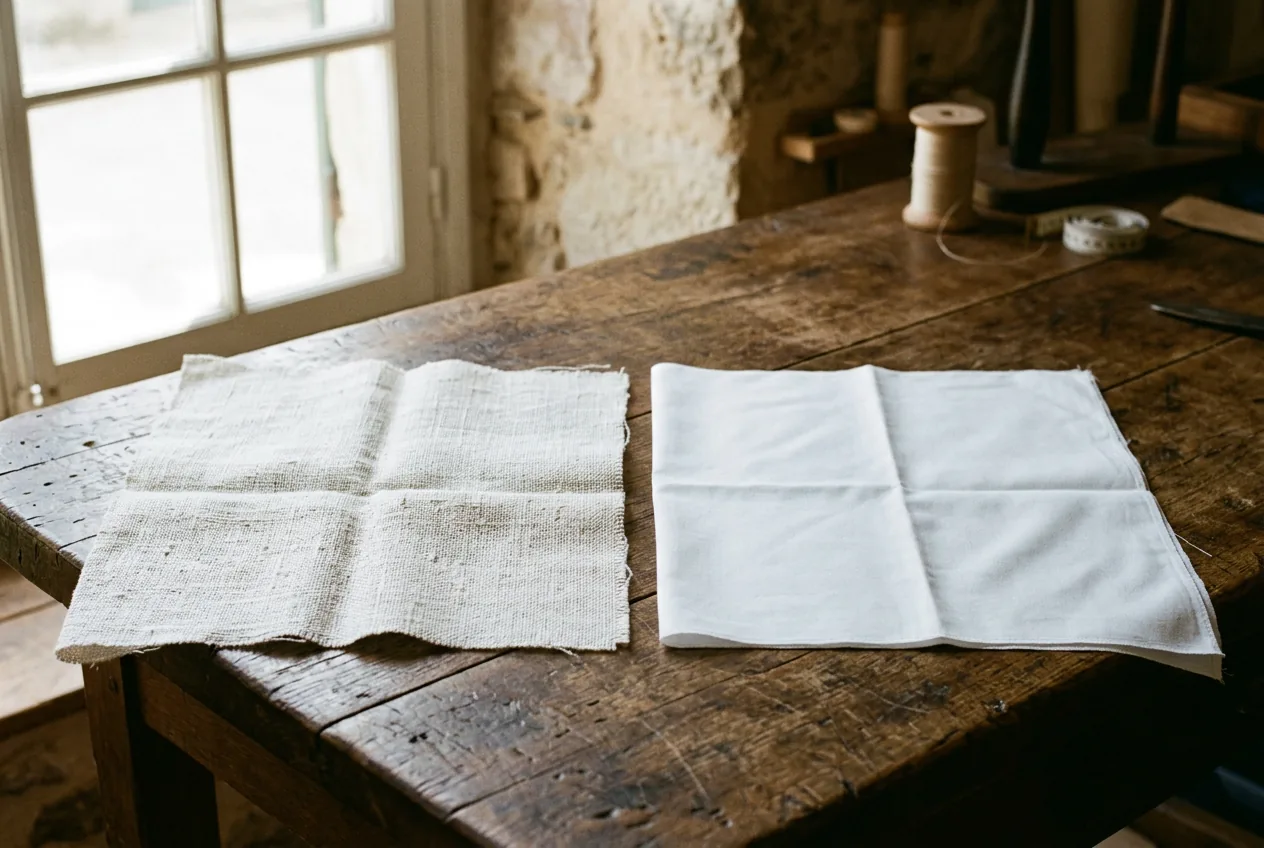
Traditionally white linen or cotton. Today most off-the-shelf kittels are a cotton-polyester blend, which is why so many look and feel a little thin and glossy.
Here’s the bench take. A polyester blend is cheap, wrinkle-resistant, and machine washable, fine if you want simple. But it doesn’t breathe, and Yom Kippur is a long day standing in a warm shul. A fine cotton or linen breathes, drapes with a real weight, and looks like a garment rather than a costume. For something you’ll wear on the most serious days of the year (and quite possibly hand down), natural fabric is worth it. More on choosing fabric →
How should a kittel fit?
Loose, but not sloppy. A kittel is a robe, not a suit. It’s meant to skim over your clothes and hang clean from the shoulders, roughly to mid-shin or the ankle.
The two things that separate a good one from a sack: it should sit square on the shoulders without collapsing, and the length should be right for your height: too long and you’re tripping the whole seder, too short and it looks borrowed. Sleeves cover to the wrist. Most are made to be worn over a suit jacket, so there’s room built in, but “room” isn’t the same as “shapeless.” A made-to-measure kittel is cut to your shoulders and your height, which is exactly why an off-the-rack one so often disappoints. How a suit should fit →
How do you care for a kittel?
Keep it white and keep it crisp. A cotton or blend kittel launders at home: wash cold on gentle, no bleach (bleach yellows white fabric over time), and hang or lay flat to dry.
A few bench habits:
- Press it before the chag so it hangs clean: a steam or a cool iron on the pleats.
- Store it breathing in a cotton garment bag, not a sealed plastic one, which can trap moisture and yellow the fabric.
- Treat spills fast, especially seder wine, with cold water. Hot water sets the stain.
- Fine linen or cotton may want a gentle hand-wash or a careful cold cycle. If it’s an heirloom piece, a good dry cleaner is the safe route.
Cared for properly, a well-made kittel easily lasts decades, which is the whole idea.
Should you buy one off the rack or have one made?
If you just need something plain for one seder, an off-the-rack blend does the job. But for Yom Kippur every year, for your wedding, or for a garment you want to pass down, have it made in real fabric, cut to you.
The difference is felt more than seen. A made kittel in a fine cotton sits right on the shoulders, breathes through a long fast, and reads as kavod rather than an afterthought. It’s the same work Sam has done for the Thornhill and Vaughan community for years: the fine dark suit, the bekishe and kapota, and the simcha garments that carry meaning. More on the traditional wardrobe →
For grooms, a kittel is one small piece of the day. The suit under it, and the fit that carries you through the chuppah, matter just as much. The groom’s suit →
Getting ready for Yom Kippur, a seder, or your chuppah? Sam’s studio is a short drive on the Vaughan–Thornhill line. Come in with the suit you plan to wear underneath, and you’ll leave with the fabric and the length settled. Book an appointment →