What doctors should wear: trust, practicality, and life under the coat
Updated July 2026 · Sam’s Menswear editorial team

Most days you’re a physician, the clothes barely show: a collar and maybe a cuff under the white coat. So the honest answer is: dress conservative, clean, and comfortable, in fabric that survives an eleven-hour day, and put your money into fit rather than flash. In a consult room or private clinic, that means a well-fitted navy or charcoal suit or a jacket-and-trouser combination. In the OR or the ED, it’s scrubs, full stop. The trick is knowing which room you’re in.
Doctors tend not to want to be talked into anything. They want to know what works under a white coat, through a twelve-hour shift and in front of a patient’s family. Here it is.
What should a doctor wear to see patients?
In clinic: a navy or charcoal suit or sport coat with a clean shirt, worn under or without the white coat. In the OR or ED: scrubs. Match the room, not a fashion idea.
The research here is not vague. A landmark study (Petrilli et al., BMJ Open, 2018) surveyed more than 4,000 patients across ten U.S. academic medical centres and found formal attire with a white coat rated highest for how knowledgeable, trustworthy, caring and approachable a doctor seemed. Around half the patients said how their doctor dresses matters to them, and over a third said it shapes how satisfied they feel with their care.
But it’s setting-specific, and patients are smarter than we give them credit for. That same research showed:
- Primary care and hospital rounds: formal attire with a white coat wins.
- Emergency and surgery: patients prefer scrubs: clean, prepared, ready to work. A suit in the ED reads as wrong.
- Older patients (65+) lean harder toward the formal-plus-coat look. Younger ones are more relaxed.
So the surgeon in scrubs and the consultant in a suit are both dressed correctly. Nobody’s underdressed. Each is reading his room right.
What should I wear under the white coat?
A pressed dress shirt and tailored trousers, in a breathable, wrinkle-resistant fabric. Half the outfit is hidden, so the visible half (collar, cuffs, tie if you wear one) has to be crisp.
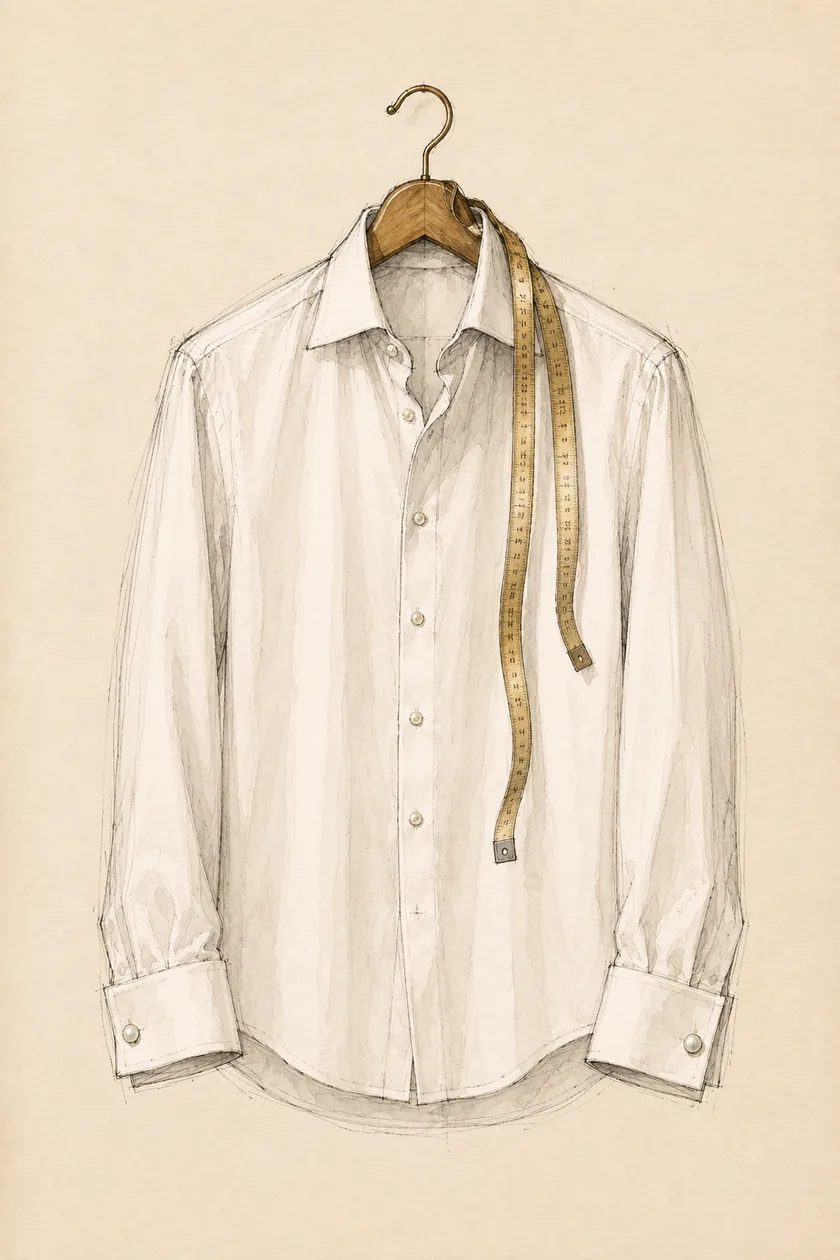
The coat covers your torso, which means your shirt collar and cuffs do most of the talking. A collar that gapes or a cuff that swallows your hand undoes an expensive coat. This is where proper fit earns its keep. A shirt cut to your neck and arm length sits clean under the coat and doesn’t bunch.
On fabric: skip pure cotton that creases the second you sit down. I steer doctors toward a cotton blend or a good non-iron weave with a touch of stretch. It takes a twelve-hour shift, a stethoscope around the neck, and forty trips in and out of the coat without looking slept-in. Trousers should have a little give in the waist and thigh; you’re on your feet, crouching to a bedside, sitting to type notes. Comfort here isn’t a luxury, it’s function.
What colours and fabrics work best for a physician?
Navy and charcoal, in mid-weight wool or wool blend. Conservative, clean, and they don’t fight the white coat or read as flashy. Save bold colour for the tie or nothing at all.
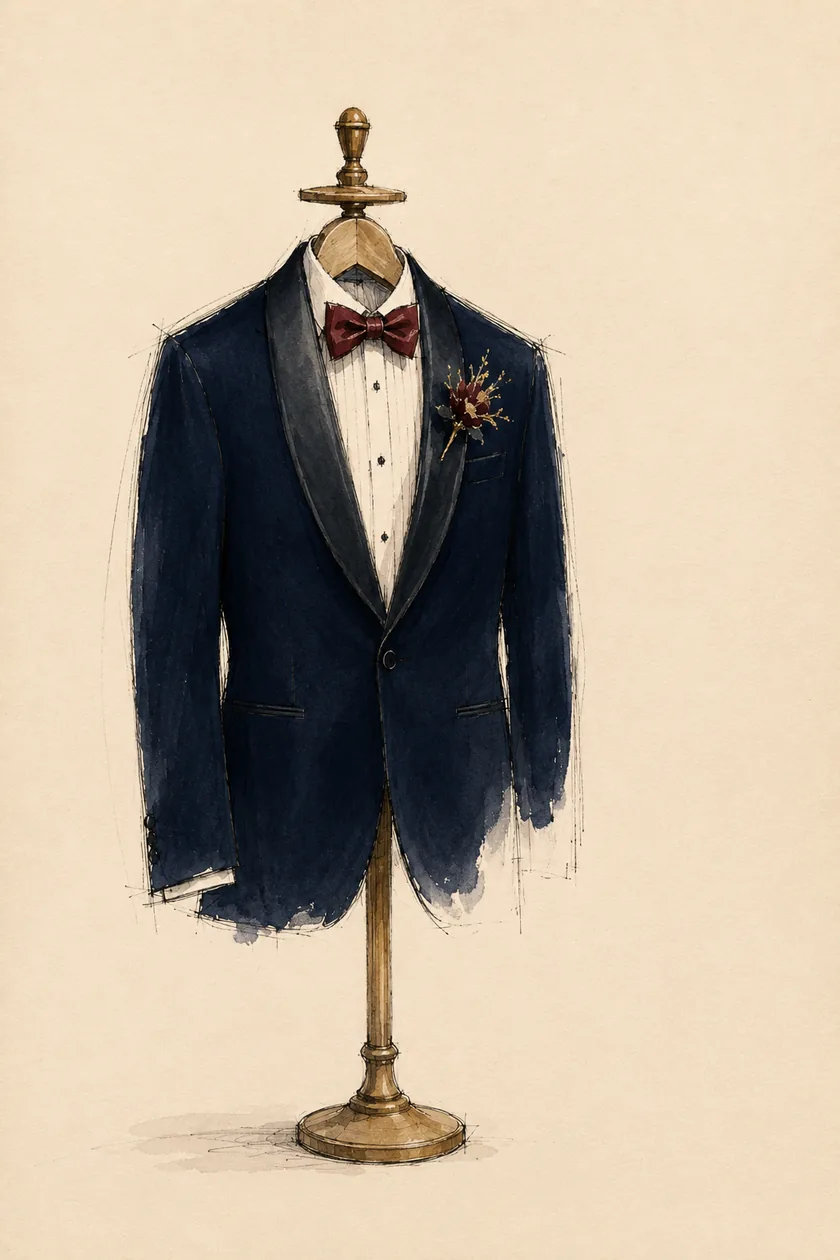
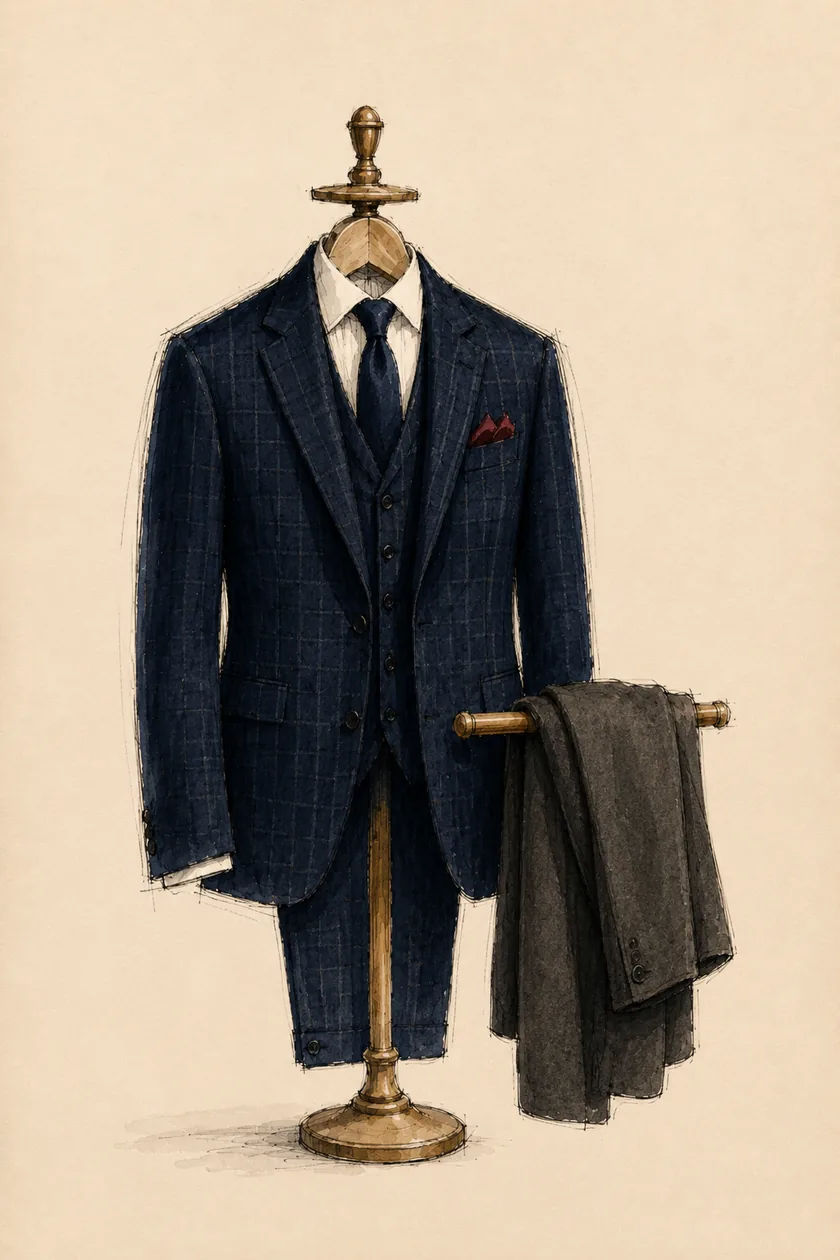
You want fabric that signals steady and serious. A navy suit is the single most useful thing in a doctor’s closet. It works for clinic, a hospital board meeting, a conference talk, and a colleague’s retirement dinner. Charcoal is its equal partner. Both sit under a white coat without clashing.
Keep the patterns quiet. A subtle check or a fine stripe is fine; anything loud competes with the one thing that should stand out: you, being calm and competent. Whites and pale blues for shirts. If you wear a tie, keep it clean and simple, and be aware some hospitals discourage them on hygiene grounds. A good jacket-and-open-collar look is perfectly professional now.
Do I even need a suit if I’m always in scrubs?
Yes, for the moments outside the ward. Conferences, grand rounds, hospital admin, expert-witness work, media, faculty dinners. Those rooms judge on a different scale than the OR.
A surgeon can live in scrubs 90% of the week and still get caught flat-footed at a conference podium in a jacket that fits like it was borrowed. The suit isn’t for the patients. It’s for the peers, the deans, the funding committees, and the lawyers. When you’re presenting or advocating, you want to look like the authority in the room, and that’s a job for tailored business clothing. One good suit and one good blazer covers nearly all of it.
If you’re early-career and interviewing for a residency or a staff position, that’s a separate calculation. Read my take on the interview suit. Selection committees are conservative, and fit matters more than label.
What are the common mistakes doctors make with clothes?
The big three: buying off-the-rack and never getting it altered, choosing fussy fabric that wrinkles, and over-dressing for a room that wants scrubs. All three read as “not paying attention.”
- The unaltered suit. Shoulders too wide, sleeves swallowing the cuffs, trousers pooling on the shoe. It costs almost nothing to fix and changes everything. Fit is the whole game; see how a suit should fit.
- The wrong fabric. A linen-heavy or cheap cotton suit is a crumpled mess by noon. You need fabric that holds a line through a long day.
- Flash over calm. Shiny fabric, sharp fashion cuts, loud accessories. Patients read that as ego, not competence. The research is clear that they trust clean and conservative.
- Shoes as an afterthought. You’re standing all day. Get a proper leather shoe with a real sole and comfort built in. Cheap shoes hurt and they show.
How does fit signal competence more than an expensive suit?
Because patients and peers don’t read price tags. They read whether you look put-together and in control. A modest suit that fits beats an expensive one that doesn’t, every time.
This is the truth I come back to with every client. The white coat, the navy jacket, the pressed collar: none of it works if the fit is off. A jacket that hugs your shoulders and a trouser that breaks cleanly makes you look precise, and precise is exactly what a patient wants in the person about to make a decision about their body. It’s the same instinct that makes them trust the doctor in the crisp white coat. Fit is the affordable lever, and most doctors never pull it.
For the surgeon who wants one thing done properly, or the specialist building a small working wardrobe, I’d rather build a suit around your actual body and schedule than sell you five things you won’t wear.
The Toronto angle
Across the GTA, from the downtown teaching hospitals to clinics in Mississauga, North York, and Vaughan, the standard is professional but unfussy. Toronto patients aren’t looking for a peacock; they want a doctor who looks calm, clean, and squared-away. That’s an easy brief to hit and a hard one to fake, and it’s exactly what good tailoring is for.
If you’re a physician, surgeon, or specialist and you want clothes that hold up to your actual working day, come by the studio between shifts, get measured properly, and I’ll tell you straight what you need and what you don’t. Book an appointment or design a suit built around the life you actually live under that coat.
Related reading: dressing for business · the navy suit · the interview suit