The Online Gamble
Where ordering a suit from a screen goes wrong, from self-measuring to remake policies, and how to lower the risk.
These are the situations that come up at the bench season after season, written as general advice. They are not stories about real clients and they are not reviews: nobody here is a real person, and no shop is named.
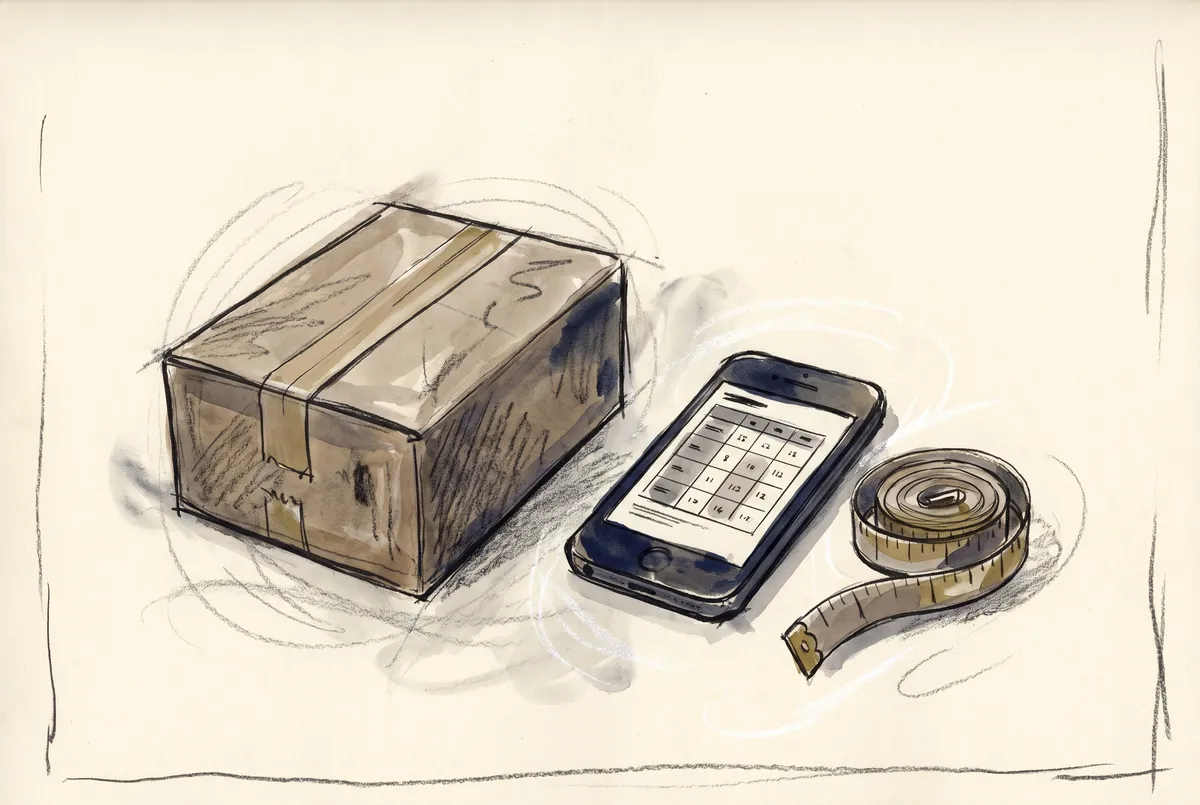
I measured myself with a kitchen tape. How far off could I be?
Far enough to matter. The usual errors are small and they add up: a tape that tilts across your back when you measure your own chest, a waist taken where your trousers sit instead of where the form asked, a sleeve measured from the wrong point on the shoulder, a breath held in. An inch out in three places gives you a different jacket.
The biggest mix-up is between body and garment measurements. Some forms want your body; others want a jacket that already fits you, laid flat and measured. A garment is larger than the body inside it by the room you need to move, so typing one where the other belongs throws every number off. Read the instructions twice, have someone else hold the tape, and cross-check against a suit you like. Measured in person, none of this falls to you, and the fitting on the finished garment catches what a tape misses.
Check whether the form wants your body or a garment measured, and have someone else hold the tape. Read more →
The online suit arrived and it's wrong. What are my options?
Read the remake policy before you do anything else. Online made-to-measure sellers commonly set a short window for reporting a fit problem, sometimes as little as ten days from delivery. Many offer an alteration credit, often as store credit, in place of a refund, and some limit it to your first order. A remake is usually offered only when the garment doesn't match the numbers on your order; if it matches what you typed, the mistake is treated as yours.
So measure the delivered garment against your order sheet the day it arrives, and photograph it on you from the front, side and back. File any claim before a tailor touches it, because altering it can close the claim. If you end up paying a local tailor, the fixes worth paying for are sleeves, hems and the waist. When a garment is measured and fitted in person, the person who took the numbers is the one who corrects them.
Measure the delivered garment against your order sheet the day it arrives, and file any claim before a tailor touches it. Read more →
The navy on my screen wasn't the navy that arrived
A screen shows colour by giving off light, while cloth only reflects the light that falls on it. A product photo is shot under studio lamps, edited, then shown on a display with its own colour settings, so the same image looks different on a phone and a laptop. Navy is especially unreliable: it can lean purple under some office lighting and grey in daylight. A colour also tends to look stronger across a whole jacket than on a small square, so a swatch that seems quiet can read louder as a suit.
Ask for a physical swatch before you order. Look at it by a window, under office light and under a warm lamp at night, and hold it near your face. In a studio you choose from the cloth itself, held up in the kind of light you'll wear it in.
Ask for a physical swatch and look at it by a window, under office light and under a warm lamp before you order. Read more →
The photo looked like matte wool. What arrived is shiny.
Product photos are lit to flatter the cloth, and soft studio light hides the sheen a synthetic blend shows under an overhead light or a camera flash. The listing words help: 'wool feel', 'wool touch' and 'premium blend' describe an impression. Super numbers such as Super 120s describe how fine the wool fibres are, which tells you nothing about how much of the cloth is wool.
The fibre percentages are what to read. In Canada the fibre content has to be on the garment's label, and a good listing shows it as well. If polyester comes first, expect shine and slower recovery from creases; if the listing won't say, ask before you order. In a studio you can rub the cloth between finger and thumb and turn it under the light, which tells you more in a few seconds than any product photo can.
Find the fibre percentages before you order; if polyester is listed first or the seller won't say, expect shine. Read more →
I've exchanged the size twice and it still isn't right
Ready-made sizes are graded, so going up one size makes the shoulders, chest, sleeves and length bigger together. If the first jacket was right everywhere except the waist, the next size up fixes the waist and makes everything else too big. Every exchange also costs a week or more in shipping, and sizes vary between brands, so the size you wore last year is only a starting point.
Stop exchanging once the shoulders fit. The shoulder seam should end at the edge of your shoulder bone, and the collar should sit against your neck. Keep that size and have the waist, sleeves and hems altered, which any good tailor can do. If no size fits both your shoulders and your chest, the pattern is the problem rather than the size, and that is when a suit made to your measurements earns its keep.
Keep the size whose shoulders fit and have the rest altered, instead of ordering yet another size. Read more →
Can a phone app measure me from two photos?
An app estimates measurements from your outline. It can get lengths roughly right, but it can't see how you carry yourself. Many men have one shoulder lower than the other, often on the side of the dominant hand. Others stand with their shoulders rolled forward, or carry their weight in front. Each of those changes how a jacket hangs, and none of them shows clearly in a front and side photo taken in a T-shirt.
If you use one, stand the way you normally stand, without straightening up for the camera. Then add what the app can't know: tell the maker if one shoulder sits lower or if you stoop. Better still, have the finished garment checked on you. In person, a tailor sees your posture in the first minute and adjusts the pattern for it before anything is cut.
Stand relaxed in front of a mirror; if one shoulder sits lower, tell the maker, because no photo form asks. Read more →
Should I order for the weight I'll be by the wedding?
No. Order for the body you have and plan to adjust it. A suit ordered a size small on a promise won't close if the weight doesn't come off, and a jacket can only be let out about an inch. Taking in is easier, but it has limits too: beyond a couple of inches the pockets and seams start to pull out of proportion.
If you're still losing steadily, say so at the first appointment. A suit takes three to four weeks to make, and the fitting on the finished garment is where the tailor takes in whatever has gone since you were measured, with time after it for the alteration. At Sam's the alterations after delivery are included, so a final take-in a few weeks before the wedding is part of the plan rather than an extra. For a wedding, two to three months ahead is a comfortable time to start.
Order at the weight you are now, and book the fitting close enough to the event to take in what you lose. Read more →
The groomsmen are each ordering online from a link
Five men ordering the same colour on different days can still arrive in five shades. Cloth is dyed in batches called dye lots, and two lots of the same 'charcoal' can differ enough to show side by side in photographs, especially under flash. Delivery dates differ as well, and every man measures himself differently, so the fits vary as much as the colours.
If the party has to order online, have one person place every order on the same day from the same listing. Line the jackets up together in daylight the day they arrive, while there's still time to replace one that doesn't match. A party made together is cut from a single cloth order, so the colour matches from the start, and each man is measured by the same person to the same standard.
Have one person order every suit on the same day, and line the jackets up in daylight the day they arrive. Read more →
The tracking has stalled and the event is twelve days away
A parcel from overseas can sit in customs for days, and when it reaches Canada the courier may collect sales tax, duty and a brokerage fee before handing it over. None of that shows on the product page. Twelve days out, you can't count on the parcel arriving in time for any alteration it might need.
Set a cut-off date. If the parcel isn't in your hands three weeks before the event, start the backup then, while a made suit is still possible: three to four weeks is the normal time and about twelve days the fastest rush. Any closer and the backup is an off-the-rack suit bought for the shoulders and altered. At Sam's, orders placed between November 20 and the end of February take about three weeks longer, with no rush. If the parcel turns up after all, you have a spare.
Set a cut-off three weeks before the event, and if the parcel isn't in your hands by then, start the backup. Read more →
General advice from thirty years at the bench, not client stories and never customer reviews. For the real thing: about Sam · his Google reviews · the practical guides.