Dressing for the Room
Interviews, promotions, a first suit at fifty, a speech, a funeral at short notice: the everyday occasions where fit does the work.
These are the situations that come up at the bench season after season, written as general advice. They are not stories about real clients and they are not reviews: nobody here is a real person, and no shop is named.
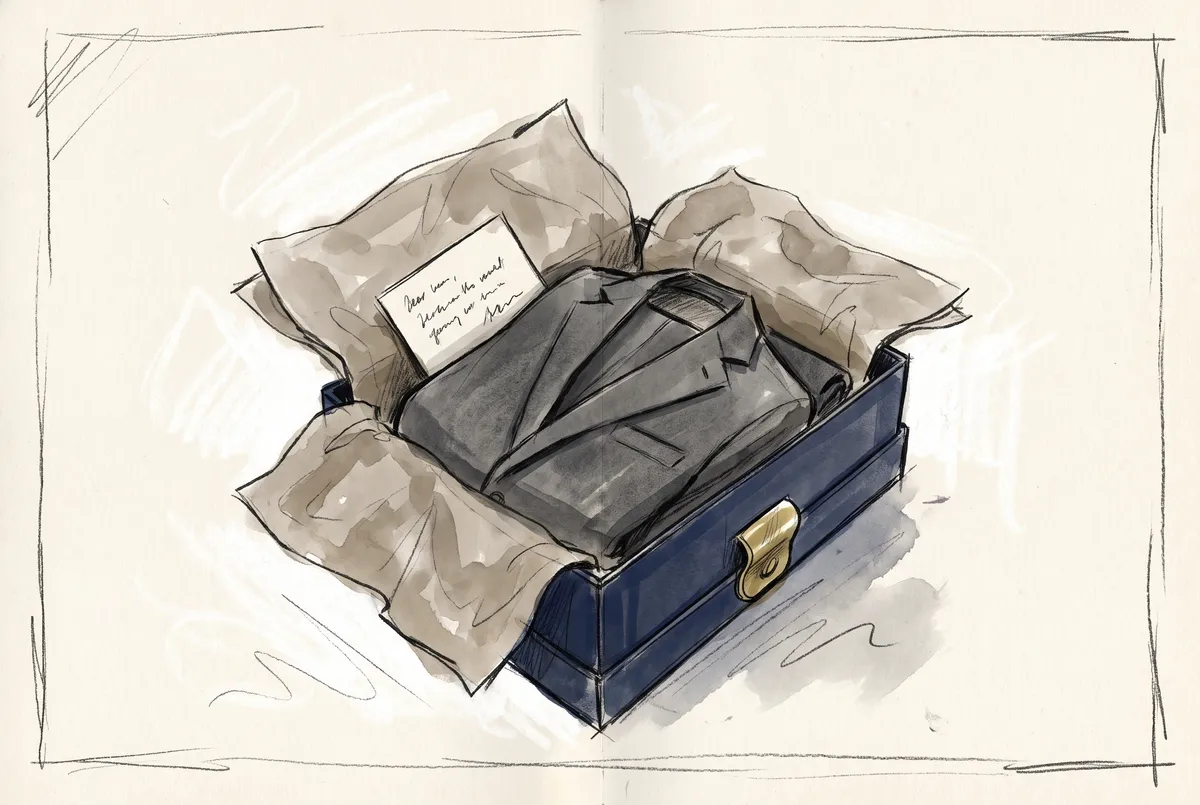
I have an interview and no suit that fits.
Check the date first, because it decides your options. A made suit takes three to four weeks. A rush of about twelve days is sometimes possible, though not on orders placed between November 20 and the end of February. Anything sooner means altering something you already own, or buying ready-made and having it altered, and either way the shoulders have to fit. For the suit itself, navy or charcoal, plain, with a white or pale blue shirt, covers almost every interview, including at offices that dress casually; you can leave the tie off there. What reads badly across a table is at the edges: sleeves over the hands, shoulders hanging past your own, trousers pooling on the shoe. Those faults are fixable, so fix them first. Then wear the suit at home before the day, sitting and standing, so anything that pulls shows while there is still time.
Wear the suit for an hour at home before the interview, sitting and standing, so any pull or loose button shows while there is time to fix it. Read more →
I've been promoted and I still dress like the junior I was.
What separates a junior's wardrobe from a senior's is usually finish. Suits bought at the start of a career tend to be sized off the rack and worn hard: sleeves over the shirt cuff, trousers pooling at the shoe, a jacket that has lost its shape at the chest. The men you now sit with may wear the same navy and charcoal you do, but theirs fit. So look at what the room wears and match its level, a half-step sharper at most. Louder ties and bolder patterns won't close the gap. Spend on fit, and on construction that holds. A fused jacket, with a glued chest, loses shape and can bubble after a few years of hard wear, while a canvassed one keeps its line. Every suit here is half canvas by default, never fused. A charcoal and a navy cut to you is the place to start.
Note what the people in your new meetings wear, match their level, and spend on fit before anything else. Read more →
I'm fifty and I've never owned a proper suit.
It is common, usually after years in a trade or a uniformed job, then a move to a desk or a role full of meetings. Men who have done physical work tend to have built up their shoulders, arms and back, so a rack jacket that closes over the chest won't let them reach, which is often what put them off suits in the first place. You don't need to know anything before you come. The first appointment is a conversation, the measuring and a look through cloth, and you can ask what every term means. For one suit that covers work, weddings and funerals, navy or charcoal in a year-round worsted is the place to start. Bring the shoes you'll actually wear with it. The heel height changes where the trousers should end, and the length is set to those shoes.
Bring the shoes you will wear with the suit to the first appointment, since the trouser length is set to them. Read more →
My suit looks tired and I can't say why.
Look at the parts you never see. The seat and the backs of the elbows go shiny first, because friction flattens the fibres, and a shine that has set in won't press out. Trouser hems fray at the back where they meet the heel. Lapels that once rolled softly start to lie flat or curl at the edge. On a fused jacket, the glued chest can come away from the cloth and show as bubbles or a puckered front, and that can't be repaired. Some of the tiredness is plain neglect: a suit worn two days running never gets the rest it needs for creases to drop out. Rotating two or three suits, brushing after each wear and hanging them on wide, shaped hangers keep a suit going for years. A half-canvas chest, the default on every suit here, doesn't bubble.
Have someone photograph you from behind in daylight, and check the seat and elbows for shine. Read more →
I look young and people don't take me seriously.
A soft, unstructured blazer and chinos read as a student, whatever your title. Small changes add years without making you look costumed. A suit in a darker colour, navy or charcoal, carries more weight than a light one. A little structure at the shoulder helps; it needs no heavy padding, only a jacket that holds its line instead of collapsing. The shirt collar matters here. A soft collar that folds under the jacket lapel looks casual. A collar with enough height to show about half an inch above the jacket collar at the back, and points long enough to stay tucked under the lapels, looks finished. Polished shoes and a jacket that fits close at the waist do the rest. With made-to-measure shirts you choose the collar shape and height yourself, from hundreds of shirtings.
Choose a dark suit with some structure at the shoulder, and a shirt collar tall enough to show above the jacket collar at the back. Read more →
I'm giving a speech and I keep tugging at my jacket.
Most of the tugging comes from a jacket that moves when you do. Raise an arm to point or gesture and the whole jacket rides up, the collar lifts off the neck, and you spend the next minute pulling it down. The usual cause is a low, wide armhole. Rack jackets often have them so one size fits more bodies. It seems backwards, but a higher, closer armhole gives the arm more freedom, because the arm can then move without lifting the body of the jacket with it. Trousers that twist as you walk come from a seat cut for someone else. On the day, button the jacket when you stand and unbutton it when you sit. And rehearse once in the suit itself, arms and all, so the first time you raise a hand in it isn't in front of the room.
Raise one arm as if pointing at a screen; if the jacket collar lifts off your neck, the armhole is too low. Read more →
I'm starting a career where everyone wears a suit.
You don't need a full wardrobe on day one. Two suits, navy and mid-grey, in a year-round worsted, cover a working week if the shirts and ties do the varying. Five shirts in white and pale blue and three or four ties make the same two suits look different from one day to the next. What keeps them alive is rest: a suit worn two days running doesn't get time for creases to drop and moisture to dry out, so alternate them. Trousers wear out before jackets, so a second pair for the suit you wear most is the cheapest way to make it last. Once you know how the office dresses, a third suit is the next addition. On payment, a made order here is split: half as a deposit when you order, half when you collect it.
Start with a navy and a mid-grey suit and alternate them, so neither is worn two days running. Read more →
I spend my days in the car between clients.
A car is hard on a suit. Driving creases the jacket across the back and the trousers behind the knees, and the seat takes friction for hours. By the third meeting of the day, those creases are what the client sees first. Take the jacket off and hang it before you drive, rather than driving in it, and keep a hanger in the car for the purpose. The cloth matters as much as the habit. A high-twist wool, woven from tightly twisted yarn, springs back from creases far better than a smooth, fine worsted, and it breathes on warm days. Keep the colour calm, navy or mid-grey, and dress a half-step sharper than your clients, never several. If you are on the road most days, add a second pair of trousers, since they take the wear.
Hang the jacket in the car before you drive, and choose a high-twist wool if you spend hours on the road. Read more →
My suits have grown too big for me as I've got older.
Men often lose a little height and shoulder width with age, and a suit bought for a broader frame starts to hang. The shoulder seam drops past the edge of the shoulder, the sleeves creep over the hand, and the jacket collar stands away from a neck that now leans forward. Some of it is easy to fix. Sleeves shorten, waists and trousers come in, hems go up. The shoulders are the dividing line. If the seam now sits well past your own shoulder, narrowing it means taking the jacket apart, and the result is rarely worth the work compared with a new suit. A favourite suit with good cloth and shoulders that still sit close is worth altering. Have the shoulders looked at first, so you know which kind you own before paying for any work.
Have the shoulder seam checked first, and if it sits past the edge of your shoulder, put the money toward a new suit rather than alterations. Read more →
I need a dark suit for a funeral and I have days, not weeks.
A funeral gives no notice, and a few days is not enough time to have a suit made anywhere. The choice is between a suit you already own or can borrow, and a ready-made one hemmed to fit. Black is not required. A dark navy or charcoal suit with a white shirt and a plain dark tie is correct at almost any funeral. If your own dark suit has grown tight, a tailor can often let the trousers out at the centre back seam or move a jacket button within a day or two, and a good press makes an older suit presentable. A loose suit is quicker to rescue than a tight one, since taking in is easier than letting out. The lasting fix is to be ready before it happens: keep one dark suit that fits you now, and have it adjusted when it starts to pull.
Keep one dark navy or charcoal suit that fits you now, and try it on twice a year. Read more →
General advice from thirty years at the bench, not client stories and never customer reviews. For the real thing: about Sam · his Google reviews · the practical guides.