Fathers & Sons
Bar mitzvah suits for growing boys, a son's first real suit, two generations at one wedding, and suits that pass between them.
These are the situations that come up at the bench season after season, written as general advice. They are not stories about real clients and they are not reviews: nobody here is a real person, and no shop is named.
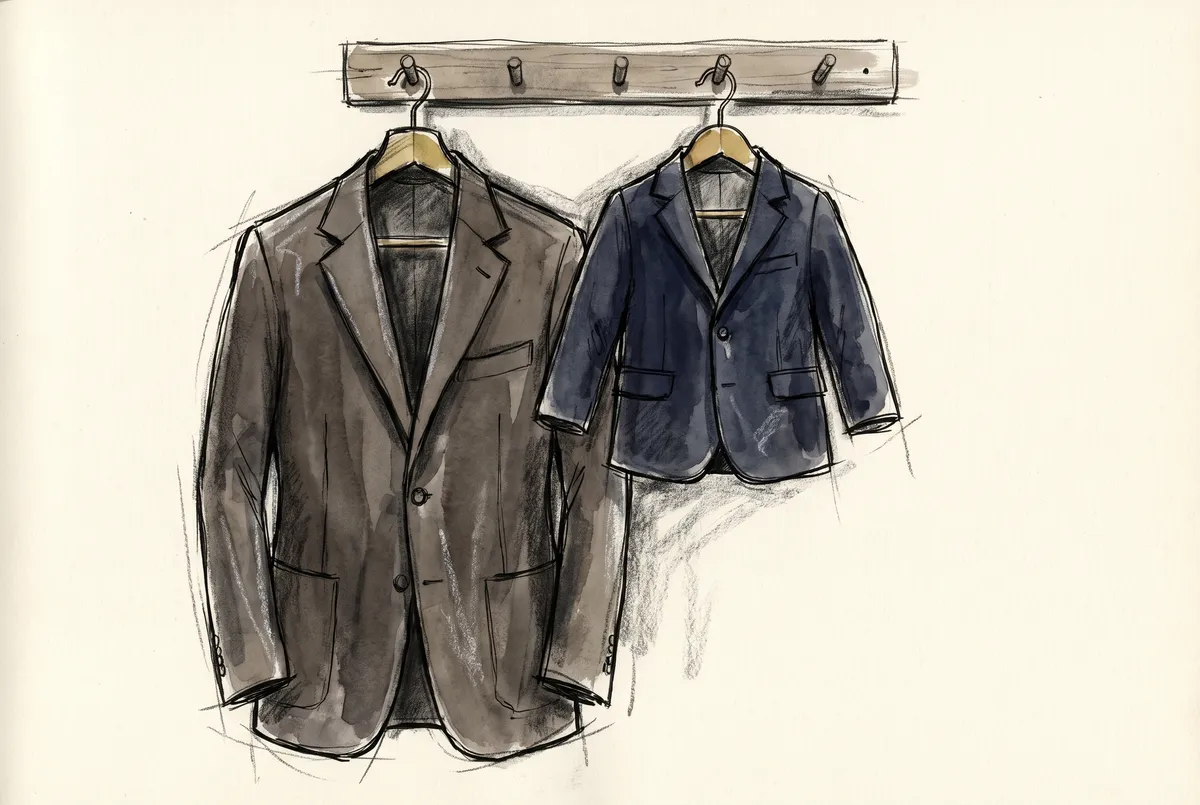
Should I buy his bar mitzvah suit big so he grows into it?
Buying big puts the extra cloth in the wrong places. A jacket a size up is too wide in the shoulders and chest on the day, and those are the parts that never shrink to fit. What a boy gains first is length, in the arms and legs, with width at the waist and seat following. So fit him as he is now and hide the growing room inside: deep trouser hems, extra sleeve length turned in at the cuff, and spare cloth at the trouser waist and seat. One detail matters more than parents expect. Working buttonholes at the cuff look smart, but once they are cut the sleeve can no longer be lengthened from the end, so a growing boy is better off with plain cuffs. The limit is the shoulders: no tailor can add width there, so once they broaden he needs the next suit.
Ask for deep hems, spare sleeve length, extra cloth at the trouser seat and cuffs without working buttonholes. Read more →
When should we order the bar mitzvah suit?
About six to eight weeks before, and measuring earlier is no safer. Boys of twelve and thirteen can grow noticeably in a couple of months, so numbers taken half a year ahead belong to a smaller boy. Six to eight weeks gives the three to four weeks the suit needs to be made, then a fitting on the finished suit close to the date, when any late growth can still be let down from the hems. A winter date needs a second look: orders placed between November 20 and the end of February take about three weeks longer, and there is no rush service in that stretch. Look at the Jewish calendar as well when you book. The studio closes for Shabbos from Friday afternoon, and on chol hamoed it opens by appointment only, so pick a fitting day that is actually open.
Count back six to eight weeks from the bar mitzvah, and three weeks more if the order falls between November 20 and the end of February. Read more →
He wants the skinny suit his friends wear.
Let him win on the things that don't affect fit or how long the suit lasts. The lining, the buttons, the shirt colour and the tie can all be his choice, and a boy who chose part of his suit tends to wear it without complaint. Hold the line on one point: the trouser leg. A very narrow leg is the part of a fashionable suit that dates first, and it can't be undone. A trouser cut with some room through the thigh and calf can be narrowed later without trouble; cloth cut away for a skinny leg is gone for good. Growing teenagers also fill out through the thigh, so the narrow leg that fits in spring can bind by the following winter. Settle it at the first appointment, with him in the room, so the decision is partly his.
Let him pick the lining, buttons and tie, and keep the trouser leg a little fuller than he asks, since it can be narrowed later but never widened.
What should my son's first real suit be?
One suit has to cover interviews, weddings, funerals and his first months at work, so make it the one that handles all of them: navy, in a year-round wool worsted of medium weight, single-breasted with two buttons and plain trousers. Charcoal is the second choice if navy doesn't suit his colouring. Avoid anything that ties it to this year, because he will wear it for several. The point most families miss is the trousers. They take the friction of every chair and car seat and wear through well before the jacket, so a second pair ordered with the suit keeps the jacket in use long after the first pair is done. If it is a gift, don't guess his size. Have him come to the first appointment himself, or have Sam come to his office, so he is measured in person and helps choose the cloth.
Choose navy in a year-round worsted, and order a second pair of trousers with it. Read more →
My father and I want different cuts for my wedding.
This comes up often. The father wants what looked right when he married: a longer jacket, pleats, a fuller trouser. The son wants a shorter jacket and a narrower leg. Usually both are right for their own bodies. A man with a fuller middle and seat sits more comfortably in pleats and a straighter leg; a lean younger man in the same cut looks swamped. In photographs the eye reads colour and level of dress before it notices jacket length or lapel width, so two cuts in the same cloth still look like one family. What does look wrong is a different shade, or a dinner suit standing beside a business suit. So agree on the cloth and the formality together, and let each man have his own pattern. With made-to-measure that is no extra work, since each suit is drafted from its own measurements anyway.
Agree on one cloth and one level of formality, then let each man choose the cut that suits his own body. Read more →
Can my good suit be altered to fit my son?
Start at the shoulders. Put the jacket on him and look at the seam where the sleeve meets the body: if it sits at the edge of his shoulder, nearly everything else is ordinary alteration work. Sleeves can be shortened, and lengthened if there is cloth turned in and no working buttonholes. The jacket waist can come in. Trousers can be hemmed, and let out at the centre back seam by as much cloth as is left there. If the shoulder seam hangs past his shoulder or pinches inside it, stop; re-cutting shoulders rarely ends well. Construction matters too. A canvassed jacket can be reshaped and pressed hard. A fused one, with a glued chest, can bubble under the heat and steam an alteration needs, especially when it is old. Pinch the front of the jacket just below the lapel: a loose third layer between cloth and lining means canvas.
Check the shoulder seam on your son first, and only take the suit to a tailor if it sits at the edge of his shoulder. Read more →
Can I wear my own wedding suit to my son's wedding?
Maybe, and you can find out at home before you see anyone. Button the jacket and look for an X of creases pulling from the button; that is a waist problem and often fixable. See whether the back vents spread open when you stand still, then sit down and reach forward. A jacket that binds across the back and upper arms when you reach usually can't be helped. Turn the trousers inside out and look at the centre back seam: the cloth on either side of the stitching is the room the waist can grow. On dark, smooth cloth, a let-out seam can leave a faint line where the old stitching was. Check the cloth itself in daylight, too. Shine on the seat and elbows comes from worn fibres and won't press out. Do all of this early enough that ordering new is still possible.
Try the old suit on with the shirt and shoes you plan to wear, sit and reach forward, and do it at least two months before the wedding. Read more →
I want something of my late father's with me at my wedding.
The simplest things to carry are the ones he wore. If he left cufflinks, the shirt needs double cuffs, often called French cuffs, since an ordinary buttoned cuff has no holes for links. Shirts take two to three weeks, so decide before the shirt is ordered. A tie bar, a pocket square or his watch need no planning at all. Buttons from one of his jackets are a common wish, and a quiet one, but count them first. A two-button suit uses two larger buttons on the front plus three or four smaller ones on each cuff, and an old jacket rarely has enough of both sizes to cover a new suit. If there are too few, they can go on the front alone or the cuffs alone. Bring them to the first appointment and ask, before anything is ordered, whether there are enough of each size.
If you will wear his cufflinks, order the shirt with double cuffs, and bring any buttons to the first appointment to be counted. Read more →
General advice from thirty years at the bench, not client stories and never customer reviews. For the real thing: about Sam · his Google reviews · the practical guides.