The relaxed wedding-suit timeline
Updated July 2026 · Sam’s Menswear editorial team
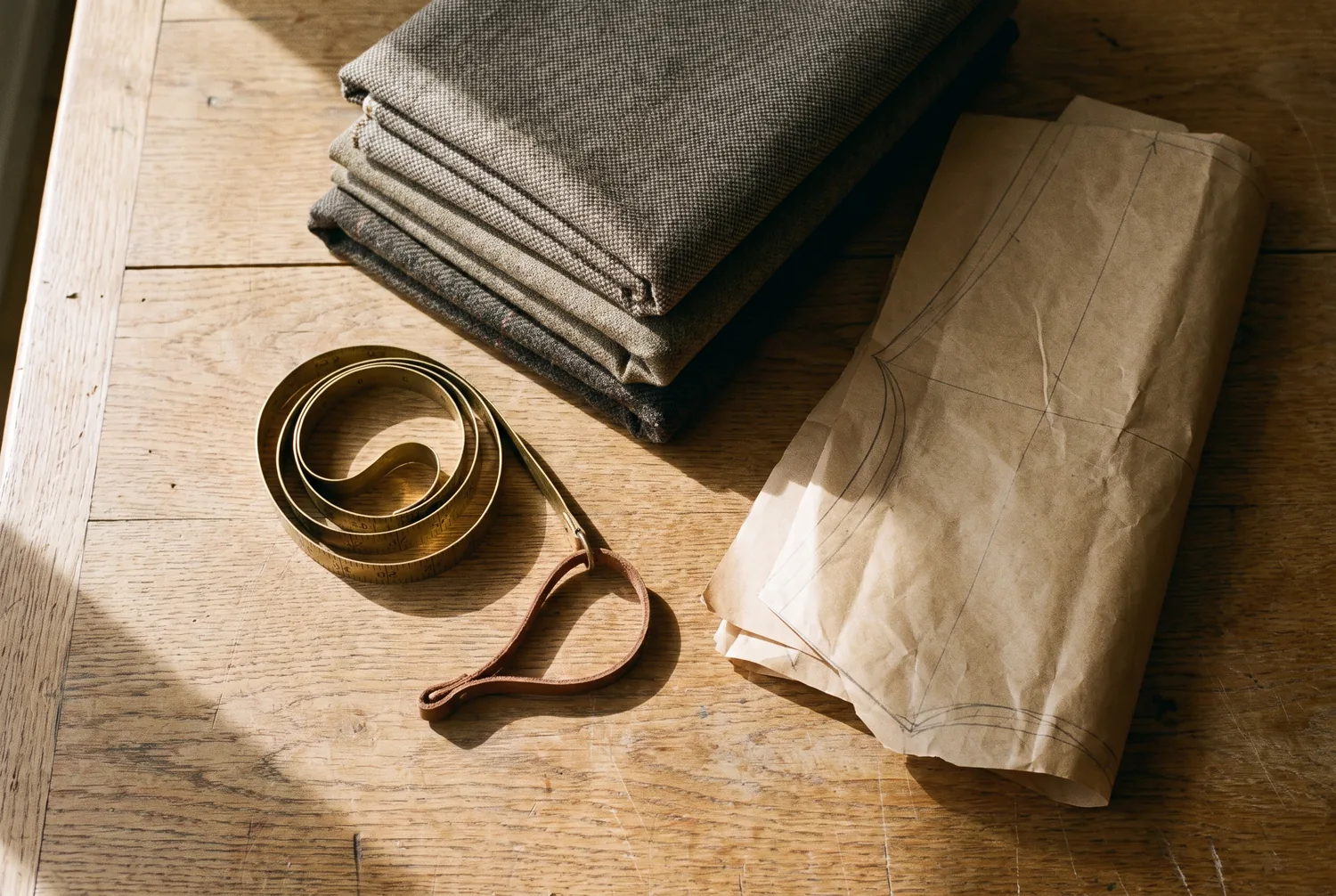
Start two to three months before the wedding and you get the calm version of this: no rush, no panic, room to breathe. The suit itself takes only three to four weeks to make; everything before that is just breathing room. Start early and the whole thing feels less like a deadline and more like something you actually enjoy.
How far ahead should a groom really order a wedding suit?
Two to three months out is the relaxed sweet spot. It’s more runway than the suit needs, and that’s the whole point. The extra weeks absorb life without touching your wedding date.
If you like to plan further ahead, come in earlier; nothing is lost by looking at cloth a year out. If a fabric you love is out of stock, if your body changes, if you get attached to the idea of a second look for the reception: with a few months in hand, none of it becomes a fire.
The suit doesn’t need all those months. You do. The early runway is for the human, not the garment.
How long does the suit itself take to build?
Three to four weeks from the day the fabric is chosen. That is the actual production window, and it surprises people: the rest of your timeline is buffer for you, not for the garment.
Here’s the calm version of the build, start to finish:
- Consultation and measure: we talk about the day, the venue, the feel of it, and I take your measurements. The pattern is kept on file afterwards.
- The make: three to four weeks, half-canvassed as standard and full canvas on the dearer fabrics. Nothing is fused.
- The fitting: the suit goes on you finished, and I mark whatever needs moving. Alterations are part of the order.
- Collection: well before the wedding, not the week of it.
Three decades on the bench has taught me one thing about wedding suits: collection day should be boring. If it is boring, the measuring was right.
What does the relaxed timeline actually look like?
Front-load the fun stuff, leave the finish line clear. Here’s how the months lay out when nobody’s rushing.
- Two to three months out: Come in, get measured, look at fabric. See the Fabric Library first if you like.
- Six to eight weeks out: Lock the fabric and the design. This is when the Drawing Board gets fun: lapels, lining, buttons, the details that are you. The make begins, and it needs three to four weeks.
- 3–4 weeks out: The fitting, on the finished suit. Small tweaks only, then you walk out with it.
- Wedding week: The suit’s been hanging in your closet for weeks. Zero stress.
What happens if I’ve left it later than that?
Don’t panic. A good tailor can still get you there. If you’re at five or six weeks, we skip the leisurely part and go straight to decisions, and the suit is still finished in time.
What you lose by starting late isn’t the suit. It’s the slack. Fabric choices narrow to what’s in stock. There’s less room to adjust if your body shifts. And a true rush, twelve days at the fastest, is a favour rather than a service, so ask before you assume.
If the date is genuinely tight, come talk to me anyway. I’d rather see you early and tell you honestly what’s doable than have you stress-Google it. Book a chat and we’ll figure out the real timeline for your date.
Should groomsmen and fathers follow the same clock?
Give them the same runway, especially if anyone’s coordinating looks. The more people in the suit, the earlier you start; one late groomsman shouldn’t rattle the whole party.
If you want the party to match or complement, decide the direction early and get everyone measured on a similar schedule. Out-of-town groomsmen can be measured locally and send numbers in; we build around that all the time. For the details on wrangling a group, see coordinating groomsmen. Dads have their own considerations worth reading up on in the father of the bride and groom guide.
What about weight changes or last-minute nerves before the day?
This is exactly why we do the final fitting late: 3–4 weeks out, not months. Grooms lose or gain a little in the run-up; it’s normal, and a late final fitting catches it.
A little advice from the bench: don’t crash-diet the month before the wedding. It’s the one thing that fights the fit. Eat like a person, sleep, and let the final fitting do its job. If your body’s genuinely shifting, tell us; a well-cut suit built with proper seam allowance has room to follow you.
The whole reason to start two or three months out isn’t to finish early. It’s so that when nerves hit the last week, the suit is the one thing you don’t have to think about.
Ready when you are
Whether your date is a year out or a few months, the first move is the same: come in and we’ll map the calm version of your timeline together. Bring the wedding details, or just bring yourself.
Count back from your date, find the nine-month mark, and book the first appointment inside it, or start designing your suit tonight while it’s on your mind.