When the Rack Doesn't Fit
Broad shoulders, long arms, a short frame, a bigger middle, a lower shoulder: why rack sizes miss, and what a measured suit changes.
These are the situations that come up at the bench season after season, written as general advice. They are not stories about real clients and they are not reviews: nobody here is a real person, and no shop is named.
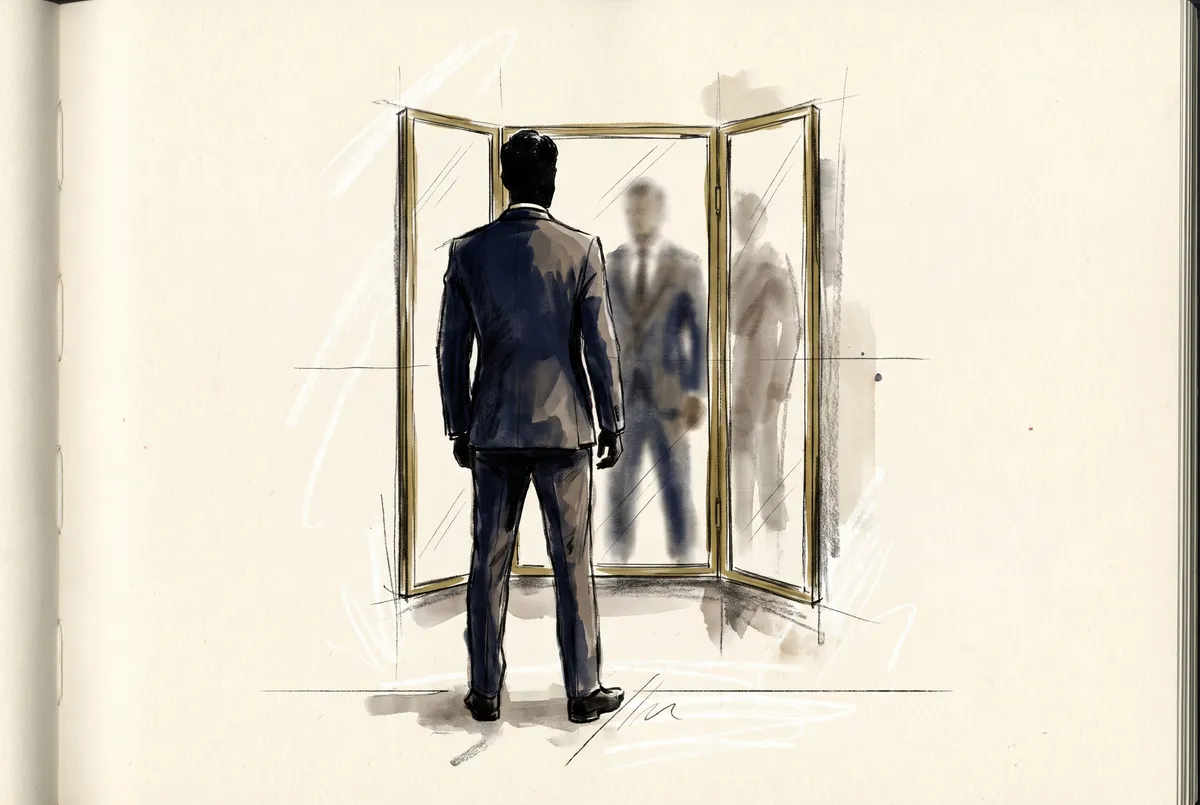
Jackets fit my shoulders or my waist, never both.
A rack jacket is drafted with a fixed difference between chest and waist, set for an average build. Train hard and that difference grows, so a jacket that closes over your chest hangs loose at the waist, and one that fits your waist won't button. A tailor can take a jacket in at the waist, within limits, but can't add width across a back that isn't there. This is easy to misread. When a jacket pulls in an X at the button, the cause is often a broad upper back and shoulder blades rather than the chest measurement, and going up a size only makes the shoulders and sleeves too big. Heavy arms need a wider upper sleeve as well. When you are measured in person, the chest, waist, back width and upper arm are each taken separately, and the pattern follows them.
Button the jacket and reach forward with both arms; if it pulls across the back, ask for more back width rather than a bigger size. Read more →
My trousers split when I crouch.
Rack trousers scale the thigh and seat to the waist size. Buy for the thighs and the waist gapes; have the waist taken in and the back of the trousers bunches. The split, when it comes, is usually at the seat seam as you crouch or take stairs two at a time, which points to the seat and the back rise rather than thigh width alone. Those are the hard parts to fix later. The centre back seam can give an inch or two at the waist on good trousers, but the thighs and the front rise have almost nothing to let out. They have to be right when the trousers are cut. Cloth plays a part too: a very light, smooth worsted wears thin at the inner thigh sooner than a slightly heavier one. A made-to-measure pattern takes the thigh, seat and rise from your own body and drafts them together.
Crouch as if to tie your shoe in any trousers you try on; if the seat pulls tight, ask for more room in the seat and back rise. Read more →
I'm tall and my sleeves always end too early.
Rack sizes add length in fixed steps and tie it to width. A tall, slim man who sizes up for sleeve length gets a jacket cut for a heavier man, and one who sizes for his chest gets sleeves that stop short and a jacket that barely covers the seat. Tall men aren't long in the same places, either. Some are long in the leg, others in the body or the arm, while a long size assumes all of it at once. A sleeve should end at the wrist bone with a quarter to half an inch of shirt cuff showing, and the jacket should cover the seat. Check both arms. Plenty of men have one arm slightly longer than the other, and a sleeve set to the longer one shows the difference on the other side. Measured in person, each sleeve is set to its own arm.
Stand with your arms relaxed and check each sleeve on its own: it should stop at the wrist bone with a little shirt cuff showing. Read more →
I'm short and suits swallow me.
Short sizes take length off the jacket and trousers, but they often keep the rest of the pattern from a bigger man: the pockets, the button point and the lapel notch sit where they would on a taller frame, just closer to the hem. The pockets end up low, the button sits below the waist, and the leg looks shorter than it is. What helps is moving those points with the length. The jacket should just cover the seat. The waist button should sit at or slightly above the navel, with the pockets placed in proportion to it. Trousers look best touching the shoe with little or no break, since a pool of cloth at the ankle takes height away. Jacket and trousers in one colour give a longer line than a contrasting jacket. Made to measure, the whole pattern is set to your proportions.
Check that the jacket's waist button sits at or just above your navel and that the trousers touch the shoe with little or no fold. Read more →
I'm a bigger man and I dread the photographs.
Two mistakes make a bigger man look bigger. Sizing up for comfort adds cloth everywhere, including the shoulders, so the whole frame reads wider. Squeezing into something close shows strain lines at every button. The aim is a jacket that sits clean at your own shoulder and falls straight from the chest, skimming the body without clinging to it. The trousers carry more of the look than people credit. Worn below the belly with a belt, they slide down, the crotch drops and the hems drag on the shoe. A higher rise that sits at the natural waist, held by side adjusters or braces instead of a belt, keeps the line straight from waist to shoe. Dark, plain cloth helps, and a single-breasted jacket is easier to wear than a double. Measured in person, the rise and the front are cut to where your body actually is.
Ask for trousers with a rise that sits at your natural waist, held by side adjusters or braces rather than a belt. Read more →
My shirts gape at the chest but the collar fits.
Rack shirts are sold by collar and sleeve, and the body is graded from the collar by a formula. A broad chest or heavy arms on an average neck breaks the formula: buttons pull, gaps open between them, and the sleeves grip the upper arm. Sizing up the collar to get more chest leaves the collar loose and the tie knot sagging. The gap is worst when you sit and reach forward, which is how a desk day is spent, so a shirt that looks fine standing in a fitting room can open at work. Fit the collar first: two fingers should slide flat inside it when buttoned, and no more. The shoulder seam should sit at the point of the shoulder. Then the chest, waist and upper arm can each be cut to their own measurements. Shirts take two to three weeks, from hundreds of shirtings.
Sit down and reach for something across a desk; if the shirt opens between buttons, the chest needs more room than your collar size allows. Read more →
What should a good fit feel like?
Closer than you are used to, and lighter. A jacket that fits hangs from the shoulders instead of dragging on the neck and arms, so it can feel lighter than a looser one. The checks are simple. The shoulder seam sits at the edge of the shoulder bone with no dent below it. The jacket collar rests on the shirt collar at the back, with no gap when you stand naturally. Buttoned, the front lies flat with no X pulling at the button, and a flat hand slides in without forcing it. The sleeve shows a little shirt cuff. The trousers sit comfortably at the waist when you sit, which is when a waistband is tightest, and touch the shoe with a slight break. Men used to loose clothes often ask for more room at their first fitting. Wear it for a few minutes before you decide.
At the fitting, stand naturally, sit, then reach forward, and mention anything that pulls instead of waiting to see if it settles. Read more →
My jackets ripple across the back or twist to one side.
Rack jackets are cut for a symmetrical man standing up straight, which describes very few men. A diagonal fold running from the collar toward one armhole usually means one shoulder sits lower than the other, often on the side of the dominant hand. A ripple of cloth across the back just below the collar points to a very upright stance or a deep curve in the lower back. A collar that stands away from the neck at the back goes with a forward head and rounded shoulders, common after years at a desk or on the tools. A different size fixes none of these, because they come from posture, which a size chart can't know. When you are measured, stand the way you normally stand. Pulling yourself up straight gives numbers for a posture you won't hold all day, and the jacket gets cut for that posture.
Stand relaxed in your normal posture when you are measured, instead of pulling yourself up straight.
I've lost a lot of weight. Can my suits be taken in?
Some of them, and the shoulders decide which. Waists, seats and trouser legs come in readily. A jacket body can be taken in a fair way at the side and back seams. Shoulders and chest are the hard part: if the shoulder seam now hangs past your shoulder, alteration rarely fixes it. Sort the wardrobe into piles: suits whose shoulders still fit, which are worth altering; pieces that still work with braces or a different shirt; and the ones to pass on. Then wait before ordering anything new. A suit made while your weight is still moving may fit for only a few months. Once your weight has held for about three months, have the important things made. Shirts are the exception, because a collar can't usefully be taken in and the neck changes early, so buy a few that fit your neck now.
Wait until your weight has held for about three months before ordering new, and have trousers taken in first while you wait. Read more →
General advice from thirty years at the bench, not client stories and never customer reviews. For the real thing: about Sam · his Google reviews · the practical guides.