Athletic build? Here’s why nothing fits
Updated July 2026 · Sam’s Menswear editorial team
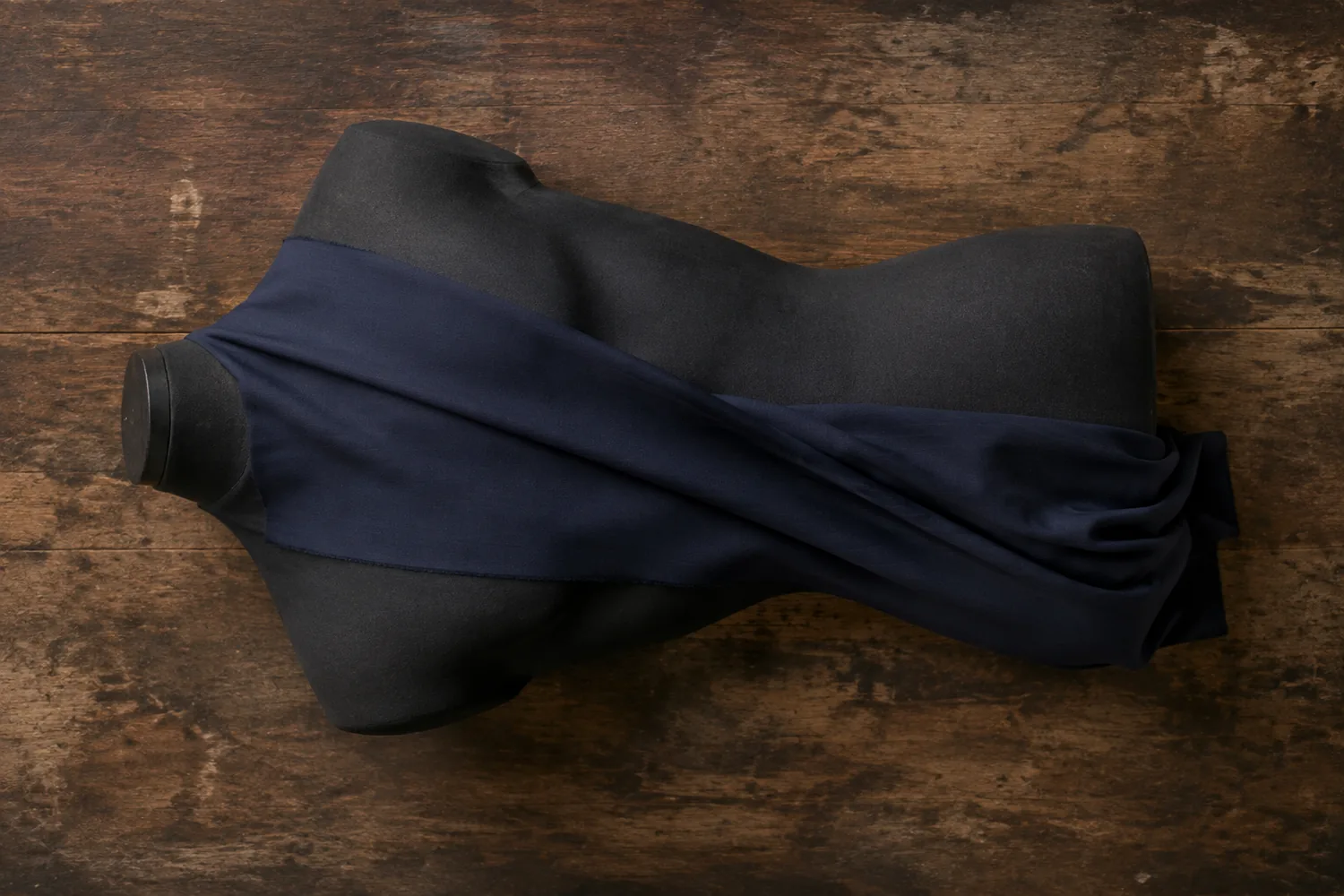
If you train, off-the-rack suits fight your body: broad shoulders, a big chest, a lean waist, and thighs that fill the trouser. The problem isn’t you; it’s that standard sizing is cut for a small “drop” between chest and waist that athletic men blow right past. A suit built to your measurements, not a size chart’s compromise, is the only thing that actually fixes it.
Why do athletic men struggle so much with suits?
Because a rack suit assumes your waist is only about six inches smaller than your chest. Athletic and V-shaped builds run far bigger than that, so a jacket that fits your chest and shoulders swims at the waist, and one that fits your waist won’t close over your chest.
Off-the-rack is patterned for an “average” ratio between chest, shoulder, waist and thigh. Train seriously and none of those hold. You end up buying up to fit the biggest part of you, then living with a tent everywhere else. It’s not a willpower problem or a “buy a nicer brand” problem. It’s a geometry problem baked into the pattern.
What is “drop” and why does it matter?
Drop is the gap, in inches, between a jacket’s chest and its waist. Standard suits are built around a 6-inch drop (a 42 chest with a 36 waist). Athletic builds routinely need a 8-, 10-, even 12-inch drop, and the rack simply doesn’t make it.
So here’s the trap:
- Buy for the chest → the waist is boxy and shapeless.
- Buy for the waist → it pulls and strains across the chest and back.
- Split the difference → you get both problems at once.
A tailor can take a waist in a little, but taking in 6+ inches drags the side seams, distorts the pockets, and throws the whole balance off. The drop has to be built in from the start, not carved out later. See how a suit should actually fit for what “right” looks like.
Why don’t the shoulders ever sit right?
Because trained men carry more through the traps, delts and upper back than any sizing model plans for. A jacket cut to fit your shoulders binds across the back when you reach; one cut to fit your back stands away from the shoulder seam. You can’t win both off the rack.
And the shoulder is the one part a tailor mostly can’t fix. It’s the architecture of the jacket; the seam sits where the pattern put it. Move it and you’re rebuilding the coat, which costs more than it’s worth and rarely comes out clean. This is exactly why we start from your shoulder measurement instead of asking your shoulder to match a stock one on The Drawing Board.
What about the trousers and thighs?
Trousers are scaled from the waist, so if you’ve got developed thighs and a lean seat, the leg has no room. The thigh strains, the seat pulls, the crease disappears, and the break is gone. That’s not an alteration you fix. The fabric was never cut for it.
Buying up a waist size to free the thighs just gives you a gaping waistband you then cinch with a belt, which bunches the whole front. The real answer is a trouser cut with your thigh, seat and waist as separate numbers, which is what made-to-measure does by default.
Can a tailor just alter a store suit to fit?
Only within limits. A tailor can trim a waist, shorten sleeves, and hem trousers: small moves on a garment already close to right. What he can’t do is add fabric that isn’t there, re-cut the shoulder, or turn an average-drop pattern into an athletic one.
Think of alterations as fine-tuning, not reconstruction. If the base pattern is wrong for your build, no amount of pinning saves it. That’s the honest line we draw at the bench: we’ll tell you when a suit is worth altering and when you’re throwing money at a lost cause. More on that in when off-the-rack won’t work.
So what actually fixes it?
A suit made to your measurements, because the ratio problem disappears. Your chest, shoulders, waist, seat and thigh each get their own number instead of being forced onto one size chart’s compromise. The drop is built into the pattern, so nothing has to be sacrificed to make something else fit.
That’s the whole point of made-to-measure. At your fitting we take the full set of measurements, look at how you carry your shoulders and stand, and cut fabric that’s shaped for a body like yours: broad up top, lean through the middle, strong in the leg. You pick the fabric, we handle the geometry. If you want the difference between routes spelled out, read bespoke vs made-to-measure vs off-the-rack.
You don’t need to hide your build under a boxy jacket or apologize for your thighs. A suit should follow the shape you worked for. If you’ve never had one that did, come in for a first fitting and get your real drop measured. Once that number is on paper, the years of “almost fits” finally make sense. Book an appointment or start your suit on The Drawing Board.