A Jewish man's life in clothing: every garment, in the order he grows into it
Updated August 2026 · by Sam Talkar
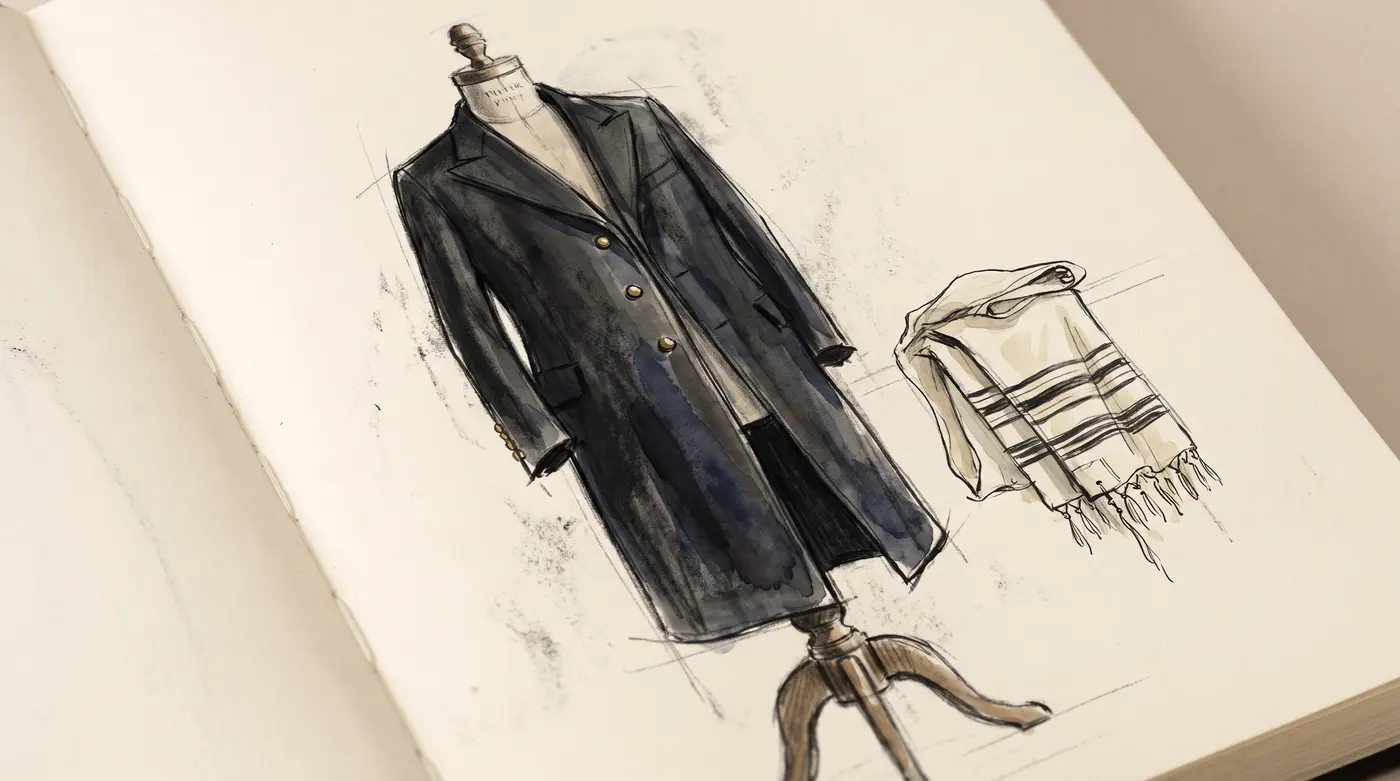
A Jewish man does not assemble his wardrobe the way other men do. It arrives in stages, and each stage is a threshold. At three he receives his first kippah and his first tzitzis. At bar mitzvah come tefillin and, usually, the first suit cut for him rather than handed down. As a bochur he grows into a rekel or a kapota. At his wedding he puts on a kittel, and in most Ashkenazi homes he receives his tallis. None of it is bought all at once, and none of it is arbitrary.
This is the map of that arc. Each stage links to a full guide, and the whole thing is written from the bench: what the garment is, what it means, and what actually matters when someone has to make one that fits.
One thing to say plainly at the start. Sam is a tailor, not a rav. Minhag varies enormously between Chassidish, Litvish, Yekkish and Sephardi homes, and between families inside each of them. Where this series describes a custom, it describes what is commonly done, never what you personally should do. For that question, ask your rav. It has never been the tailor’s call.
At three: the first kippah and the first tzitzis
The arc opens at the upsherin, the ceremony at three where a boy’s hair is cut for the first time and his peyos are left. In Chassidish and many Sephardi homes this is the day he first puts on a kippah and a pair of tzitzis. It is his first mitzvah and his first garment, and the two arrive together.
The custom is not universal. Many Litvish and German families mark the age without the haircut ceremony, and the boy simply begins wearing a kippah and tzitzis when he is ready. Either way, three is when the clothing starts.
The upsherin wardrobe: what a boy actually needs →
From three onward: the two garments he never takes off
Everything else in this series is occasional. The kippah and the tzitzis are daily, and he will wear some version of both for the rest of his life. That makes them worth understanding properly rather than replacing badly every few years.
The tzitzis, or tallis katan, is the four-cornered garment worn under the shirt. The real decisions are wool against cotton, the fit across the shoulders, and how it sits under a dress shirt without showing through.
Tzitzis explained: wool, cotton, fit and care →
The kippah is the one garment that reads across a room. Velvet, suede, knit and felt are not interchangeable styles, they are communal signals, and most men learn to read them long before anyone explains it.
The kippah guide: materials, sizing and what each one signals →
At bar mitzvah: the first suit that was cut for him
Thirteen is the first time most boys are measured. Until then a suit is bought a size up and grown into, or passed down from a brother. At bar mitzvah it is worn to be looked at, standing at the bimah in front of everyone he knows, and that changes what it needs to do.
The practical problem is that a thirteen-year-old is a moving target. He may grow several inches inside a year. A suit made with real seam allowance can be let out twice and still hang correctly, which is the difference between one suit and three.
Through the teenage years: the white shirt
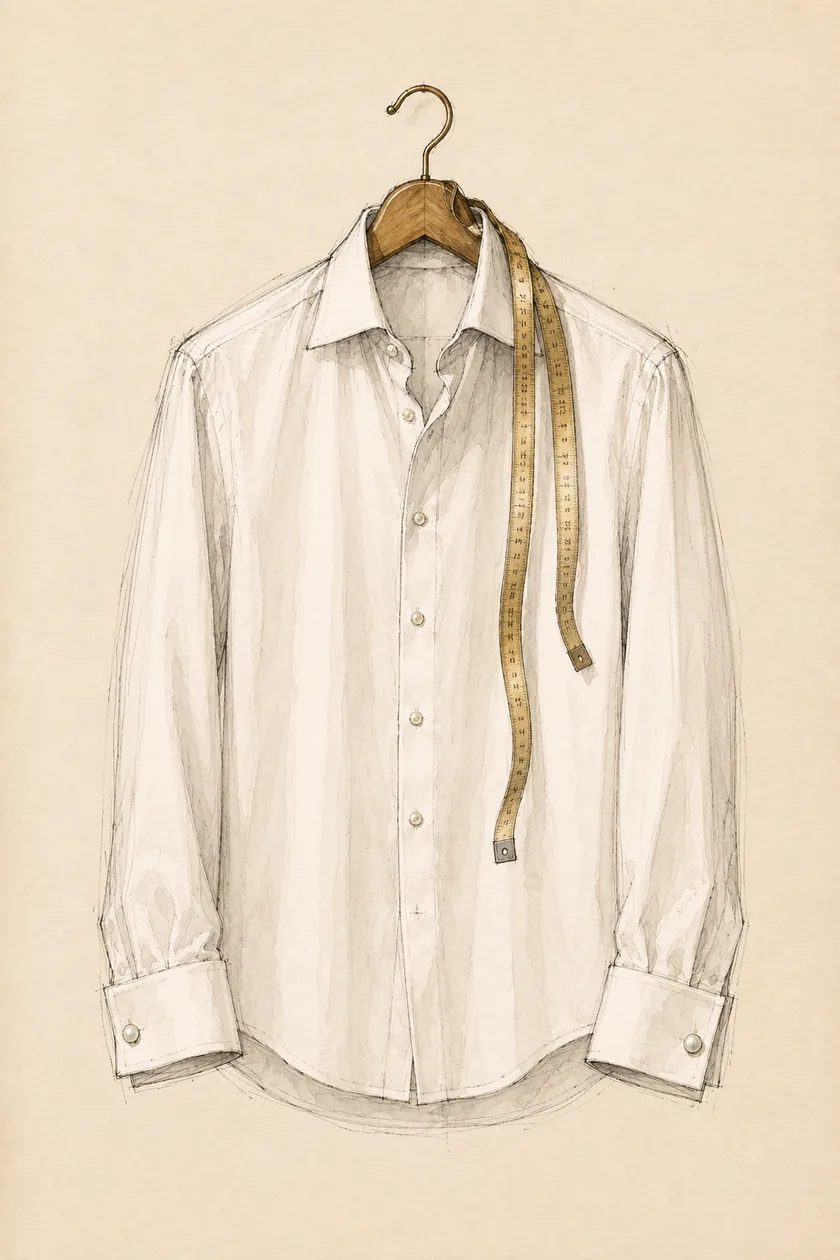
The white shirt is the quiet workhorse of the whole wardrobe. In most homes it is what Shabbos looks like, and in many Chassidish homes it is what every day looks like. A boy will go through a great many of them.
Because it is worn constantly and washed constantly, cloth choice matters more here than on almost anything else. The difference between a shirt that stays crisp for three years and one that goes grey and limp by Pesach is entirely in the weave.
The white shirt: cloth, collar, fit and keeping it white →
As a bochur: the rekel and the kapota
Somewhere in the later teens a boy starts dressing like a man. In Chassidish homes that means a long coat, and which coat depends on the day rather than on where he comes from.
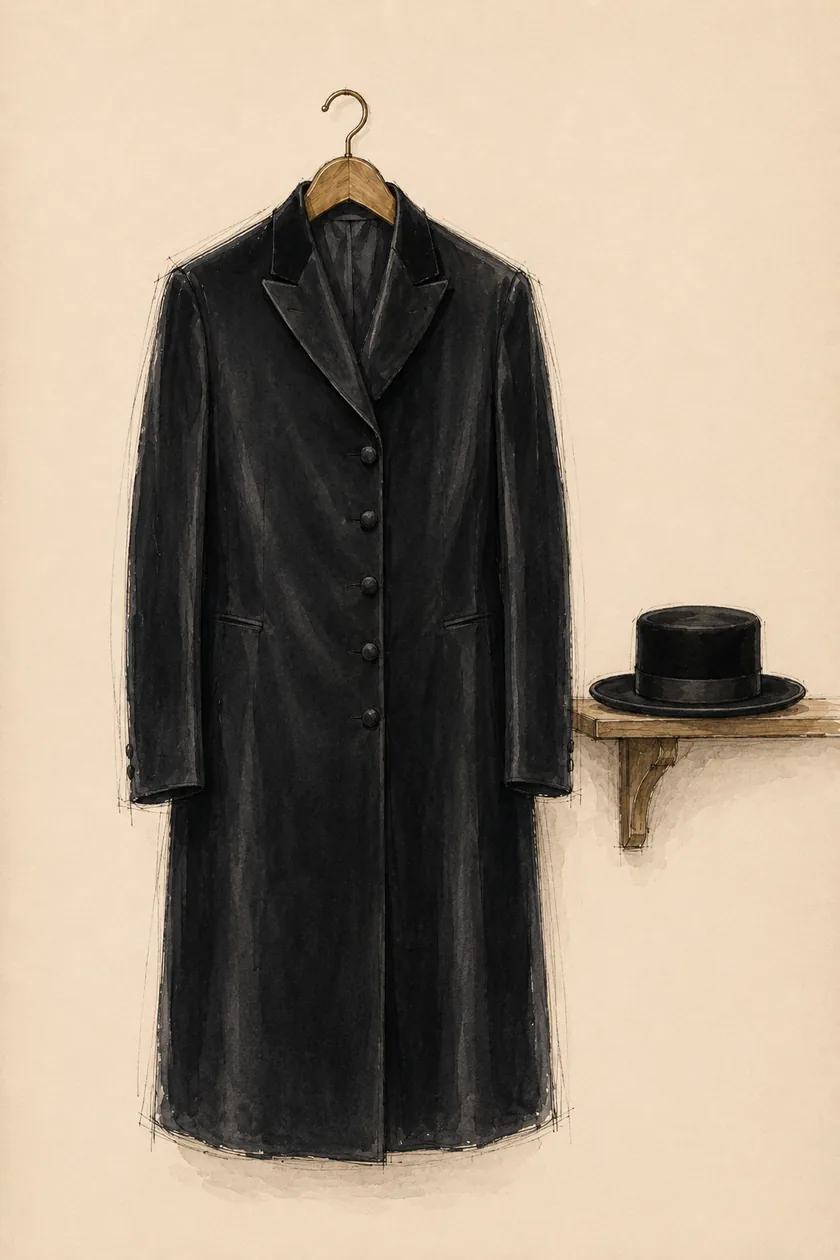
The rekel is the everyday one, cut essentially like a long suit jacket. The kapote, or frock, is built to its own pattern with a waist seam and a back slit, and it is worn for Shabbos in many communities. They are not the same garment in different cloth, and you cannot make one by lengthening the other.
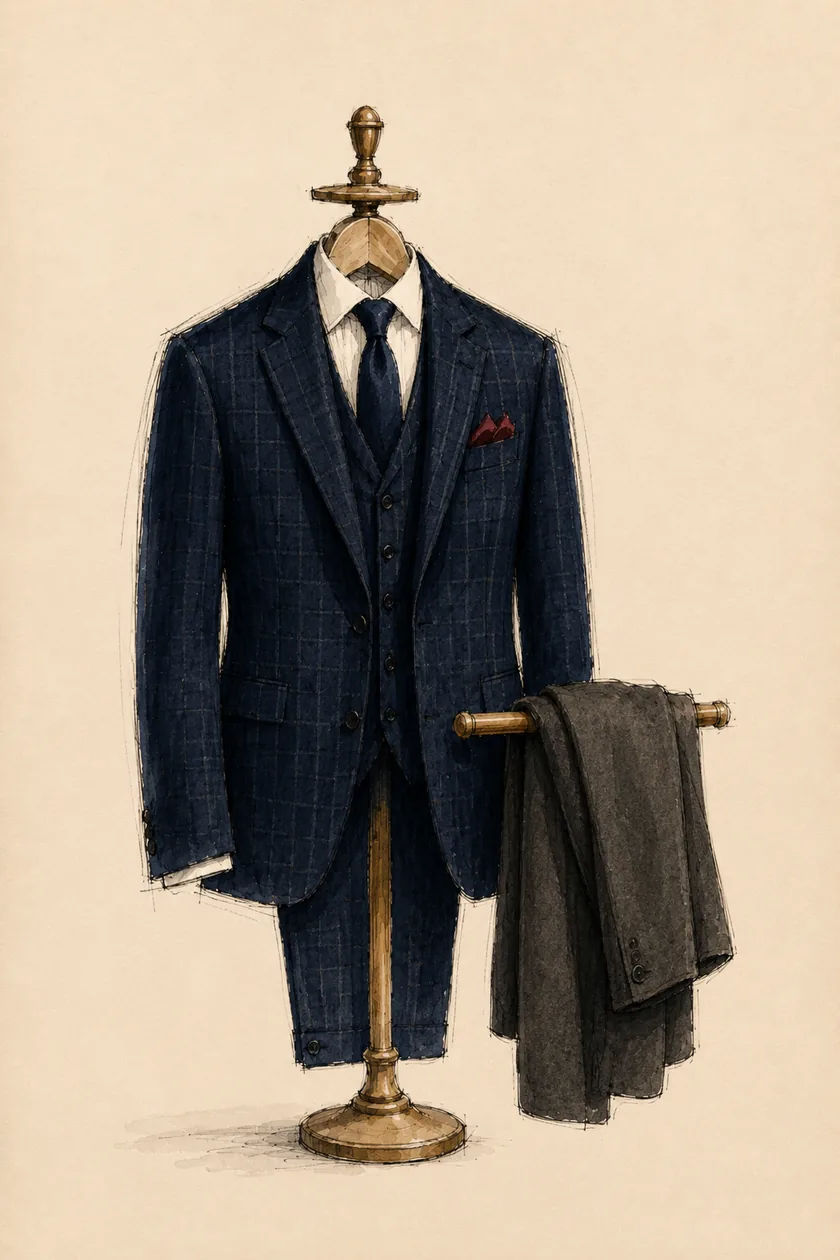
In Litvish and yeshivish homes the long coats are much less common day to day. There a young man is usually growing into a well-cut dark suit instead, which is its own skill and its own fitting problem.
Kapota against rekel: the difference, plainly → · The navy suit →
For Shabbos and Yom Tov: the bekishe
In Chassidish homes, Shabbos and Yom Tov call for a bekishe, the silk or satin coat that separates the week from the day. It is the most visually distinctive garment in the entire arc and the one most often made badly, because the cloth is unforgiving and the cut has to hang absolutely straight.
Building the whole Shabbos wardrobe, rather than one piece at a time, is its own subject.
At his wedding: the kittel, and the tallis
The wedding is where the arc turns. A chosson has a full wardrobe to think about, and two garments in it are unlike anything he has worn before.
The kittel is the plain white robe he wears under the chuppah, the same garment worn on Yom Kippur and at the seder. It is deliberately simple, and its simplicity is the entire point.
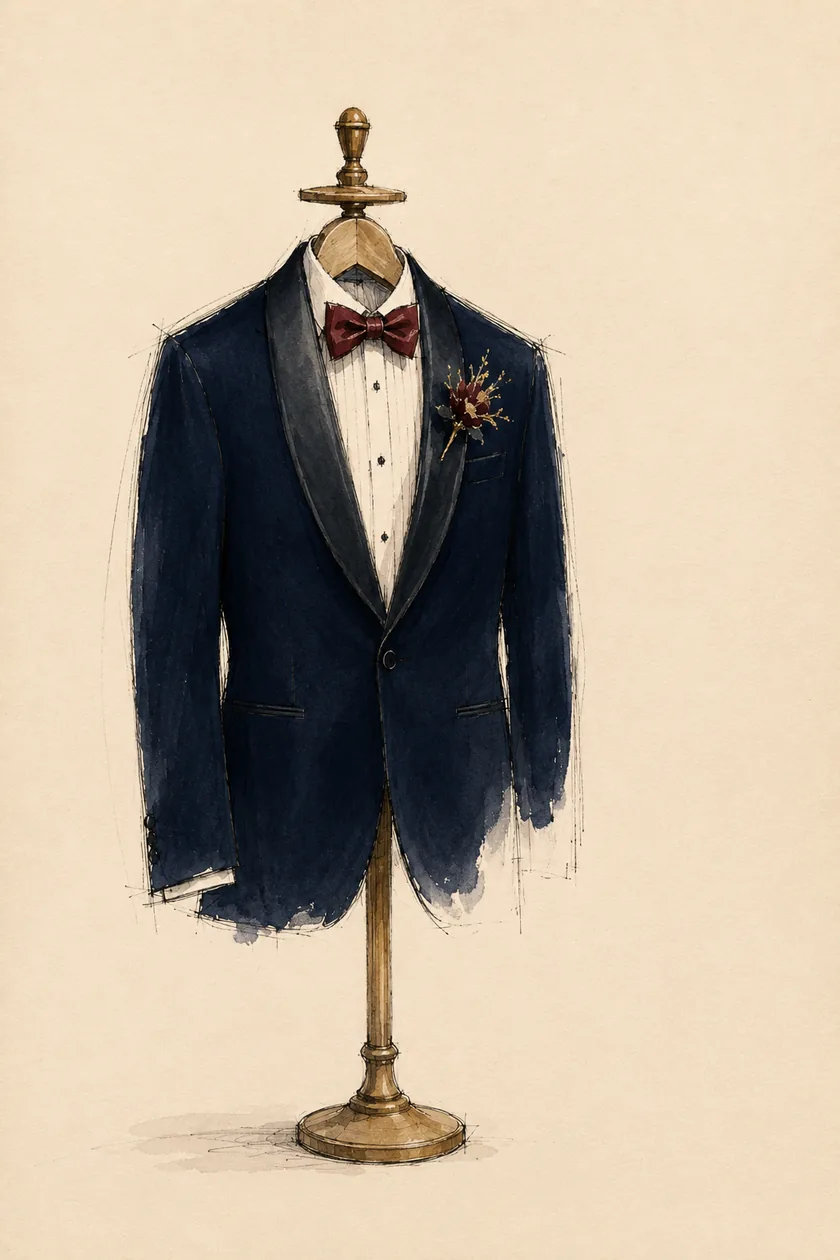
The kittel guide → · What the chosson wears →
The tallis is the one that surprises people. In most Ashkenazi communities a man does not wear a tallis gadol until he marries, which means his wedding is the first time he puts one on. It is very often a gift from his kallah’s family. Sephardi and German communities do it differently, and boys there wear one from bar mitzvah.
When a man starts wearing a tallis →
And after
Nothing new arrives after the wedding. What changes is that the garments start getting replaced, altered and handed down, which is most of what a tailor actually does. A kittel is worn for decades. A bekishe is recut as a man’s shoulders change. A bar mitzvah suit gets let out for a younger brother.
That is the honest shape of this work. Very little of it is making something from nothing. Most of it is keeping good clothes in service through a life that keeps changing around them.