For ten thousand handshakes.
The business suit is a uniform a man wears for thirty years of his working life. It should fit him from across the room and from across the negotiating table. Sam draws yours so it does both.
★ 4.7 · 150+ Google reviews · First fitting free & no-obligation · A firm price up front
The boardroom cut for the body.
Navy. Charcoal. Glen check. The grammar of a working wardrobe, and the grammar that, when correct, lets the wearer disappear into the work.
A business suit is judged differently from a wedding suit. Nobody photographs it. Nobody compliments it directly. It earns its keep in the weight it lends a meeting, the way it sits on a man's shoulders when he stands up to speak, the way it travels in a carry-on without losing its shape.
Sam's house cuts a working suit closer to the English drape than the Italian sleek: a soft shoulder that won't fight a jacket-on-the-chair-back, room enough for a shirt cuff to show, trousers with a half break so the line of the body stays clean from heel to lapel.
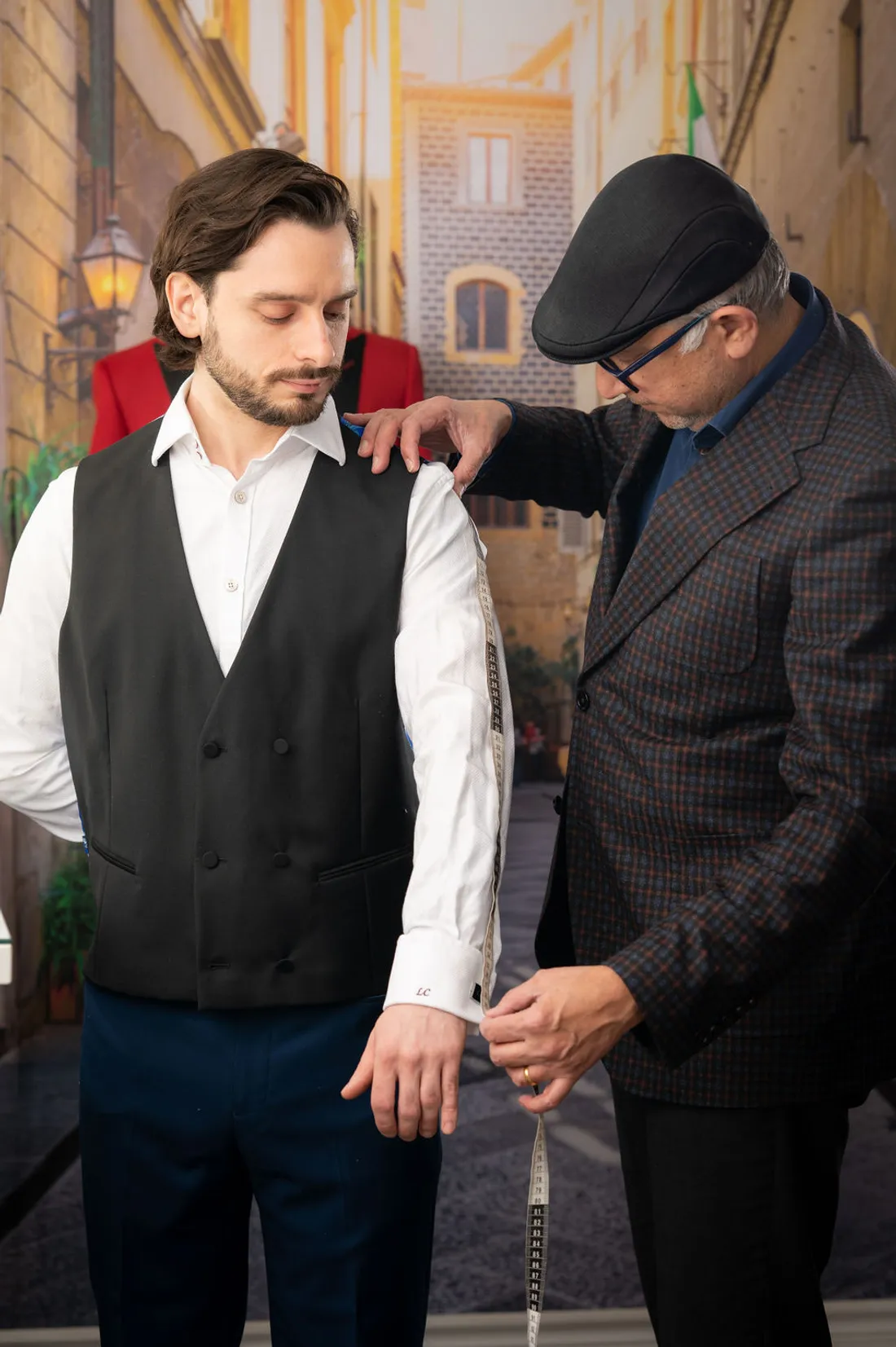
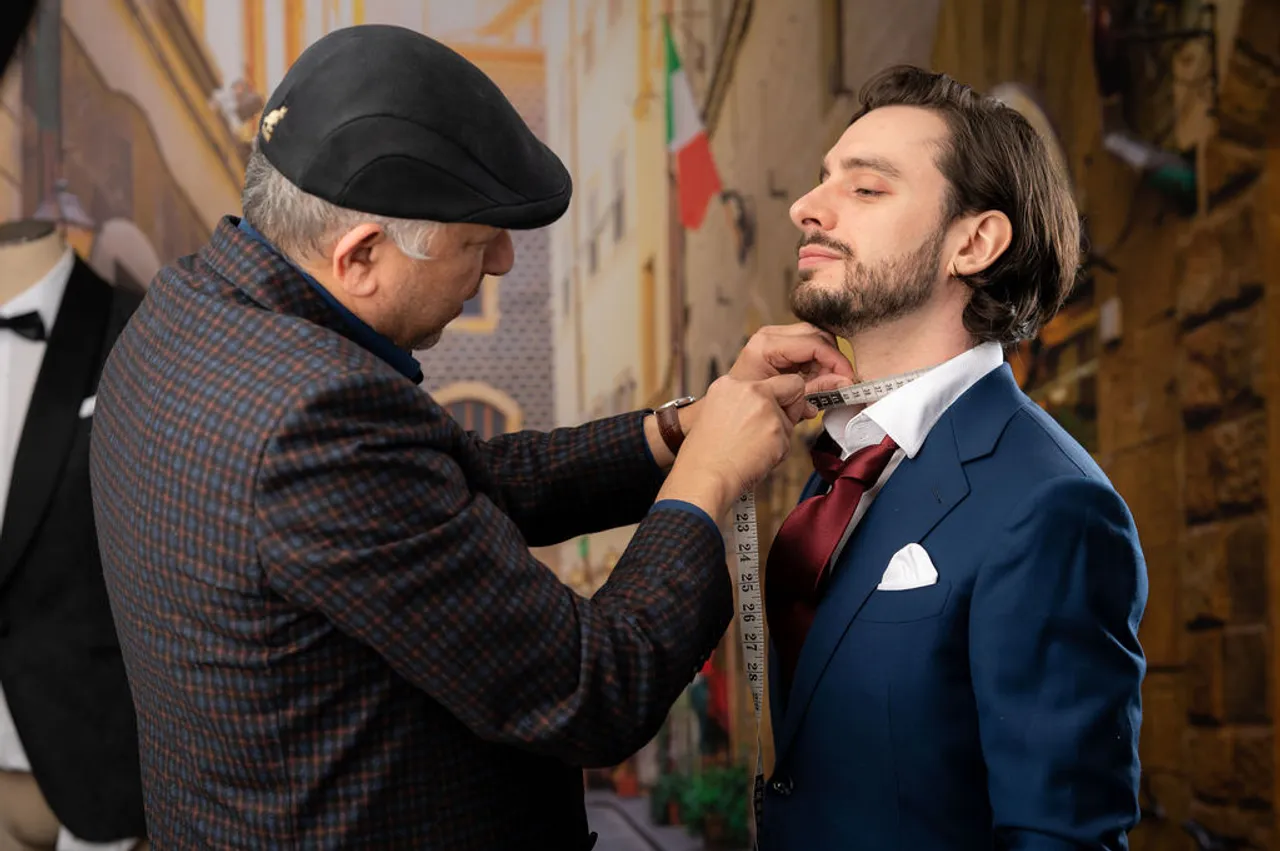
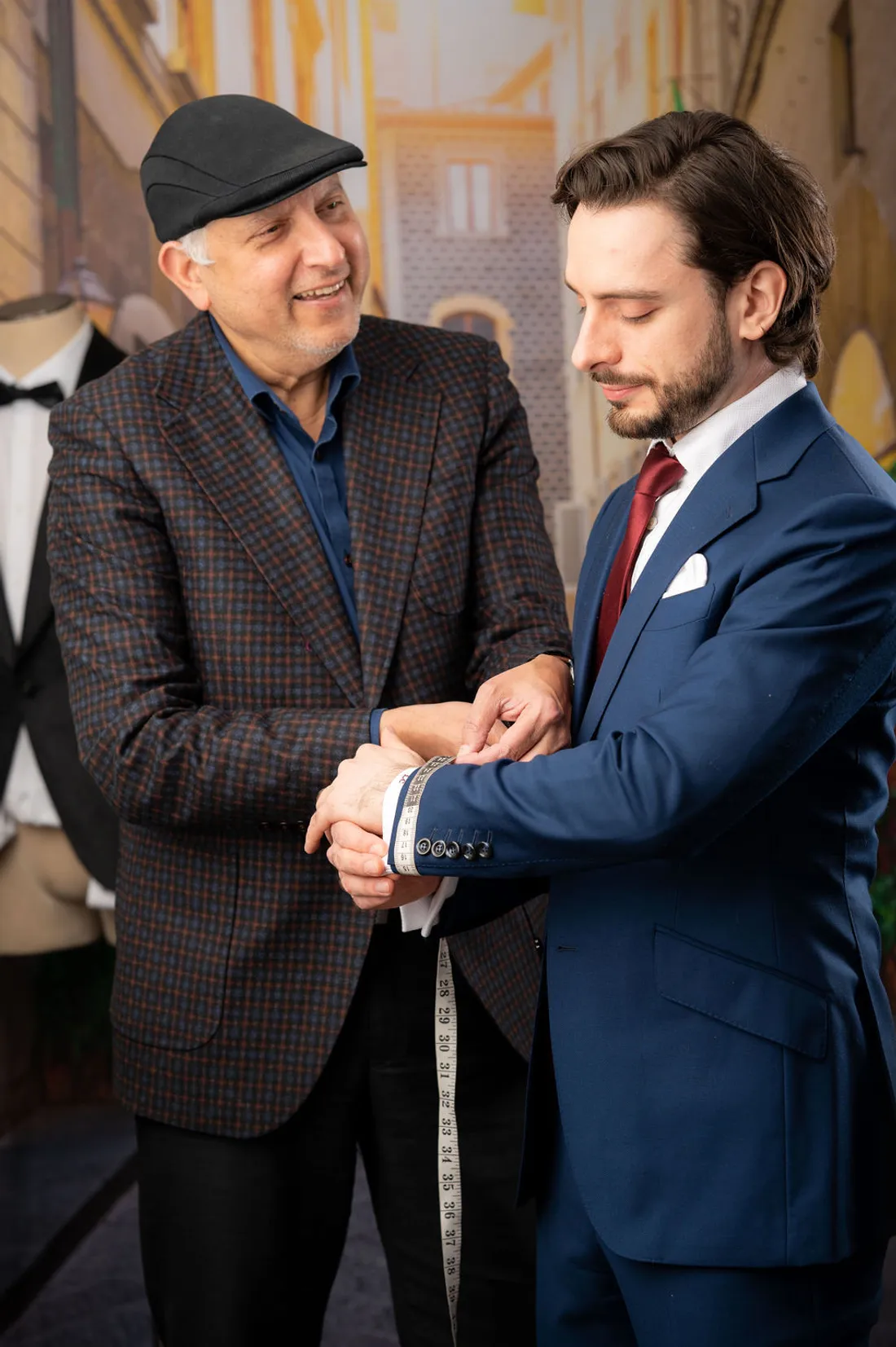

Dressing for your profession.
Every field reads a suit differently. What earns trust in a courtroom would overdo it on a sales call, and what works on Bay Street isn't what works showing houses all weekend. Here's how Sam dresses each.
The working wardrobe.
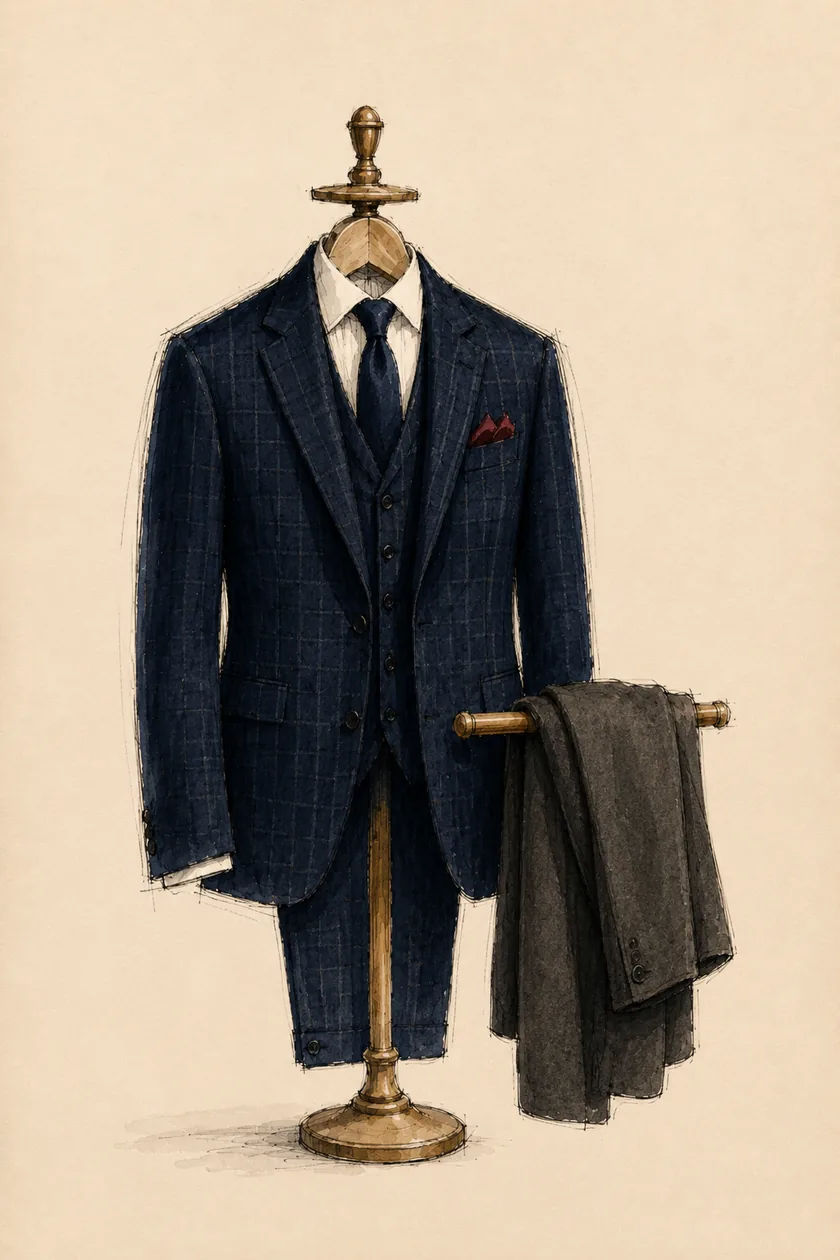
Plain Navy
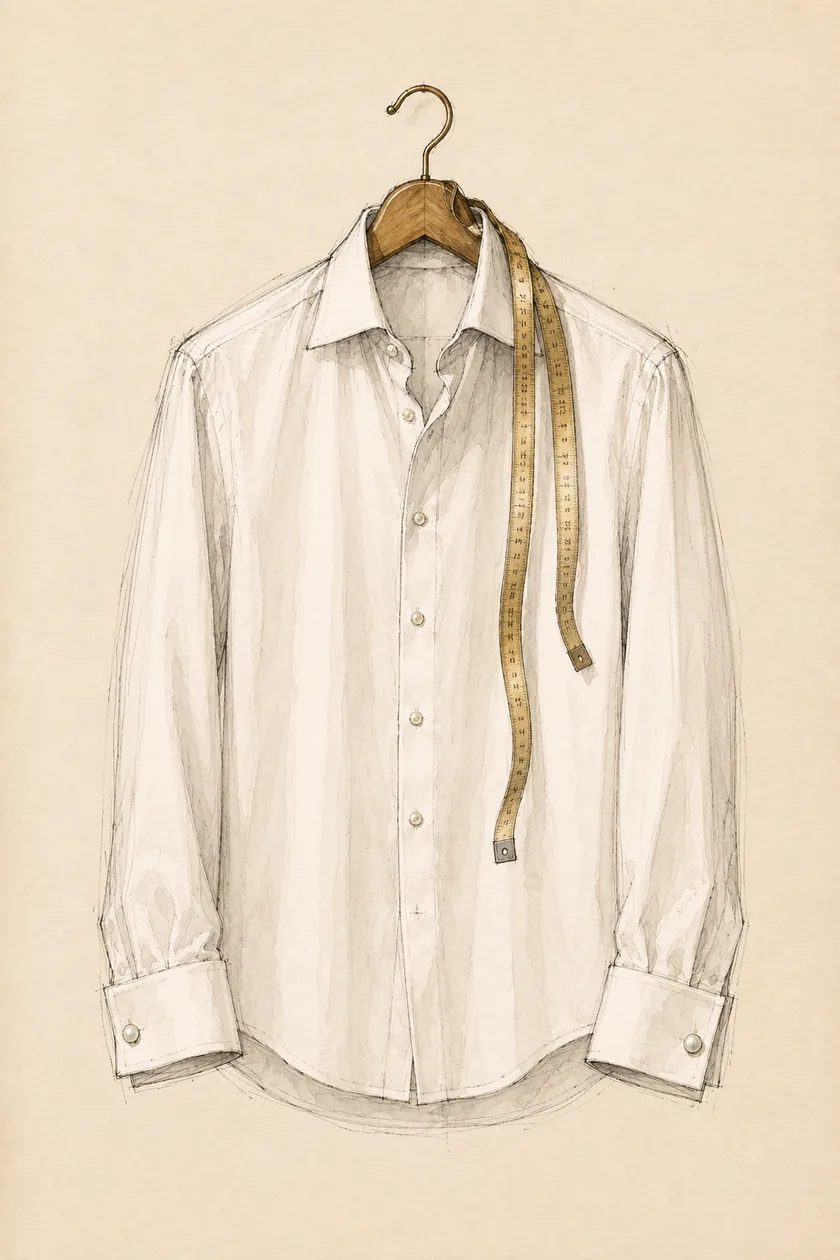
The everyday weapon. Worn with a white shirt and silk knit tie.
Charcoal Chalk
A fine white stripe widens the shoulders by a half-inch. Authority cloth.
Glen Check
Earned. Worn after partnership. Says establishment, not fashion.
Navy Birdseye
A textured weave that reads as navy across the room and complex up close.
Oxblood Jacket
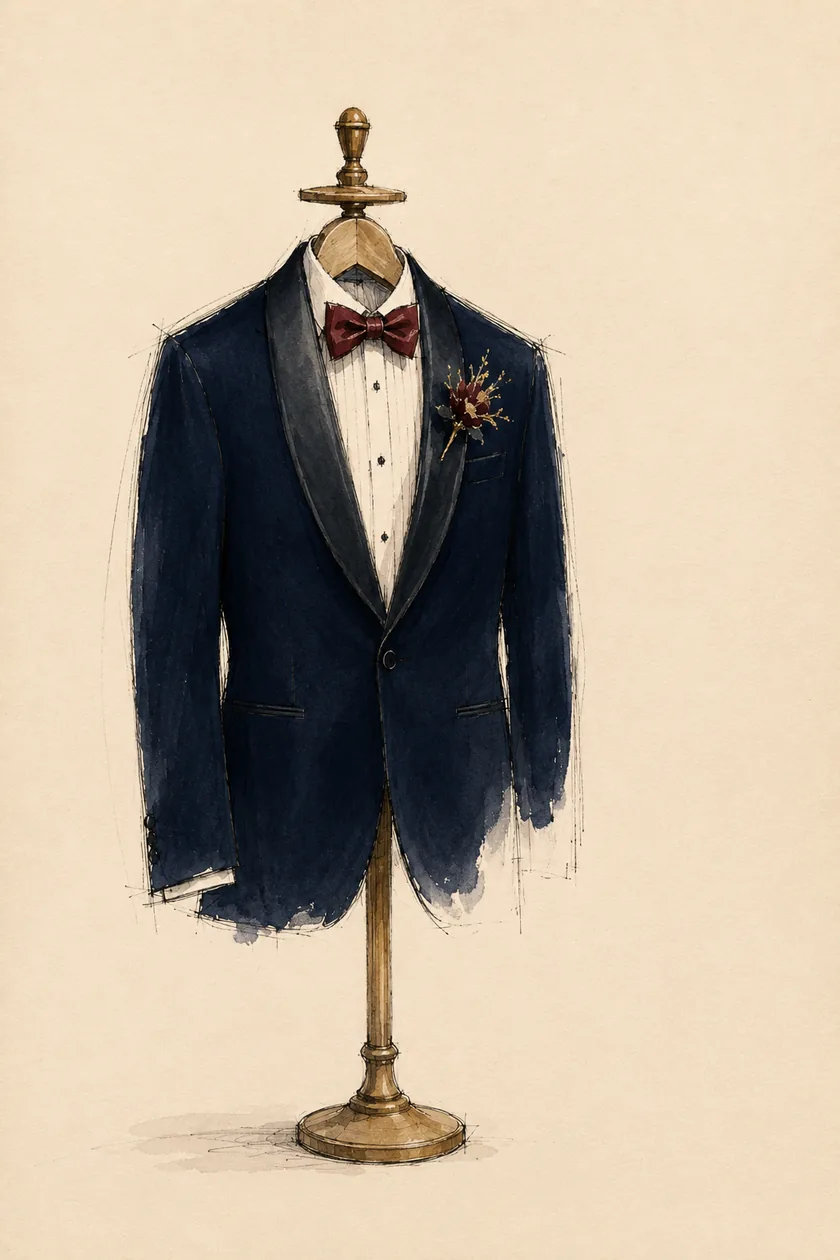
Sport coat for the half-day Friday. Worn with grey wool trousers, no tie.
Small details, worn for years.
A soft shoulder
No structured padding, no English chest. A natural shoulder that survives a jacket-off-the-back-of-the-chair without buckling at the seam.
A working sleeve
Functional buttonholes, kissing or stacked. The sleeve hem cut to show a quarter-inch of shirt cuff when the arm is at rest.
A trouser that travels
A half-break at the shoe. Side adjusters instead of a belt where possible. Cut to fold neatly into a carry-on without losing its line.
A lining you'd defend
Bemberg or cupro, lightly woven, oxblood or hunter green by default. The lining is the only place a working suit is allowed to be loud.
Pockets that hold
A ticket pocket for the loyalty card. A pen pocket cut into the inside breast. Slant lower flaps that don't pull when you're seated for three hours.
The annual press
Bring it back once a year. We'll re-press, replace a button, refresh a lining. The suit ages with you, not against you.
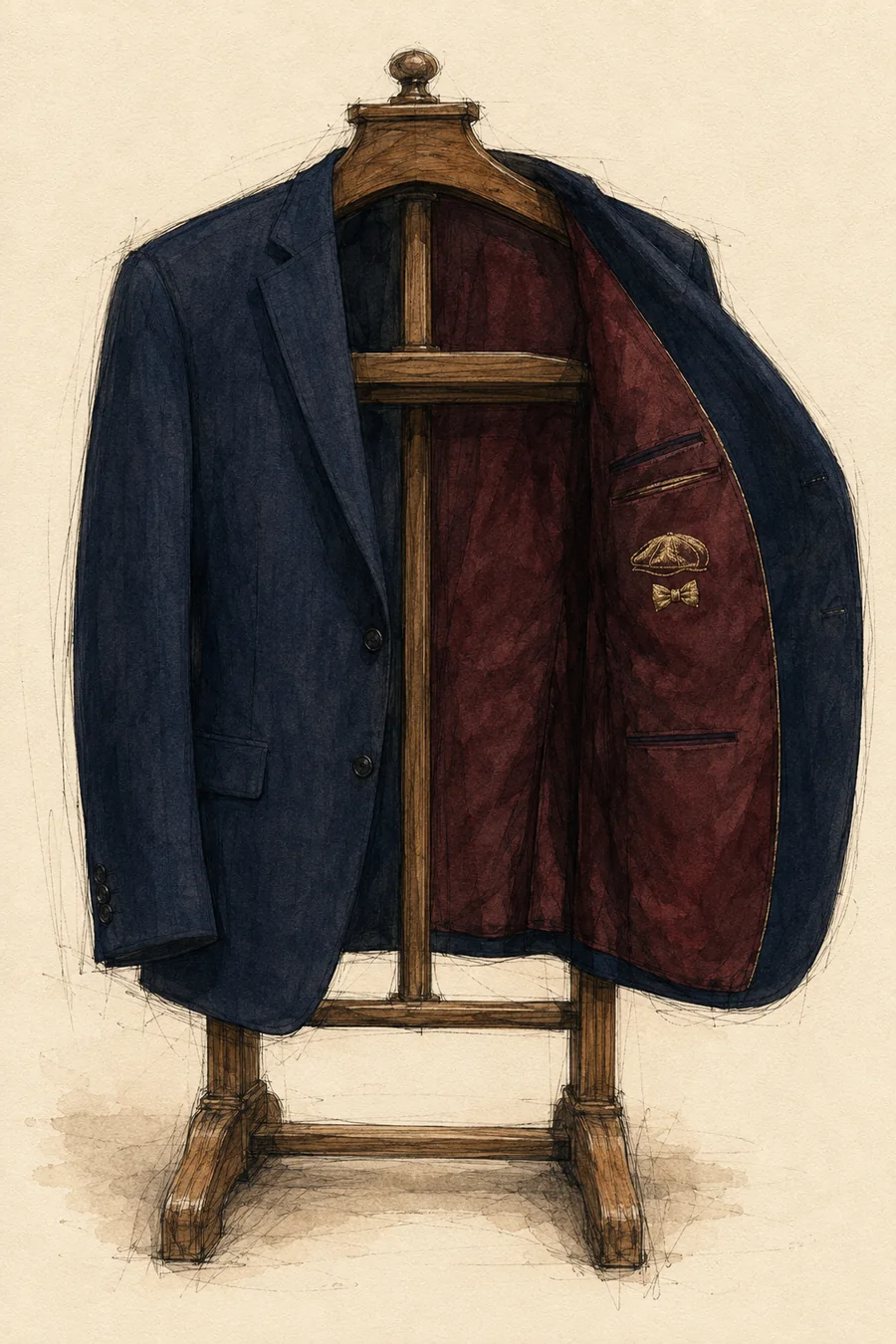
The lining: where a working suit gets personal.
The outside of a business suit should keep its voice down: navy, charcoal, nothing shouting across the boardroom. The inside is where it's allowed to have a private opinion. The lining is the one place a working man gets to be bold, because only he knows it's there.
We line in breathable cupro (Bemberg™), a regenerated-cellulose lining that lets a suit vent through a long day instead of trapping the heat a synthetic would. Choose the mood: a deep oxblood, a hunter green, a midnight paisley, a fine stripe, or a flash of colour that catches only when you reach for your phone.
Your monogram, woven in
Over the inside breast pocket, we'll add your mark: your initials, a wedding date, a child's name, a family crest, or your own company's logo, embroidered or printed into the lining silk. A small, private signature that turns a suit from a suit into yours. It's the detail a man shows a friend, almost in passing, when he hangs his jacket on the back of a chair.
- Initials or a monogram over the breast pocket
- A date, a name, or a few words that mean something
- A family crest or your company logo, matched to the cloth
- Contrast lining, piping and functional (working) cuff buttons to match
In their own words.
“Always bought my suits off the rack and always struggled with getting a quality suit that fit. A friend recommended I try Sam and I don't think I'll ever switch back. Sam has an extremely wide selection of fabrics and the detail he puts in every suit is truly remarkable. From the fit to choosing my fabric and design, Sam will be my go-to.
Rafi Habs · ★ Google
“My first custom suit by Sam did not disappoint. He's a master of his craft and everything was fully customized with a perfect fit. I would definitely recommend him for any occasion.
Parth Thakkar · ★ Google
“Sam is an amazing tailor and helped me pick out a wicked suit. He's very friendly and will help you step by step.
Alexander Ferrier · ★ Google
Dress for the room you're in.
- The navy suit, and why it is first
- The interview suit
- How many suits a man actually needs
- Canvassed vs fused
- Packing and travelling with a suit
- Cloth for a Toronto year
- How often to dry-clean a suit
- Skipping the Bay Street markup
Good to know.
How many suits do I actually need for a five-day week?
Two will carry a week if the shirts and shoes do their share; three stops anyone noticing a rotation at all. Start with one navy, add charcoal, then the third is whatever your week is short of. Sam will map it with you rather than sell you all three at once.
How long before I have the first suit?
Three to four weeks on the bench, and two to three for shirts. If a date is tight, twelve days is the fastest Sam will go, and only when the cloth is already on hand.
Is the jacket fused?
No. Sam does not fuse suits. Half canvas is the default and full canvas goes into the dearer cloths, which is exactly what keeps a jacket you wear three days a week from bubbling across the chest by its second winter.
What do I pay, and when?
Half when the cloth is chosen, half on delivery, with one firm price agreed before anything is cut. Alterations to get the garment right are part of that price rather than a bill at the end.
Can I reorder without coming in again?
Yes, and that's the point of the pattern. Once it's on file, the second suit and the shirts are a phone call: name the cloth, and you're not measured again.
Do you come to my office downtown?
The studio in Vaughan is where the fitting is properly done: the full range of cloth, the mirrors and the light are all in one room. It's a short drive up from the core, everything is by appointment, and you make the trip roughly once, because the pattern handles everything after.
What is the difference between this and a Bay Street showroom?
Overhead. A showroom in the core bakes the lease, the lounge and the receptionist into every ticket, and none of it changes how the shoulder sits. Same wools, same canvassed construction, without the postcode premium.
Plan the whole week, once.
- The visit Seventy minutes. We map the rotation, the seasonal cloths and the shirts to match.
- On the bench Three to four weeks a suit, two to three a shirt.
- Payment Half when the cloth is chosen, half on delivery.
- Alterations Part of the price. Bodies change; the suit follows.
- Next time Your pattern is kept, so a second suit is a phone call.
Most men arrive wanting one suit and leave with a three-year plan. Bring the suit you wear most and Sam will tell you what it is costing you.
Build a working wardrobe.
Most working men start with one suit and end with three. We can plan the rotation, the seasonal cloths, and the shirts to match, all in a single seventy-minute conversation.