Straight answers.
Everything men actually ask me: cost, timing, whether it's worth it, fit, weddings, fabric, coming to your door. No sales gloss. If yours isn't here, call and I'll answer it straight.
Cost & value
How much does a custom suit cost in Toronto?
It depends on the fabric and the construction, and I would rather quote your garment than a stranger's. I keep fabric across three price shelves and I show you all three on the first visit, then give you one firm number for the exact garment you have chosen before anything is cut. Alterations are part of that price, not an extra. The first consultation costs nothing, so you can get the real figure without committing to a thing.
Why does a custom suit cost more than one off the rack?
You're paying for a pattern cut to your body, better fabric, hand-work, and fittings, not a factory average plus a brand markup. A good custom suit also lasts and re-fits for years, so the cost per wear is often lower than chasing cheap suits that never quite fit.
Is a bespoke suit actually worth it?
Yes, if you have a hard-to-fit body, a wedding coming, or you wear a suit weekly. For a suit you'll wear twice a year, made-to-measure is the smarter spend, and I'll tell you so. I'd rather you buy the right tier once than overspend to impress me.
Do you have options for smaller budgets?
Always. I keep fabric across three price shelves and I never push the top one. My reviews say it plainly: I don't upsell. Tell me the number you're comfortable with and we'll build the best suit inside it.
What makes one suit more expensive than another?
Three things: the fabric (a Super 150s or a mohair costs more than a house worsted), the construction (full canvas and hand-work over fused), and the detail (working cuffs, hand-finished buttonholes, bespoke lining). We decide together where the money is worth it for you.
Do you take a deposit?
Half at the start, half on delivery. The first half covers the fabric, which is cut to you and can't be resold. Nothing is ordered until you have the full price in front of you and you're happy with it.
What makes the best custom-tailored suit?
The best custom-tailored suits share four things: a pattern drafted to your own body rather than an adjusted factory size, full or half floating canvas instead of fused construction, fabric chosen for how you actually live, and hand-finished details. Just as important is a tailor who keeps your measurements on file and re-fits the suit as your body changes. That's how I work in Vaughan.
Are custom suits worth it?
Yes, if you have a hard-to-fit body, a wedding coming, or you wear a suit weekly. For a suit you'll wear twice a year, made-to-measure is the smarter spend, and I'll tell you so. I'd rather you buy the right tier once than overspend to impress me.
Should I just buy off-the-rack and have it altered?
Sometimes, yes, and I'll tell you when. If a rack suit fits your shoulders and balance, alterations can finish the job for less. If it doesn't, no alteration will save it, and made-to-measure is the right answer. Bring your build; I'll give you the truth in five minutes.
I only need a suit for interviews and the occasional wedding. What should I spend?
Then don't overspend. One well-fitted suit in navy or charcoal covers both, and fit matters far more than price tag. Tell me your number and I'll build the best suit inside it. A modest suit that fits beats an expensive one that doesn't, every time.
Bespoke, made-to-measure & off-the-rack
What's the difference between bespoke, made-to-measure and off-the-rack?
Off-the-rack is cut to an average and altered toward you. Made-to-measure adjusts a factory's existing pattern to your numbers. Bespoke starts with no pattern at all: a fresh one is drafted for your body alone. Different price, different fit, different life.
Which one do I actually need?
Most men don't need the most expensive option, just the right one for the occasion and budget. A weekly-worn wardrobe or a tricky fit leans bespoke; an occasional suit leans made-to-measure. That's the first conversation we have, before any fabric.
Do you make bespoke or made-to-measure?
Both routes, so I can meet whatever budget you bring. When the fit or the occasion calls for the full-custom treatment we go that way; when made-to-measure is the smarter spend, I'll say so. You get the truth about which suits you, not a hard sell.
What is the difference between made-to-measure and bespoke?
Off-the-rack is cut to an average and altered toward you. Made-to-measure adjusts a factory's existing pattern to your numbers. Bespoke starts with no pattern at all: a fresh one is drafted for your body alone. Different price, different fit, different life.
Can you just fix a suit I already own?
Often, yes. Sleeves, hems, waist, and trouser work are straightforward, especially for existing clients. Some suits are worth altering; some are cheaper to replace than to rescue. Bring it in and I'll tell you straight which one you've got.
First suit: off-the-rack or made-to-measure?
If standard sizes fit your shoulders, off-the-rack plus good alterations is a fine first suit. If they never quite have (athletic drop, long arms, short rise), made-to-measure costs a little more and ends the struggle. The first consultation is free either way, so ask me before you buy anything.
What does 'fully canvassed' mean, and do I need it?
The canvas is the inner layer that gives a jacket its shape. Fused jackets glue it; canvassed ones float it, so the fabric drapes and moulds to you over the years instead of bubbling. I don't fuse suits. Half canvas is my default, and full canvas goes into the dearer fabrics where you'll feel the difference.
Another tailor altered my suit badly. Can you fix it?
Often, yes. Bring it in and I'll tell you what can be recovered. Some work can be reversed or re-done; some can't, especially if fabric was cut away. Either way you'll leave knowing exactly where you stand, at no charge for the look.
Timeline & fittings
How long does a custom suit take?
About three to four weeks for a suit, and two to three for a shirt. Once your pattern is on file the clock doesn't change much, but everything before the cutting does: no measuring, no guessing, no starting from zero.
How far ahead should I order a wedding suit?
Start 9–12 months out for a wedding. That's not construction time; it's breathing room for fabric choices, coordinating a party, and a fitting with no clock on it as the date closes in.
Can you do a rush order?
Twelve days is the fastest I'll go, and only if the fabric is on hand and my bench allows it that month. Call me and I'll tell you straight whether I can do it justice in the time, rather than promise and disappoint.
How many fittings will I need?
Usually one. The garment comes to the fitting finished and is corrected on your body. Where a build is harder to fit, Sam makes a sample suit first and tries that on you before the good fabric is cut. Reorders from a kept pattern need no fitting at all.
I'm planning to lose (or gain) weight. Should I wait before ordering?
If a big change is coming soon, wait until you're near your steady weight; fabric cut to a body in motion fights you later. If the date can't move, we cut with seam allowance and I adjust at the fittings. Tell me your plans and we'll time it right.
Your first fitting
I've never done this. What happens at the first appointment?
We talk, I measure, we choose fabric. About 90 minutes, with coffee and no clock. The first consultation is free, and you leave with a plan, not a bill.
Do I need to know what I want before I come?
Not at all. Most men don't. Bring the occasion and a rough budget; I'll bring a career's worth of knowing what works. If you own a jacket you love, bring it; we'll measure what you already like.
What should I bring or wear?
Wear or bring the shirt and shoes you'd pair with the suit, so the proportions are true. A jacket you wear often helps too. Otherwise, just yourself.
How many measurements do you take?
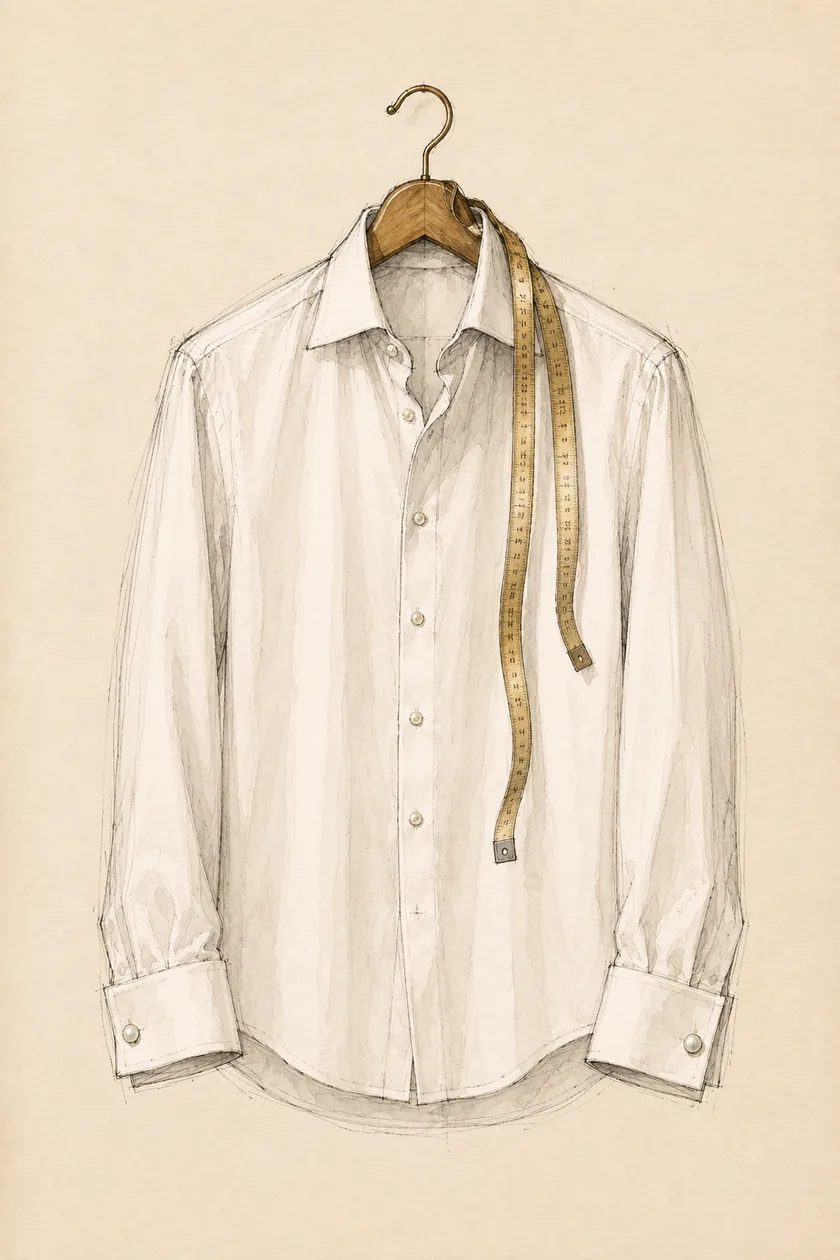
Twenty-six, by hand, plus notes on your posture, stance and shoulder slope. They're re-checked at every fitting and kept on file so your next garment starts from them.
Does the first consultation cost anything?
No. The first conversation is free and candid. If we work together, you get a firm quote before any fabric is cut.
Fit
How should a suit jacket fit?
The shoulder seam should sit on the edge of your shoulder with no divot or overhang; the chest should close without pulling; and about a quarter-inch of shirt cuff should show. Get the shoulders right and everything else follows.
I'm hard to fit (athletic, tall, shorter, or bigger). Can you help?
That's exactly who bespoke is for. A drop from athletic shoulders to a trim waist, a long or short rise, a fuller chest: a pattern drafted to you handles what off-the-rack can't. Hard-to-fit bodies are most of my week.
Can a suit make me look slimmer or taller?
It can. A clean shoulder line, the right button stance and the right trouser break lengthen and streamline you. It's tailoring, not a trick, and it only works when the suit is cut to your actual body.
How should trousers fit and break?
Comfortable at the waist without a belt cinching them, and a break at the shoe that's your call: full, half, or none. I'll show you each on you before we finish the hem.
Can suit shoulders be altered?
Barely, and rarely well. Shoulders are the one part of a jacket that's built, not adjusted. That's why every fit guide says buy for the shoulders. If nothing on the rack sits right there, that's not a flaw in you; it's the reason made-to-measure exists.
Weddings
Can you coordinate the whole wedding party?
Yes. Up to ten groomsmen, the fathers and the groom, drawn from the same fabric with consistent lapel, button and pocket detail. The aim is cohesion without uniformity: everyone matches, everyone still fits.
Some of my groomsmen live out of town. Can they still be measured?
Yes. I set up remote measuring with a guide and a video walkthrough, then fit them when they arrive. It's how most wedding parties with out-of-town members get done.
Tuxedo or suit for my wedding?
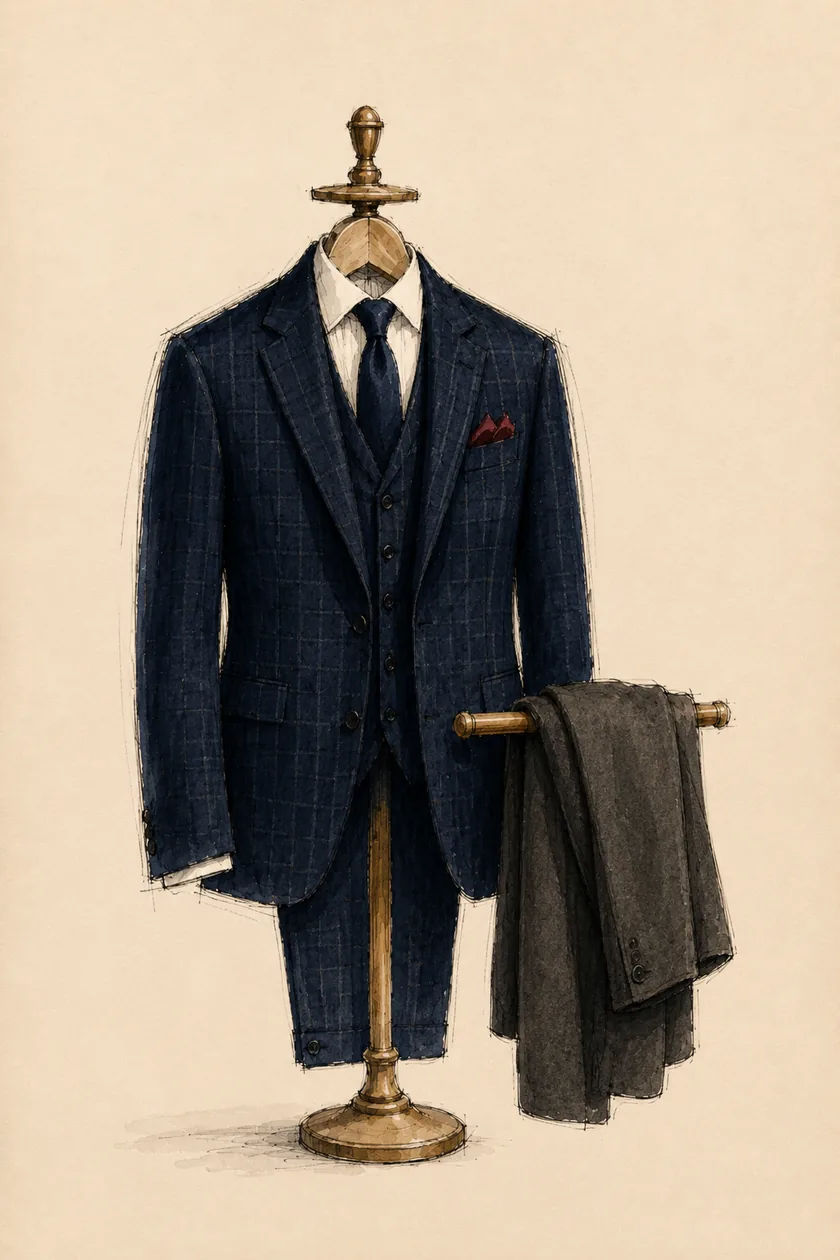
A tuxedo for a formal or evening wedding; a three-piece suit for most others, and more wearable afterward. Tell me the venue, season and time of day and I'll steer you; a suit you'll wear again is rarely the wrong answer.
Should I match the bride and bridal party?
Coordinate, don't match exactly. We tie the lining, tie or pocket square to the party's colours so the group hangs together in photographs without looking like a uniform. Bring a photo of the gown and the palette.
Custom or rent for the wedding?
Rentals fit a crowd, not a person, and it shows in the photos you keep forever. A custom suit costs more but fits only you and stays in your wardrobe. For a day your grandchildren will see in pictures, it's usually worth it.
Do you make custom tuxedos?
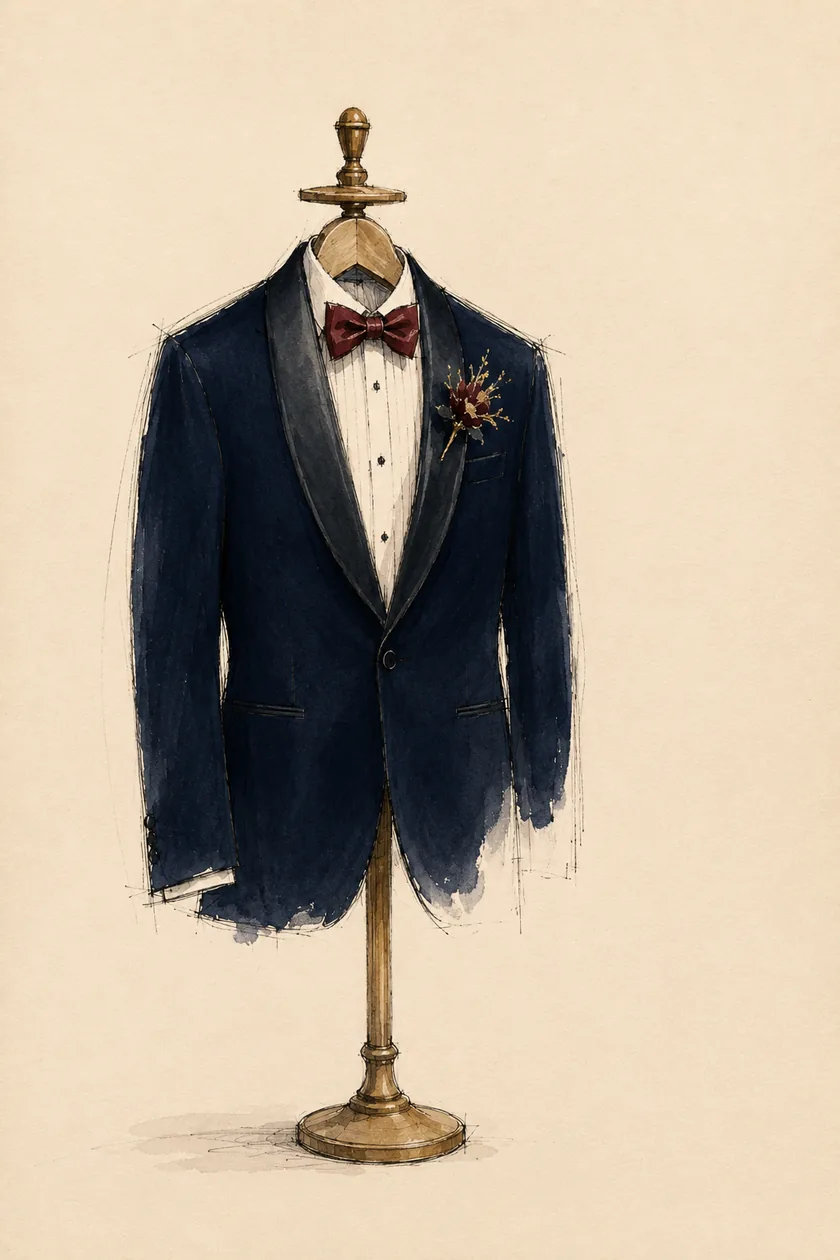
Yes. Midnight and black tuxedos with satin peak or shawl lapels, made to your measurements at the Vaughan studio. A tuxedo is the garment where fit shows most, which is exactly why it's worth having made rather than rented.
Why do rental tuxedos fit so badly?
Because a rental is cut for the average of every man who wore it before you. Satin lapels and a clean black line make a poor fit more visible, not less; every pull across the chest and gap at the collar shows. A made tuxedo sits clean because it's built to your body alone.
How much does a tuxedo rental cost vs a custom one?
A Toronto tuxedo rental runs a few hundred dollars for one night, keeping nothing. Rent twice and you've paid for a made tuxedo you'd still own and could wear to every black-tie event after. Over a couple of wears, custom is the cheaper choice.
What should the father of the bride or groom wear?
Something coordinated with the party but a notch more classic: never louder than the groom, never more casual than the guests. If it's black tie, the fathers wear tuxedos too. I'll dress the fathers and the groom together so nothing in the family photos looks borrowed or out of step.
Can you dress the groom, groomsmen and both fathers together?
Yes, and that's the ideal. Measuring everyone myself, in one session, keeps colour, lapel and detail consistent, and I do it here at the studio in one sitting. It's the easiest way to keep a whole wedding party coordinated.
What does "black tie" on the invitation actually mean?
A tuxedo: black or midnight dinner jacket with satin peak or shawl lapels, matching trousers, white dress shirt and a black bow tie, with polished black shoes. Not a regular business suit. If it says black tie, wear a tuxedo; you'll never be overdressed.
Is it weird if my suit is custom while the groomsmen rent?
Not at all; it's traditional. The groom is supposed to stand apart; a made suit against rented ones looks intentional, not unfair. We coordinate colour and detail so the party looks deliberate in photographs, with you clearly at the centre of it.
Can my groomsmen just wear black suits they already own?
Yes, and it can look wonderful if we're deliberate: matching ties, same shirt, similar lapels where possible. Small differences in button count won't ruin a photo; different blacks and different fits will. Send me photos of what they own and I'll tell you what needs fixing.
Fabric
How do I choose a fabric and colour?
Start with where you'll wear it and how often. Navy and charcoal earn their keep first; patterns and lighter shades come later. I lay fabric in the light of the room you'll wear it in and we narrow from there. You don't need to know weaves.
What fabric is best for a Toronto winter?
A mid-weight worsted or a flannel around 11–13oz: warm, holds its press, and heavy enough not to crease on the drive downtown. I'll also cut the jacket with room for a proper overcoat on top.
What about summer suits?
High-twist fresco, linen or wool hopsack around 8oz: open weaves that breathe and travel. Linen creases by design; if that bothers you, we go fresco. Browse the fabric library and I'll point you to the coolest options.
Do you offer vegan or wool-free fabric?
Yes. I keep vegan suiting and shirtings (recycled and plant-based fabrics that tailor and press well) for clients who want no wool. They're in the fabric library, tagged vegan.
What do the Super numbers (100s, 120s, 150s) mean?
They measure the fineness of the wool fibre: higher numbers are finer and softer, but also more delicate. A Super 150s feels beautiful and marks easily; a Super 110s is tougher for daily wear. Finer isn't always better; it depends how you'll use the suit.
Visiting the studio
Where is Sam's Menswear?
A home studio at 318 Charlton Avenue, on the Vaughan–Thornhill line, by appointment. It's a quiet room of fabric and light: one client at a time, no showroom floor.
Do you come to my home or office?
The studio is where I work, and it's where the fitting is properly done. I have gone out to a client before, but it's the exception rather than a service I advertise, and I decide case by case whether I can do it justice. Ask me, and I'll give you a straight yes or no.
Which areas do you serve?
Clients come from Vaughan, Thornhill, Toronto, North York, Richmond Hill, Markham and right across the GTA. The fitting itself happens at the studio, and it's worth the drive: an hour here saves three rounds of guessing.
Do I need an appointment?
Yes. Everything is by appointment, so you have the room, and my full attention, to yourself: one client at a time. Book online or call 647·458·0711.
Is parking easy?
Yes: on-site parking, a few minutes off Highway 7 and a short walk from Rutherford GO.
Traditional & Jewish menswear
Do you make traditional Jewish garments?
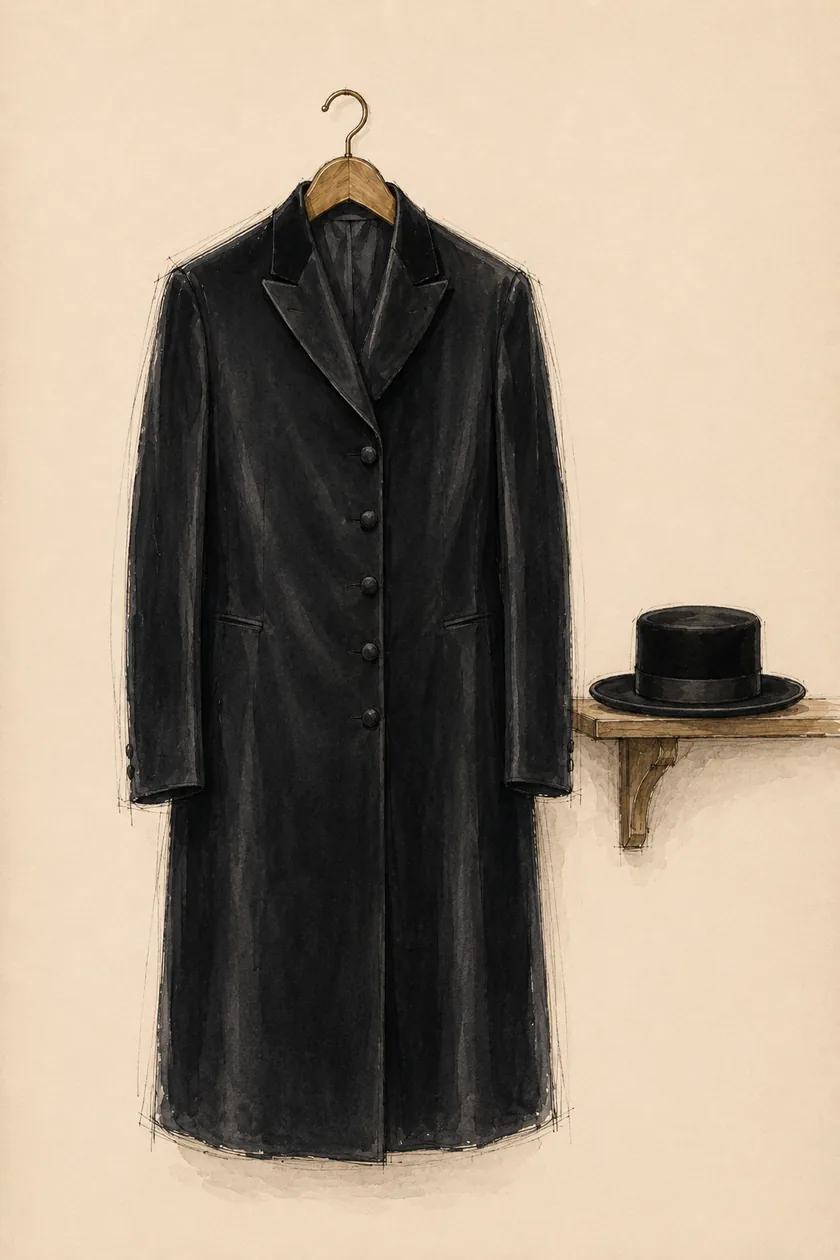
Yes: bekishe, kapota, kittel, Shabbos suits, bar-mitzvah and chosson tailoring, handled with the discretion the community expects. I've cut them in Vaughan and Thornhill for many years, father to son.
Are you open on Shabbos or Yom Tov?
No. I'm closed all Shabbos, Yom Tov and chol hamoed, and Fridays I'm open 10 to 2. Some things come before the work.
How early should I order for a chosson or a Yom Tov?
For a chosson, 9–12 months before the wedding so the kittel, the Shabbos suit and the bekishe are all ready and coordinated. For Yom Tov, order before the season; kittels close by the end of Elul.
Where can I buy a bekishe or kapota without going to Brooklyn?
Here, in Vaughan. I make bekishes and kapotas to your measurements, so there's no flying to New York and no guessing a ready-made size. Measured here at the studio, with the discretion the community expects.
Does a Shabbos suit have to be black?
In many communities black is the norm, and I'll cut you a beautiful one. But the halacha of it is your rav's question, not your tailor's. My job is that whatever your community wears, yours fits properly, holds a press through Shabbos, and lasts for years of wear.
Care & the long run
How do I care for my suit?
Brush it, air it, and press it. Don't dry-clean it often; the chemicals age the fabric. Rotate two suits rather than wearing one daily, hang it on a broad hanger, and bring it to me once a year for a proper press.
What if I gain or lose weight?
Bring it back. Your pattern is on file, and most suits have fabric in the seams to let out or take in. A body that changes doesn't have to mean a suit you retire. That's the advantage of having a tailor.
How long should a good suit last?
Cared for and rotated, a canvassed bespoke suit lasts ten to twenty years; I have clients wearing suits I cut fifteen years ago. The pattern stays, so replacing or adding is always easy.
Do you offer lifetime adjustments?
Bring the suit back any time for a re-press, a button, a small letting-out or a refresh. Your measurements stay on file, so the suit ages with you, not against you.
Trust
How long have you been tailoring?
Over thirty years, and the last decade-plus from the studio in Vaughan. I take every measurement and run every fitting myself, and every garment is made to its own pattern from measurements I keep, never pulled from a rack.
What if I don't like the finished suit?
You won't get that far without seeing it. We fit and adjust in stages, so there are no surprises at the end. If something isn't right, we correct it. The whole method exists to avoid a suit you don't love.
Do people actually come back?
Constantly. Fathers send their sons, grooms return for their business wardrobe, and some clients are on their fifth suit. My reviews average 4.7 stars, and most new clients arrive by word of mouth.
How do I tell if a tailor is actually good?
Ask three things: does he measure you himself, will he tell you not to buy something, and can you see or feel his finished work? A good tailor talks you out of spending as often as into it. Come put those three questions to me; the first visit will answer them.
How do I make sure I don't get ripped off going custom?
Get the price in writing before any fabric is cut, insist on a fitting before final payment, and walk away from anyone who won't do both. That's my standard practice: written quote first, deposit for the fabric, and you see the suit on your body before we finish.
How are you different from the online made-to-measure brands?
With me, the same person measures you, fits you, and answers for the result: in a room, on your body, until it's right. An algorithm can't see your posture or shoulder slope. If something's off, you call me, not a support queue.
Just ask Sam.
Leave your number and someone in the family calls back the same business day. Or design your suit first and bring the questions to your fitting.