The kippah: what velvet, suede and knit actually signal
Updated August 2026 · by Sam Talkar
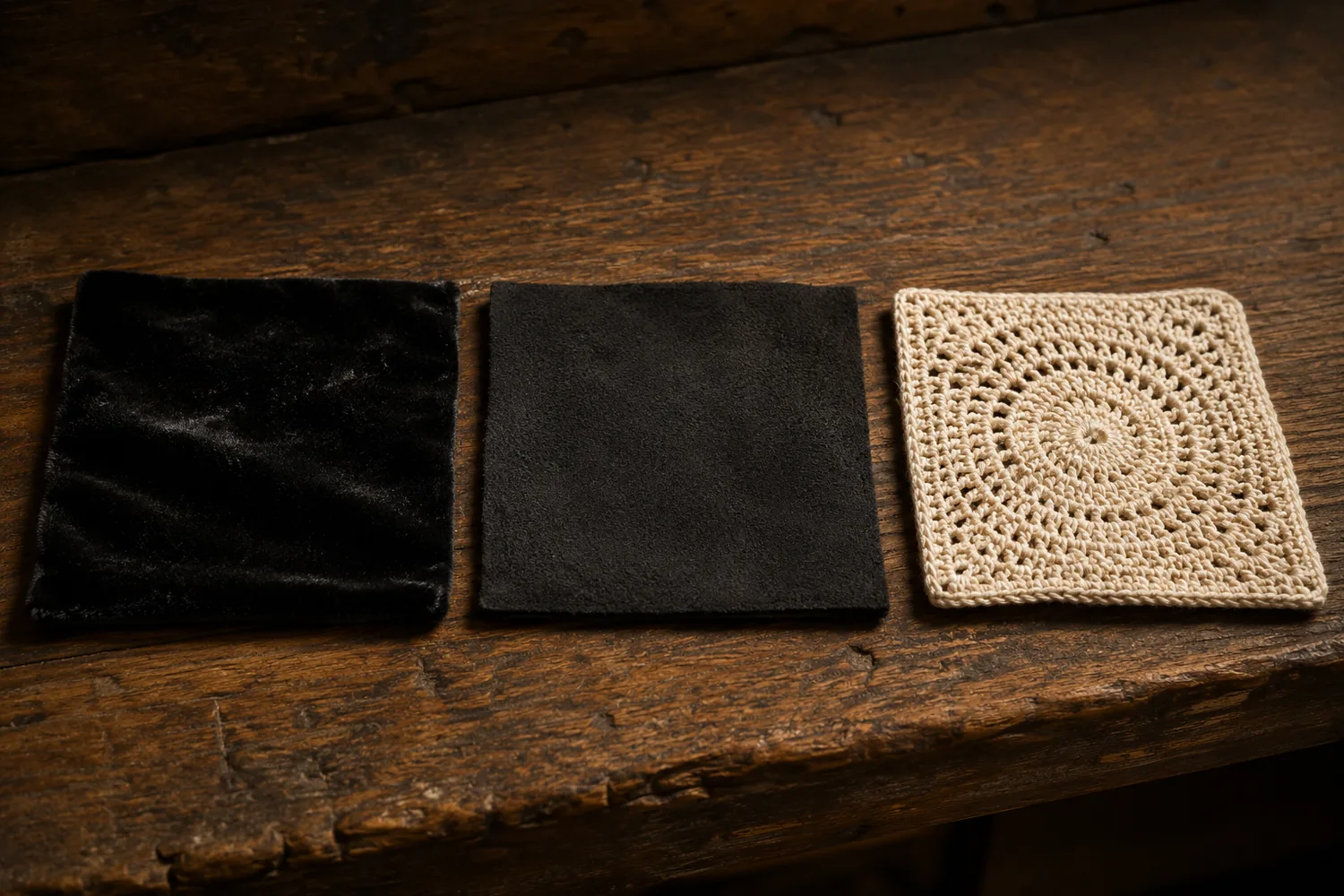
A kippah, or yarmulke, is the head covering worn as a constant reminder that something is above you. It is the most visible Jewish garment there is, and the one that carries the most information. Material, size and placement together say a good deal about where a man davens and who he learns with, and everyone inside the community reads it fluently without ever being taught.
This guide is about that vocabulary, and about the practical side nobody writes down.
Why is a kippah worn?
The plain answer usually given is that covering the head expresses awareness of Hashem above. It is a reminder worn rather than recited, present through an ordinary day in a way that a fixed practice at a fixed hour is not.
Its exact halachic standing, whether it rises to obligation or to firmly settled custom, is discussed at length and is not a tailor’s subject. What is not in dispute is that it is universal in observant practice, and that a boy begins wearing one at three. The upsherin wardrobe →
What does each material signal?
Genuinely a language, and worth learning if you are new to it or buying for someone else.
- Black velvet. Yeshivish and Chassidish. It reads as austerity and seriousness about learning. In Litvish and yeshivish circles it is often small and sits toward the back of the head.
- Knit, the kippah srugah. Religious Zionist and Modern Orthodox, frequently patterned or coloured, often crocheted by hand and sometimes by someone close to the wearer.
- Suede. Broadly Modern Orthodox and Conservative, and the default in the basket by the door at a shul or a simcha, which is why it is the one most guests have worn.
- Black cloth or felt. Plain and common, and often the practical everyday choice under a hat.
One caution against reading too confidently. Not every colourful or knitted kippah means what the shorthand suggests. Breslov Chassidim wear a distinctive white knitted kippah and are plainly not Modern Orthodox. The vocabulary is real but it has dialects, and confidence about a stranger’s affiliation from his head covering is usually misplaced.
Does size mean anything?
It does, though less consistently than material.
Broadly, a larger kippah that covers most of the crown reads more yeshivish or Chassidish, and a small one perched toward the back reads differently again. Many men own more than one size for the same reason they own more than one tie: a larger one for shul, a smaller one for the office.
The practical constraint is that a small kippah on a full head of hair needs a clip and still travels. A larger one stays put on its own. Men who are losing their hair usually find the opposite problem, that suede grips where velvet slides.
How does a kippah work under a hat?
For anyone who wears a hat, and that is most yeshivish and Chassidish men, the kippah does not come off underneath it. The hat goes over.
This matters more than it sounds:
- A bulky kippah changes how a hat sits. If you are being fitted for a hat, wear the kippah you actually wear. A hat sized over a small suede kippah will perch wrong over a large velvet one.
- The kippah stays on when the hat comes off indoors, at a meal, in a car. That is the entire point of wearing both.
- Sweat wears the crown out where the hat presses. This is why the kippah under a hat is the one that needs replacing most often, and why plain cloth is a reasonable choice for it.
How do you keep one looking decent?
The honest answer is that kippot are consumable and most men keep them long past the point they should.
- Velvet crushes and goes shiny where it is handled. Once the pile is flattened it does not recover. Handle it by the edge rather than the crown.
- Suede marks and will not come clean. Keep the shul one and the work one separate.
- Knit stretches and eventually goes slack. It can sometimes be reshaped by washing carefully and drying flat over a bowl.
- Keep a spare in the car and one in a coat pocket. Everybody who wears one has been caught without one.
For a bar mitzvah, a wedding, or anything photographed, a fresh kippah is a small thing that shows. It is the one item in the whole outfit nobody thinks to check and everyone can see. The bar mitzvah suit →
Can a kippah be made to match a suit?
It can. There is nearly always cloth left over from a suit, and a kippah takes very little, so a matching or coordinating one is a real possibility rather than a novelty. Some men do exactly this for a wedding, where the chosson’s kippah sits in every photograph taken that day.
If it is something you want, ask about it when the suit is being cut rather than after, while the remnant still exists. What the chosson wears →
The rest of the time, a kippah is bought, not tailored, and there is no reason to make it complicated.