When does a man start wearing a tallis? It depends where he is from
Updated August 2026 · by Sam Talkar
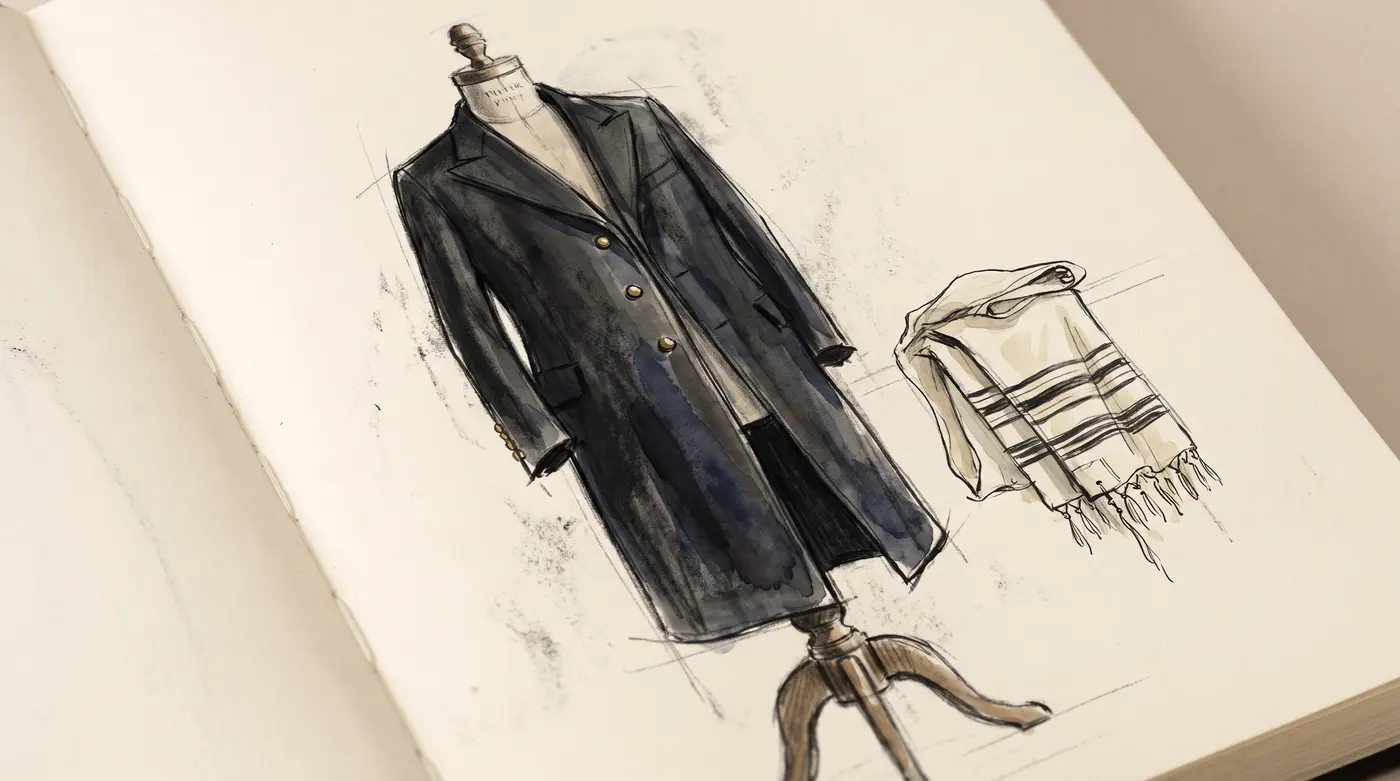
In most Ashkenazi communities a man does not wear a tallis gadol until he is married, which means the first time he puts one on is at his own wedding. In Sephardi communities, and among German Yekkes and the Oberlander, Austrian, Swiss and Dutch communities, boys wear one from bar mitzvah. Both are old and settled customs, and neither is a compromise on the other.
This surprises people more than almost anything else in Jewish dress, including plenty of Jews who assume their own practice is universal. It is worth knowing which one your family follows before someone buys you a gift.
As throughout this series: this describes what communities do, not what you should do. That is your rav’s call.
Tallis gadol and tallis katan are not the same garment
Worth separating before anything else, because the word tallis alone does both jobs.
The tallis katan is the small four-cornered garment worn under the shirt all day, from age three. Everyone who wears tzitzis is wearing one. Tzitzis explained →
The tallis gadol is the large shawl worn over the clothes for davening. This is the one whose starting age is disputed. When people say a man “doesn’t wear a tallis yet,” it is always this one they mean, and he is certainly still wearing the small one.
Why do most Ashkenazim wait until marriage?
The reason usually given is textual. In Devarim the passage about fringes sits directly beside the passage about taking a wife, and that juxtaposition is read as tying the garment to marriage. From there it became the settled Eastern European practice.
There is a plainer social logic layered on top. In a community where every married man wears a tallis and no unmarried man does, the garment quietly announces status in shul. It tells you who is available and who is not, without a word being said. Customs that do useful work tend to last.
Which communities wear one from bar mitzvah?
More than people expect, and this is the part that gets missed.
- Sephardim, generally from bar mitzvah and sometimes younger.
- German Jews, the Yekkes, who follow the same practice and are the well-known exception inside Ashkenaz.
- Oberlander Hungarian, Austrian, Swiss and Dutch communities, which follow the Central European pattern rather than the Eastern European one.
Toronto has families from every one of these, which is exactly why the assumption catches people out. A boy whose grandfather came from Pressburg and a boy whose grandfather came from Lodz may sit in the same shul and have entirely different practices, both correct.
Is a tallis traditionally a gift?
Very often, yes. Where the custom is to begin at marriage, the tallis is commonly a gift to the chosson from his kallah or her family, and in some communities it forms part of what she brings to the marriage.
That makes it one of the few garments in a man’s wardrobe he does not choose for himself, which is worth knowing if you are the one buying. A tallis is used for decades, in public, every single morning. It is not the place to economise quietly and hope nobody notices.
What should you look for in a tallis gadol?
Cloth, size and finish, in that order.
- Wool is the traditional and the safe choice, and it satisfies every opinion on the material question the same way a wool tallis katan does. Most good taleisim are wool. Lighter wools drape softly; heavier ones hold a fuller shape over the shoulders and last longer.
- Size is a real decision, not a detail. A tallis should cover properly rather than perch like a scarf. Larger sizes are worn draped over the head by many during davening, which needs genuine length. Buy for how you actually daven.
- The atarah, the decorated band at the neck, marks the top edge. The point is finer than avoiding wearing it upside down: it keeps the same two tzitzis at the front and the same two at the back every single time. The Shelah gives the reason that a side once used for the head should not afterwards be used lower, comparing it to the boards of the Mishkan, each of which kept its own side. Note that Chabad taleisim traditionally have no atarah at all, so its absence is not an oversight. It is also the piece most often replaced later, since it takes the wear from hands and beard.
- The corners carry the strings and take the strain. Reinforced corners are worth having.
How do you care for one?
It is wool, it is worn daily, and it will outlast a lot of other clothes if it is treated as cloth rather than as an object.
- Air it rather than washing it. Frequent washing is what wears a tallis out. Most need cleaning rarely.
- Protect the strings when it is cleaned, exactly as with tzitzis. Tangling in a drum abrades them.
- Store it in its bag, breathing. A cloth bag, not sealed plastic. Wool needs air, and it needs protection from moths in a Toronto summer.
- Check the strings on a regular schedule rather than by chance.
- Repair the atarah when it goes rather than replacing the whole garment. This is ordinary work and it is worth doing.
A tallis is one of the very few garments that reasonably outlives the man who receives it and passes to a son or grandson. That is a good argument for buying one properly the first time and then looking after it.
What Sam can actually do here
Honestly: a tallis is bought, not tailored. Sam does not make them, and anyone telling you a prayer shawl needs bespoke cutting is selling you something.
Where he is useful is around it. The suit under it, the wedding wardrobe it arrives with, the coat it goes over on a February morning. And repairs, which is real work: a worn atarah, frayed corners, a tallis that has served twenty years and is worth another twenty.
If you are putting together a chosson’s wardrobe and the tallis is arriving as a gift from the kallah’s side, tell him. It changes what else needs buying.