Yom Kippur: fasting, a body that changes shape, and what to wear standing all day
Updated August 2026 · by Sam Talkar
Yom Kippur 2026 falls on Monday 21 September. Unlike the other chagim this year it stands alone rather than running into Shabbos, which makes it simpler to plan and no easier to dress for.
It is the single strangest day of the year for clothing. You eat a large meal, then eat nothing for roughly twenty-five hours, then eat again, and you spend most of the middle part standing. Your waist measurement at seudah hamafsekes and your waist measurement at neilah are not the same number. Almost nothing else in a man’s year does that.
As with the rest of this series: what follows is about cloth and fit. Which customs your family keeps, and what the halacha requires of you, is a question for your rav.
Your waist is not one measurement that day
The sequence does something specific to you. A large meal before the fast, then a long stretch with nothing, then breaking the fast in the evening.
Most men are at their widest immediately after seudah hamafsekes, at their narrowest somewhere in the afternoon, and uncomfortable again after breaking the fast. A waistband cut to fit you perfectly at any one of those moments will be wrong at the other two.
What actually works:
- Side adjusters rather than a belt. Two small tabs at the hip that let out or take in by an inch or so without unbuckling anything. This is the single best answer to the problem and most men have never worn them.
- A slightly generous waist, held by braces if you like them, so the fit does not depend on the exact circumference of your middle at that hour.
- A softer waistband construction, which flexes instead of biting. A stiff, heavily fused waistband is what digs in when you have eaten.
- Avoid a belt cinched to a single notch, which is exactly the arrangement that guarantees discomfort at two out of three points in the day.
If you are having trousers made for the chagim and you fast, ask for side adjusters and a little give. Say why. It changes the pattern.
Dressing under a kittel
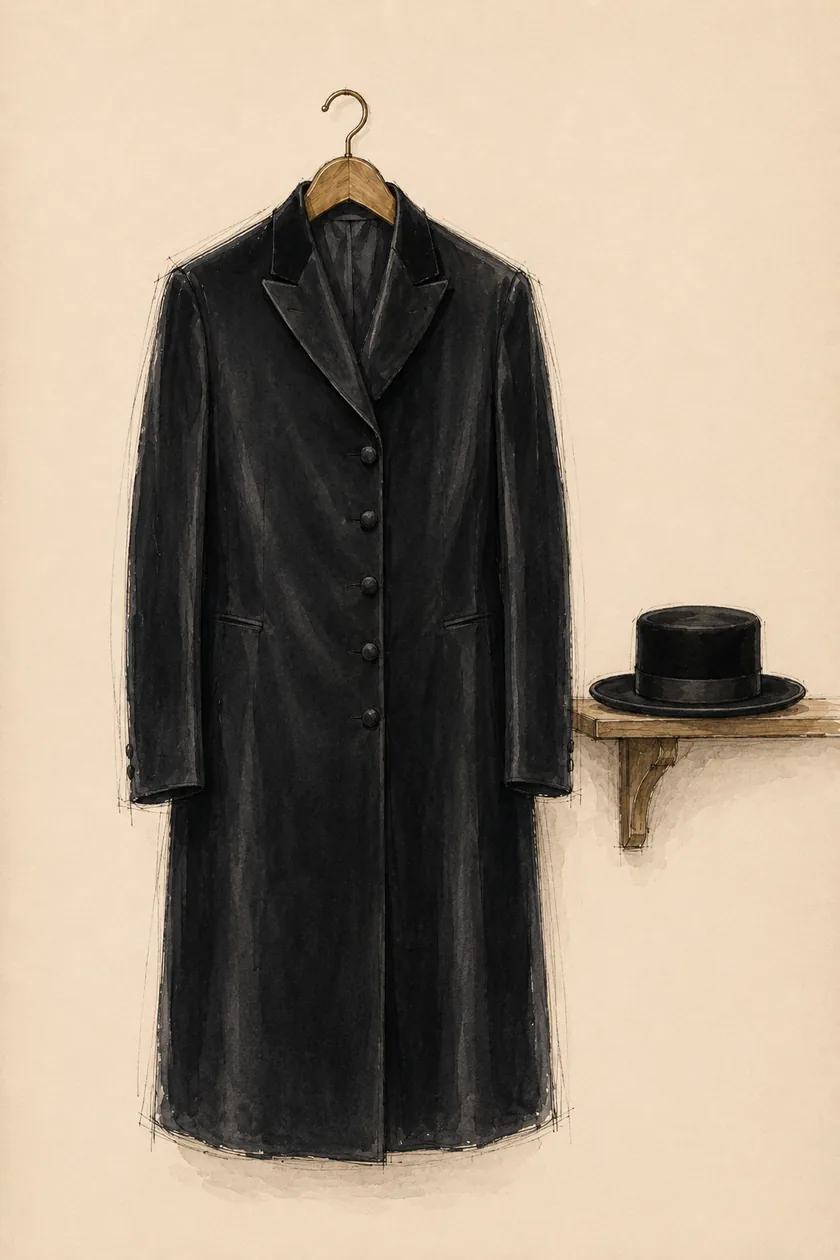
Many married men wear a kittel on Yom Kippur, over their clothes. Custom varies on who wears one and from when, and that is a question for your rav rather than for a tailor. The kittel guide →
The tailoring consequence is the part worth saying. A kittel is an additional full layer over everything else, worn in a packed shul, all day. Whatever is underneath needs to be lighter than you would otherwise choose, and it needs to breathe, because the kittel itself is not going to.
In practice: a lighter suit than you would wear on Rosh Hashanah, or in many communities no jacket at all under the kittel, and a shirt in a cloth that handles a warm room. A heavy jacket under a kittel in a full shul is genuinely unpleasant by mincha. Cloth for the season →
The shoes, which are the real problem
The widespread custom is not to wear leather shoes on Yom Kippur. Most men therefore end up in canvas, rubber or synthetic shoes for a day spent almost entirely standing.
This is the most-underestimated discomfort of the whole day, and it is worth taking seriously:
- Do not wear them new. A pair bought the day before is a pair you have not walked in. Break them in over a week beforehand.
- Cushioning matters more than looks. You are standing for many hours while depleted, on a hard floor.
- Consider the socks, which are doing more work than usual without leather around them.
- Take the walk into account. In a community where people walk to shul, that distance is done twice in soft shoes while fasting.
A tailor has nothing to sell you here, which is exactly why it is worth mentioning: it is the part of Yom Kippur dressing that most affects how the day feels and the part nobody plans for.
White, and why so much of it
Much of what is worn on the day is white: the kittel, and in many communities the shirt beneath it. The reasoning usually given is the same as the kittel’s own, a mark of purity and a clean slate.
The practical consequence is that white is unforgiving and you will be seen in it all day, in a bright room, from every angle. A tired white shirt reads as tired. A shirt that has gone slightly grey through repeated washing reads as grey next to a fresh white kittel.
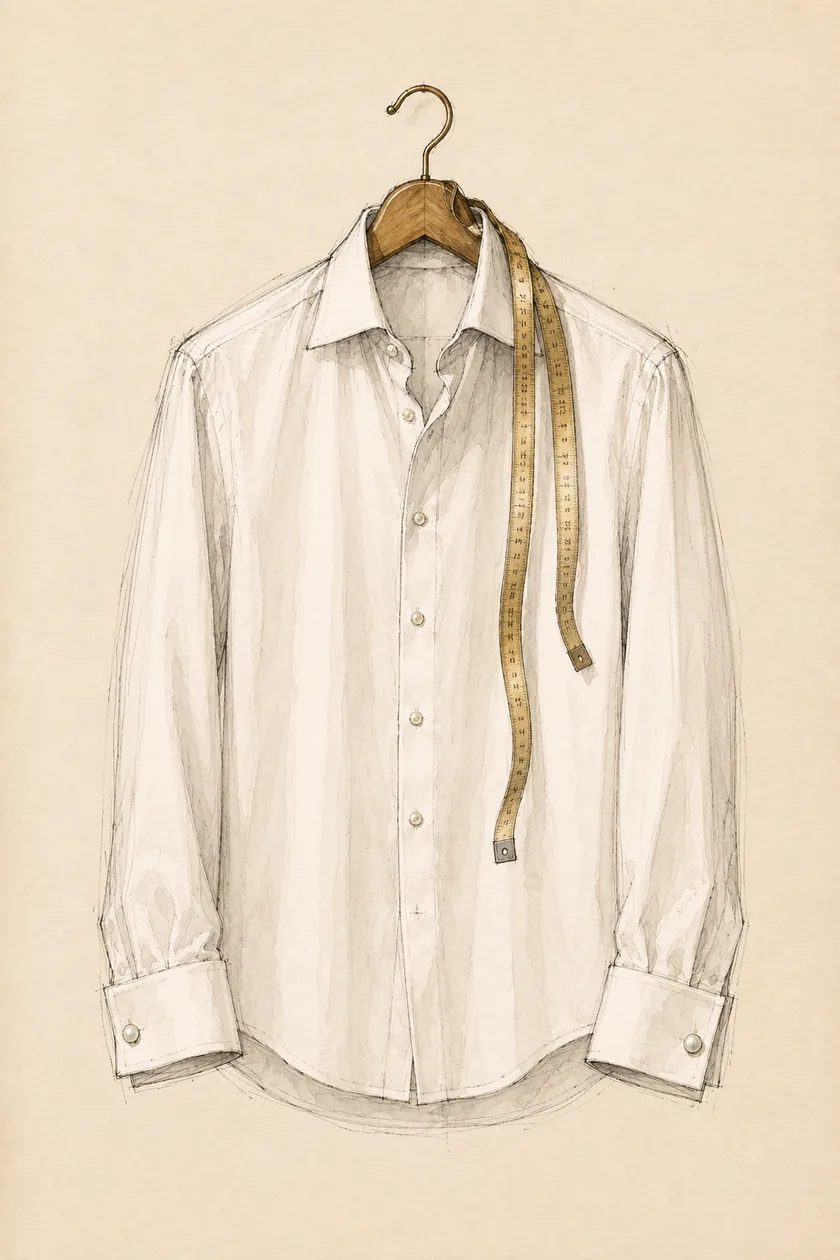
If you buy one shirt for the whole chag season, buy it for Yom Kippur, and buy it in a cloth that stays properly white. The white shirt: cloth, fit and keeping it white →
Standing all day, in brief
Part three covers sitting at length, and Yom Kippur inverts it: this is the standing day. The relevant points, quickly:
- The shoulder carries the jacket while you stand, so the fit there matters more than usual.
- A shirt long enough to stay tucked through a day of standing and sitting and standing again.
- A collar with a finger of room, because a warm room and a long day will find any collar cut exactly to the neck.
- Cloth that breathes, since you cannot drink and cannot cool yourself the usual way.
After the fast
One small thing. Break-fast is a meal you attend in the clothes you have been in for twenty-five hours, often with family, often photographed.
Men who care about this bring a fresh shirt for after neilah. It takes a minute to change and it is the difference between arriving at the table looking like you have come through the day and looking like the day came through you.
Part five: Sukkos with children → · Part one: when to order →