Built to sit: what fails at hour four of davening, and the cut that prevents it
Updated August 2026 · by Sam Talkar
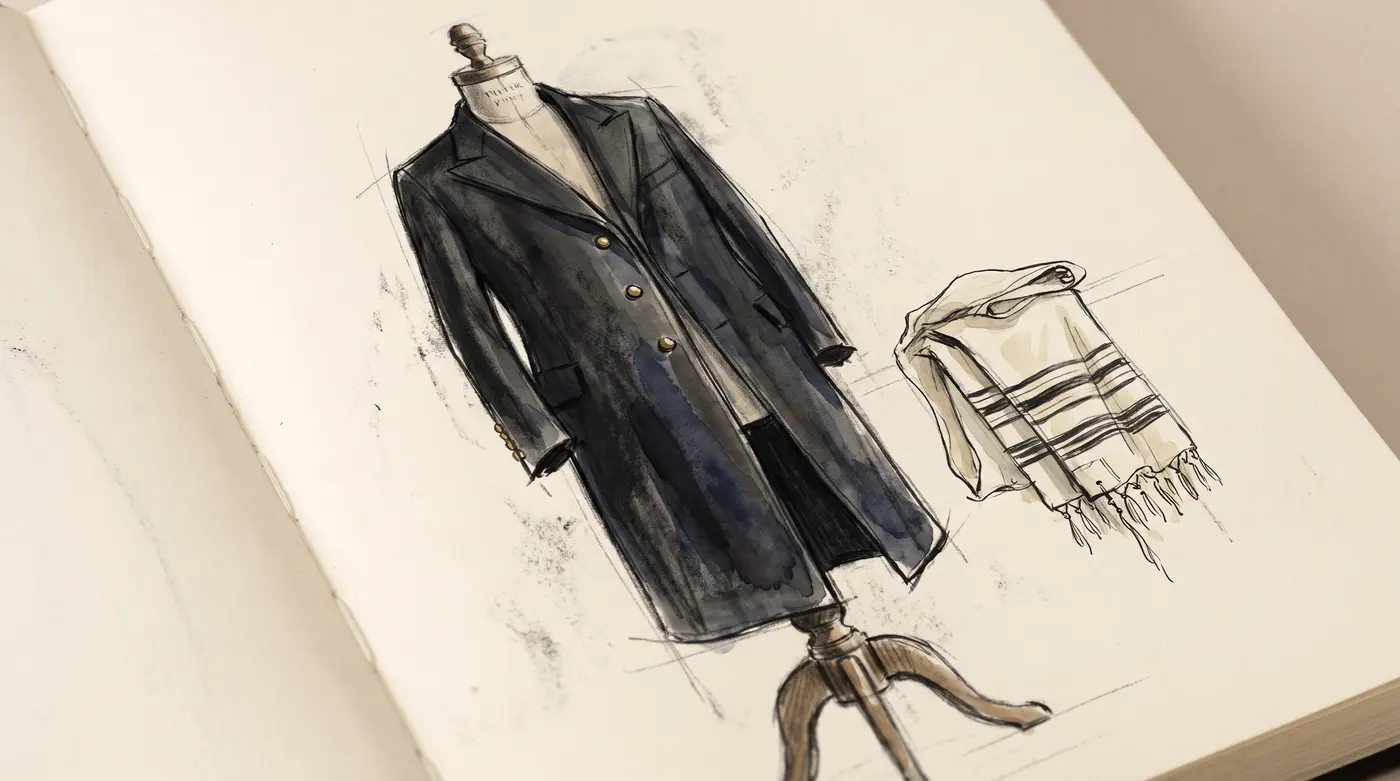
Here is the quiet absurdity of buying a suit. You are fitted standing still, in a good light, holding yourself slightly better than usual, for about ninety seconds. Then you wear it for six hours, mostly sitting, standing up and down a few hundred times, in a warm room.
Rosh Hashanah davening is the longest sustained test most suits ever face. The failures are entirely predictable, and every one of them is decided by a cutting choice made weeks earlier.
What actually goes wrong, in order
By hour four, in roughly this sequence:
- The trouser rise digs in. You sit, the waistband stays, and the fabric between your waist and your seat runs out. This is the most common complaint and the least discussed.
- The jacket pulls across the seat and the shoulder blades. Sitting rotates your shoulders forward and the back panel has nowhere to go.
- The collar lifts off the neck when you stand. A jacket that sat clean while you were still shows a gap at the back once you have been moving.
- The trousers crease behind the knee and across the lap and stay that way for the rest of the day.
- The shirt comes untucked, usually at the small of the back, usually during standing for the amidah.
None of that is bad luck. All of it is measurable.
The rise: the measurement nobody asks about
The rise is the distance from the crotch seam to the top of the waistband. It decides almost everything about sitting comfort and it is the first thing cheap trousers get wrong.
A low rise looks current on a hanger and is miserable to sit in for a morning, because there is simply not enough cloth between you and the waistband. The trousers pull down at the back when you sit, the waistband bites, and you spend the day adjusting.
A higher rise sits at or near the natural waist. It is more comfortable sitting than standing, which is exactly the right trade for davening. It also keeps the shirt tucked, because there is more waistband holding it.
If you take one instruction to a fitting, make it this: say that you will be sitting for hours, and ask for the rise to be cut accordingly. A tailor can only solve the problem he is told about, and most men never mention it.
Seat and thigh: room where it does not show
The second sitting decision. Trousers cut close through the seat and thigh look sharp standing and become a hinge problem sitting down. You need enough cloth to allow the movement, without it reading as baggy.
The test is simple and worth doing in the fitting room rather than in shul: sit down in the trousers, cross one leg, stand up again, and look. If the fabric strains when you sit, or holds a deep crease when you stand, it is too close. Do this at your fitting. Every tailor expects it and almost no client does it.
The jacket: shoulders, length, and the button
Three things decide whether a jacket survives a long morning.
- The shoulder is the whole garment. It cannot be meaningfully altered later, and if it is wrong the collar will lift every time you stand. This is the single measurement worth being fussy about.
- Length matters more when seated than standing, because a jacket that is slightly long bunches under you and creases across the back. Sitting on your own jacket is what puts that hard horizontal line across the skirt of it.
- Unbutton when you sit. Button when you stand. This is not etiquette for its own sake; it is the mechanical reason jackets survive. A buttoned jacket while seated puts all the strain on one point and pulls an X-shaped crease across the front that will not hang out.
The other habit worth building: take the jacket off when you sit for a long stretch, if the room and the moment allow it. Cloth recovers when it is hanging and does not when it is folded under you.
Vents, and why two is the sitting answer
The vent is the opening at the back of the jacket. It exists so the jacket can move when your body does.
- No vent hangs cleanly on a mannequin and pulls badly the moment you sit or put your hands in your pockets.
- A single centre vent is the common compromise. When you sit it tends to spread open and expose the seat of the trousers.
- Double vents, one at each side, let the back panel move over the hips and drape over the seat when you sit. For a garment worn sitting for hours, double vents are the correct answer and they also read as the more considered choice.
Shirts: the collar and the tuck
The shirt takes more punishment than the suit, because it is the layer against the skin.
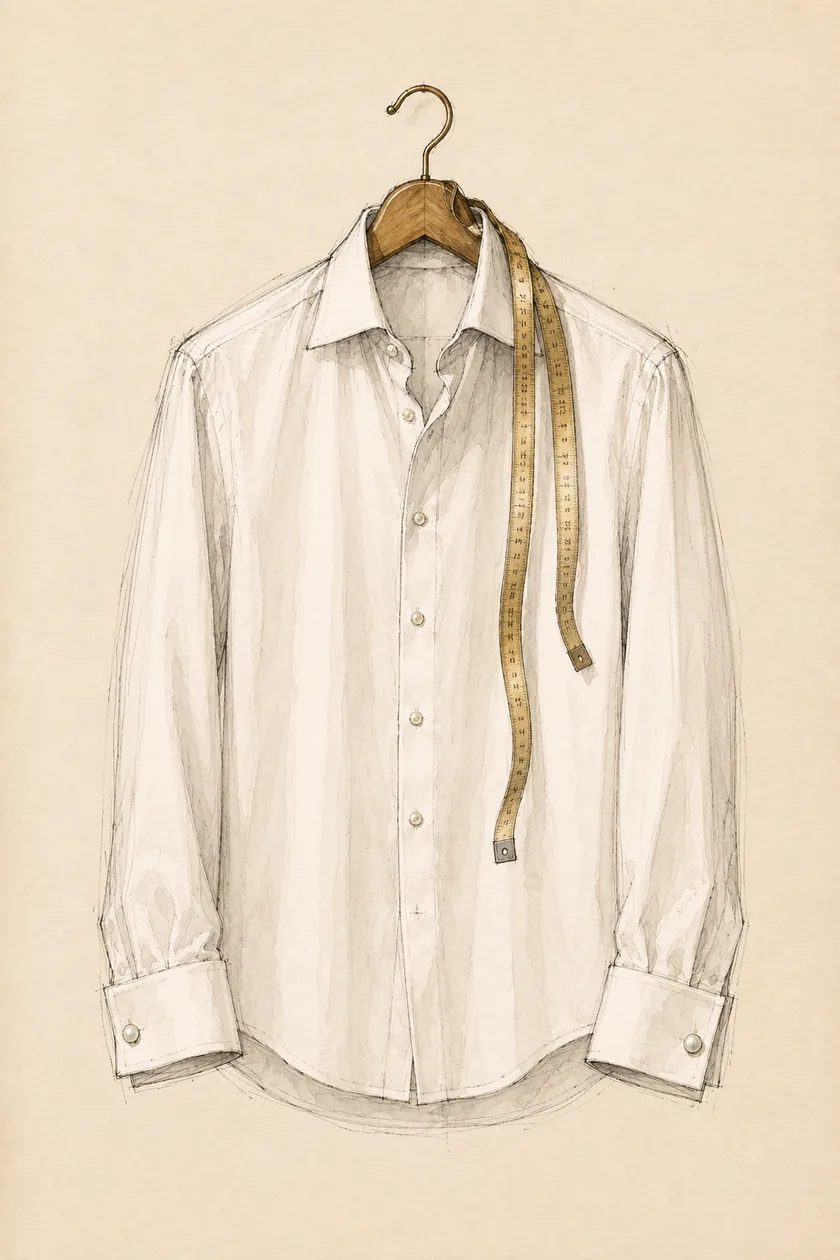
The collar should close with a finger’s room. A collar fitted exactly to the neck is fine at 9am and a vice by noon, particularly in a warm room where the neck swells slightly. Ask for the finger.
The tuck fails at the small of the back when the shirt is too short. Shirts made to measure are cut with enough length to stay tucked through repeated standing, which off-the-rack shirts frequently are not. If you come untucked every Shabbos, the shirt is short, not your fault.
The white shirt → · Custom dress shirts →
What to say at your fitting
Six sentences that will change the garment you get:
- “I will be sitting in this for six hours at a stretch.”
- “Please cut the rise for sitting, not for the hanger.”
- “I want room through the seat and thigh, without it looking loose.”
- “Double vents.”
- “A finger of room in the collar.”
- “Long enough in the shirt that it stays tucked when I stand up repeatedly.”
None of that costs anything. It is simply information the tailor does not have unless you supply it, and it is the difference between a suit that looks good in a mirror and one that is still comfortable at mussaf.
What to bring to a first fitting → · Part four: Yom Kippur →