Cloth for a nine-degree swing: dressing Rosh Hashanah and Simchas Torah in the same season
Updated August 2026 · by Sam Talkar
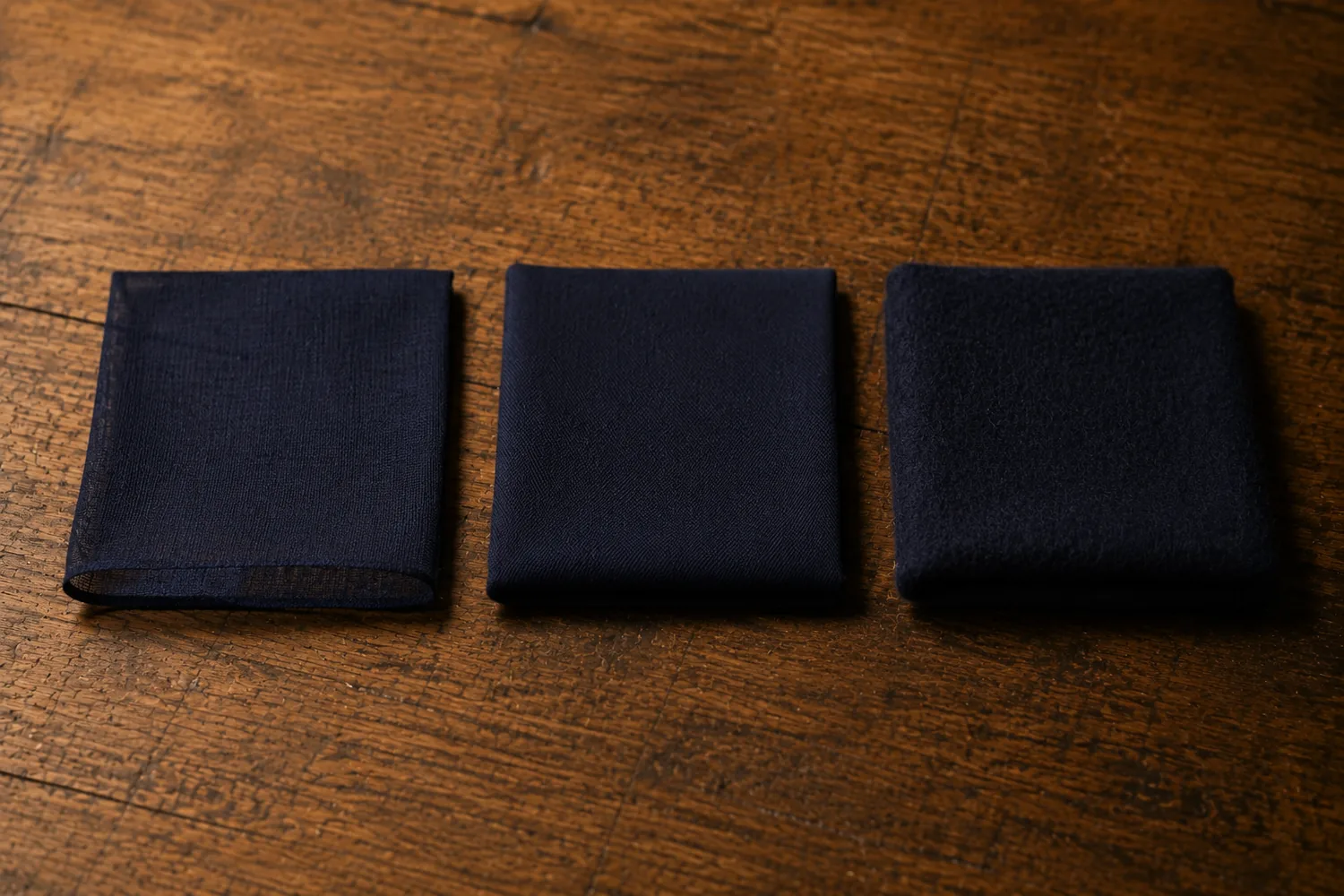
Rosh Hashanah falls on 12 September this year and Simchas Torah on 4 October. Toronto normals put those three weeks apart at roughly 24.6°C and 15.6°C. You are dressing for two seasons and most men own one chag suit.
The good news is that one suit can genuinely cover both, but only if the cloth is chosen for the swing rather than for whichever week you happened to walk into the shop. Get that wrong and you spend Rosh Hashanah wet and Simchas Torah cold.
Why a packed shul is hotter than the forecast
The number on your phone is measured in open air, in shade, with wind. A shul on Rosh Hashanah morning has none of those things. It has several hundred people at body temperature, the doors shut, and a crowd standing close together for hours.
Assume the room runs meaningfully warmer than outside. This is why men who dress for a 24°C forecast are uncomfortable by mid-morning: they dressed for the walk over, not for the room.
The corollary matters too. The same building on Simchas Torah evening, with the doors propped open and dancing spilling outside, is a different problem entirely.
Weight: the number that actually decides it
Suiting cloth is sold by weight, in grams per metre. It is the single most useful number on the ticket and almost nobody asks for it.
- Under 240g. Genuinely light summer cloth. Wonderful in August, and by Simchas Torah it is a shirt with ambitions. It also creases readily, which matters when you are sitting for hours.
- 260 to 280g. The honest answer for a Toronto chag season, and what most men should be asking for. Breathes acceptably in a warm shul, holds a press through a long day, and takes the October evenings without a coat.
- 300 to 340g. Proper autumn and winter weight. Right for Simchas Torah if the chagim are your only formal wear, and too much for Rosh Hashanah.
- Above 340g. Overcoat and heavy winter territory. Not a chag suit in September.
If you own one suit for the whole season, buy it at 260 to 280g and stop thinking about it. That range is the reason a single well-chosen suit can carry both ends.
More on cloth for a Toronto year →
Weave matters as much as weight, and gets ignored
Two cloths at identical weight can behave completely differently, because weight tells you how much wool is there and weave tells you how air moves through it.
- High-twist worsted, sometimes sold as fresco or open weave, has yarn twisted hard before weaving. That leaves tiny channels of air through the cloth. It breathes far better than its weight suggests, resists creasing, and is the closest thing to a technical answer for sitting in a warm room for six hours. If you can only remember one term from this piece, remember high twist.
- Plain worsted is the standard smooth suiting. Fine, unremarkable, and warmer than a high twist at the same weight.
- Flannel is brushed so the surface holds air against you. Beautiful in November. Wrong for September.
- Hopsack, a basket weave, sits between: breathable, a little textured, and it hides creases well.
The one thing to refuse
Polyester, in any proportion, in a garment you will sit in for six hours.
The reason is not snobbery, it is physics. Wool absorbs a meaningful amount of moisture into the fibre itself and releases it slowly, so it carries sweat away from you before you notice it. Polyester absorbs almost none. It stays on your skin and on the surface of the cloth, and the garment stops breathing at exactly the moment you need it to.
This is why an inexpensive suit feels fine in the shop and unbearable by mussaf. Cheap chag suits are very often a wool-polyester blend, and the blend is doing the damage.
The same argument applies to the lining, which is the layer actually touching you. Cupro or a fine viscose breathes; polyester lining does not. A good cloth with a cheap lining is a sealed bag. Linings, in full →
Colour, and a small honesty
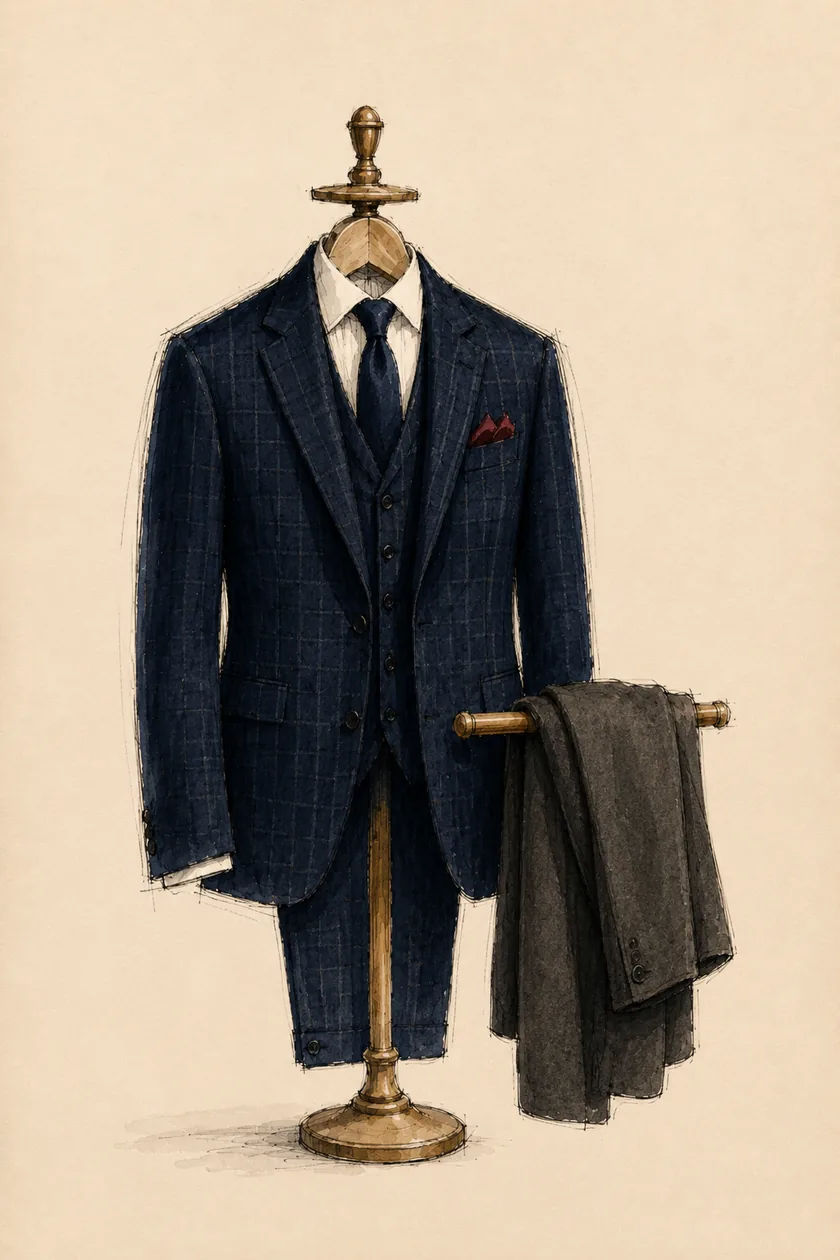
Navy and charcoal, and this is not a failure of imagination. They read correctly across every chag, from Rosh Hashanah morning to a Simchas Torah night, and they photograph well in a crowd where you will appear in a great many pictures you did not pose for.
Where you can spend some personality without regret: cloth with a subtle texture, a bird’s eye or a fine herringbone, which reads as plain from a distance and interesting up close. That is a better use of adventurousness than a colour you will be looking at in family photographs for the next twenty years.
Choosing your cloth → · Why navy →
If you can have two
Most men do not need two chag suits. If you already own a sound one and are adding a second, the useful split is not two similar navy suits but one mid-weight for the warm end and one heavier for the cold end, so that Rosh Hashanah and Simchas Torah are genuinely different garments rather than the same one suffering twice.
The second most useful purchase is not a suit at all. It is more shirts. In 2026 every chag runs Friday evening to Sunday night, which is two shirts minimum per chag, and shirts are what men chronically under-buy.
Part one: the dates and the order deadline → · Part three: built to sit →