What fabric should a winter suit be in Toronto?
July 3, 2026 · updated October 30, 2026
Much of the suiting in a fabric book is woven for milder winters than ours. A very fine super-120s or super-150s drapes beautifully in a warm room; on a January morning at minus eighteen, with the wind coming off the lake, it feels thin, and it creases on the drive downtown. For a winter suit here, the weight and the weave matter more than the super number on the label.
The worry men bring to the studio usually has two halves. They have stood on a GO platform in a summer-weight suit and been cold to the bone, and they have sat through an afternoon meeting in a heavy one with the heating turned up. They don’t want to repeat either.
Will a heavy winter suit be too hot indoors?
It can be, and that is the first thing to settle. Most of a Toronto winter day is spent inside: a heated house, a heated car or train, an office kept at shirt-sleeve temperature. The time outdoors is often short, the walk from the car or the platform and a few blocks at lunch.
So the suit is chosen for the room you sit in, and the coat is chosen for the street. Outdoors, most of your warmth comes from an overcoat that covers the jacket, a scarf at the neck and a pair of leather gloves. A heavier suit underneath adds less than people expect, and it stays on you all afternoon after the coat comes off. Coat over a suit covers the coat side, and down coat or wool overcoat is for the man who wonders whether a tailored coat is warm enough at all.
A quick way to decide is to count the minutes you spend outdoors on a normal winter weekday:
- Door to car, car to office. A year-round worsted of around 10 to 11oz under a proper coat is usually enough. A heavier cloth mostly buys you a warm afternoon.
- A real walk, a platform wait, or work that takes you outside. This is where the heavier winter cloths below earn their place.
What does a heavier cloth actually do?
For winter Sam suggests fabrics in the 11 to 13oz range: worsted flannels, mid-weight twills, and other fabrics with some body to them. The extra weight is warmer, and it hangs better. A heavier fabric also resists the creases that a car seat, a seatbelt and an overcoat press into a suit over a working day, which in a Toronto winter matters as much as the warmth does.
Flannel or twill?
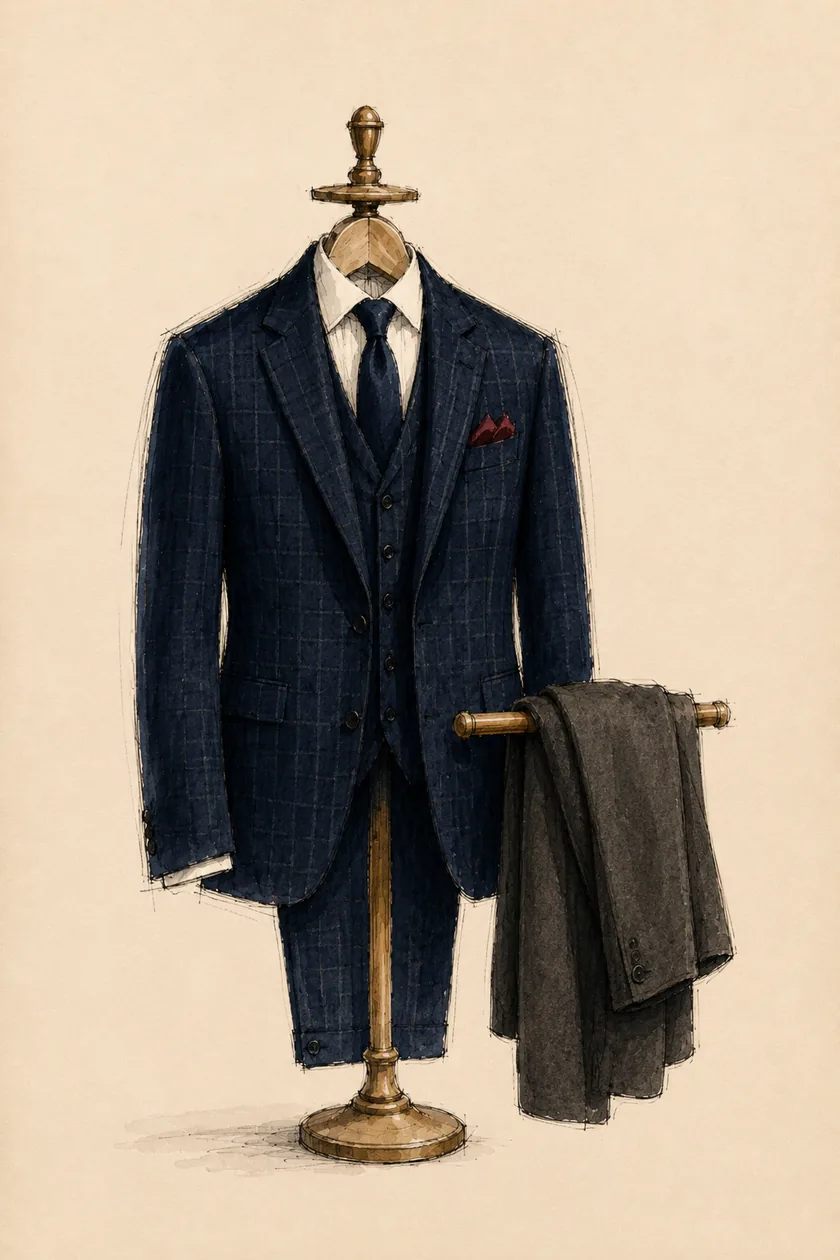
A tight twill or a birdseye reads as a solid from across a room and hides wear up close, and a firm twill keeps the trouser crease through a long day of sitting. Flannel is the warmer and softer of the two. Its brushed surface traps air against you and hides the odd mark, but it won’t hold a knife-edge crease the way a hard twill does, and it wears faster where the cloth rubs, at the inner thigh and the seat.
Colour matters as much as weave in a salt season. A mid-grey flannel or a charcoal birdseye shows the white tide line around a hem far less than a smooth navy or black does. Road salt and a good suit covers getting the salt out once it is there.
Why do winter trousers wear out first?
Because winter is hardest on them. Salt grinds at the hems, slush soaks them, and the seat and thighs take every hour in the car. The jacket sees almost none of that.
The old answer still works: a second pair of trousers, cut from the same cloth when the suit is ordered. Rotated, the two pairs wear out at about the rate of the jacket. Decide it at the order, because cloth bought two years later may be sold out or come from a slightly different dye lot. Why the trousers wear out first explains the arithmetic, and trousers are made on their own too.
When the hems come home wet, hang the trousers by the hem and let them dry at room temperature, then brush the salt off. Keep them away from the radiator; direct heat on damp wool can shrink it.
Room for the overcoat
A winter suit is half the outfit; the other half is the coat over it. Sam measures for that. The jacket needs enough room through the shoulder and chest for an overcoat to sit on top without pulling, and when a coat strains across the back, a jacket cut too close underneath is often the reason.
The coat also has to be longer than the jacket, so no suit hem hangs below it. If you drive rather than walk, ask about length: a shorter coat is easier behind the wheel, but it still has to cover the jacket.
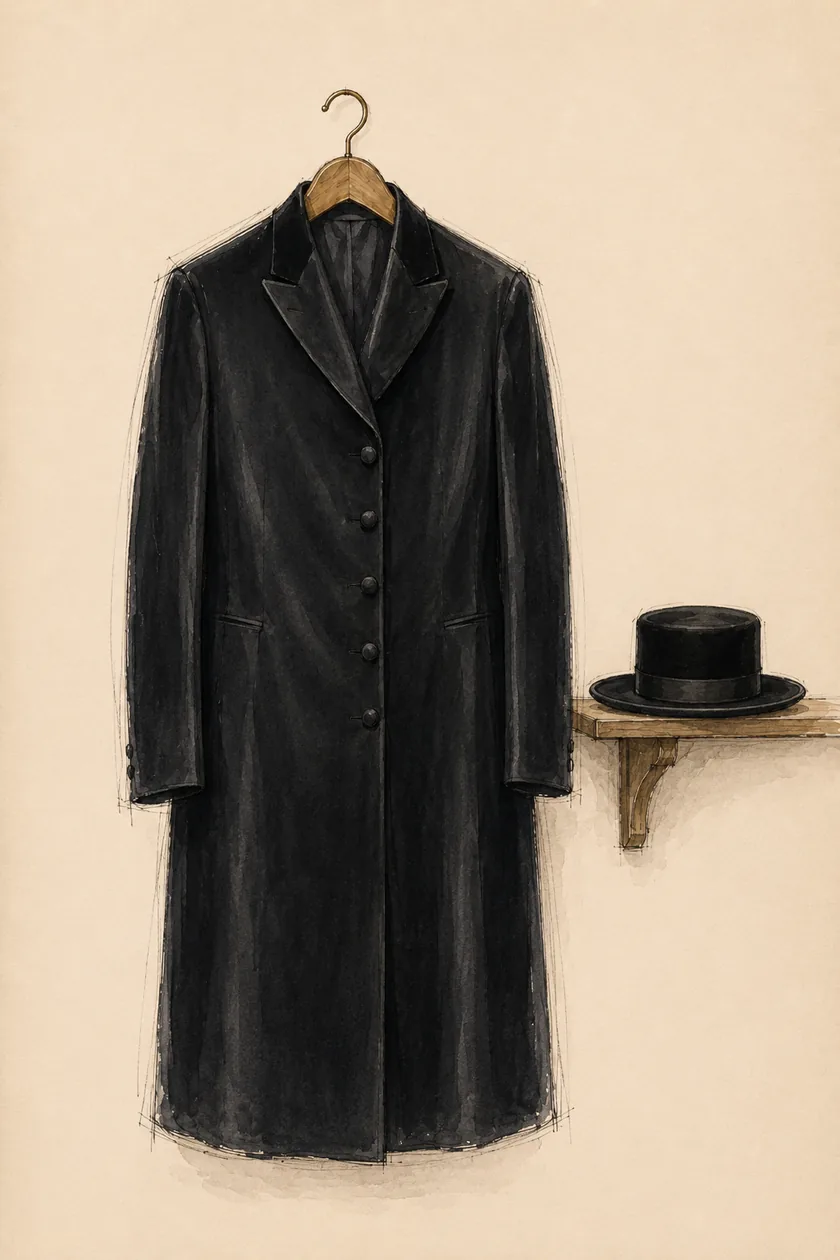
Overcoats are made to measure too: cashmere, a Chesterfield, a pea coat or a car coat, among others. A coat takes about five weeks. Outerwear has the range.
When to order a winter suit
A suit takes three to four weeks, with one fitting on the finished garment. Orders placed between November 20 and the end of February take about three weeks longer, and there is no rush service in that stretch. If you want the suit for the coldest months, come in during the autumn, and order the coat at the same time, since it takes longer. The fall and winter order-by calendar has the dates.
Before the appointment, count your outdoor minutes on an ordinary weekday and bring that number with you. It settles the weight faster than any swatch. Talk fabric with Sam.