Bespoke · Bespoke Suits

How many suits do you actually need?

Updated July 2026 · by Sam Talkar
Bespoke Suits · Sam's Menswear

Most working men need three suits, not ten. Two good ones will get you through a week if you rest them properly; the third saves you when one’s at the cleaner or you’ve got a funeral and a wedding in the same month. Buy fewer, buy better, and rotate them. That’s the whole game.

I’ve been fitting men in Vaughan and along the Thornhill line for over 30 years, and the guys who look sharpest aren’t the ones with the fullest closets. They’re the ones with a small, deliberate rotation they actually wear.

How many suits do I actually need for work?

Three is the honest number for most men. One if you rarely suit up, five if you’re in a boardroom daily, but three covers the majority.

Here’s why three works. Two suits let you alternate day to day so neither gets worn out. The third gives you breathing room: one’s being pressed, one has a spill, or you’ve got two events close together. Below three and you’re wearing the same wool too often. Above five and you’re buying suits you’ll wear twice a year.

If you’re building from zero, start with one and add over time. You don’t need the whole rotation on day one. You need the right first suit. That’s what a proper first fitting is for.

What’s the ideal capsule work wardrobe?

A tight capsule beats a full closet every time. Three suits, a handful of shirts, and pieces that mix: that’s more outfits than you’d think.

For a working man, I’d build it like this:

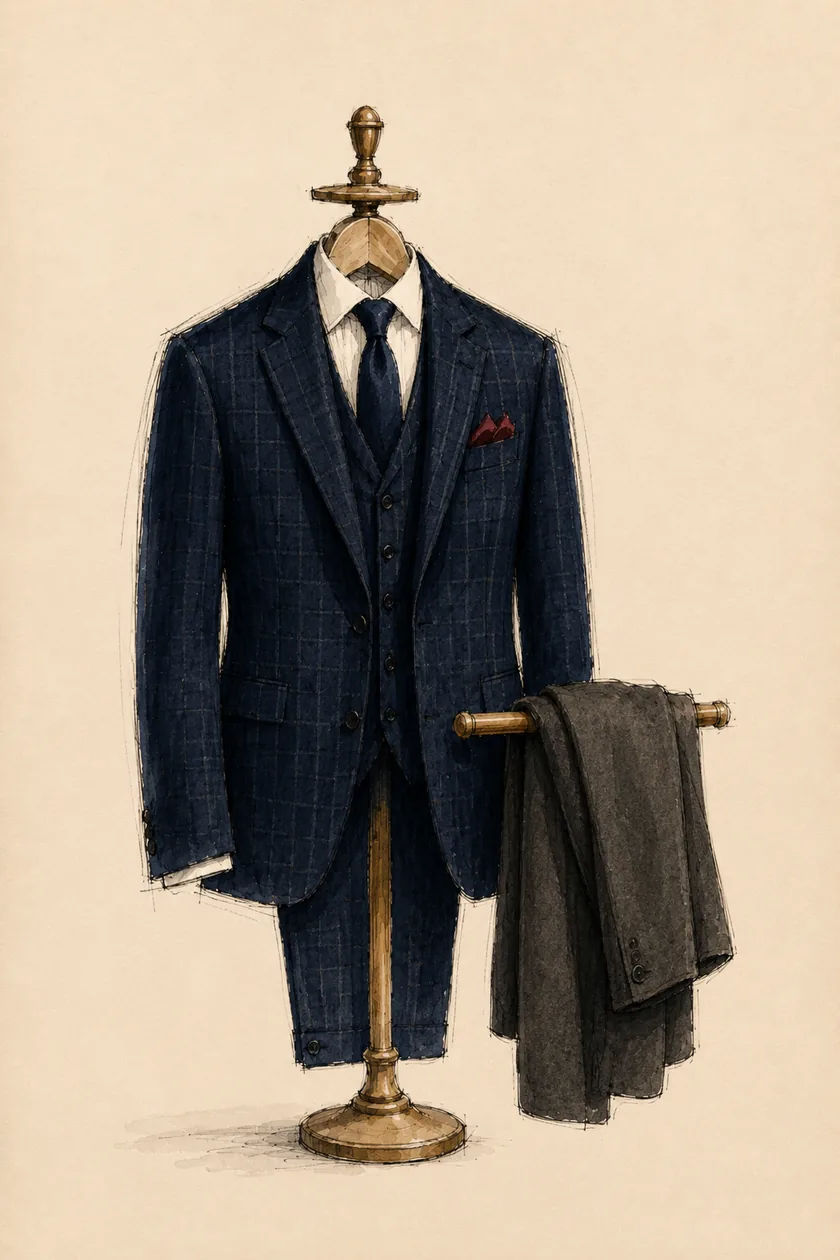
  • The navy suit: your anchor. Works for interviews, meetings, weddings, and funerals. If you own one suit, own this. See why navy earns its keep.
  • A mid-grey suit: your second pillar. Reads differently than navy, pairs with almost any shirt.
  • A third in your own color: charcoal, a soft brown, a subtle check. Something that’s you.

The trick is separates. A suit jacket that works as a blazer, trousers that go with a knit, and suddenly three suits give you fifteen looks. That’s the capsule doing its job. We build this thinking into every custom suit on the design bench.

Why do I need to rest a suit between wears?

Wool needs to recover. Wear a suit two days straight and the fibers stay compressed. They lose their spring and the shape goes for good.

This is the part most men skip, and it’s the reason a rotation matters more than the count. Wool has a natural crimp that gives it shape memory, but it needs time to bounce back. A suit also absorbs a surprising amount of moisture over a day (from your body, the weather, the commute) and that has to dry out before you wear it again.

The rule I give every client: never wear the same suit two days in a row. Give it 24 hours minimum, 48 is better. That single habit adds years to a good suit. It’s also why two suits in real rotation outlast four suits worn carelessly.

How long should a good suit last?

A well-made suit, properly rested and cared for, should give you a decade or more. Cheap suits worn daily are done in a year or two.

The math is simple. A quality suit costs more up front, but rested and rotated it lasts ten times as long as a bargain one you wear into the ground. Fewer suits, better made, is cheaper over a career, not more expensive.

What kills a suit isn’t age, it’s abuse: worn every day, over-dry-cleaned, stored on a wire hanger. Learn to care for it properly: brush it, air it, press don’t clean, and it earns its keep for years. That’s the real case for going bespoke: you’re buying something built to survive the rotation, not survive one season.

Do I need different suits for different occasions?

Usually no. One or two well-chosen suits cover most of a man’s life: work, weddings, funerals, the occasional formal night.

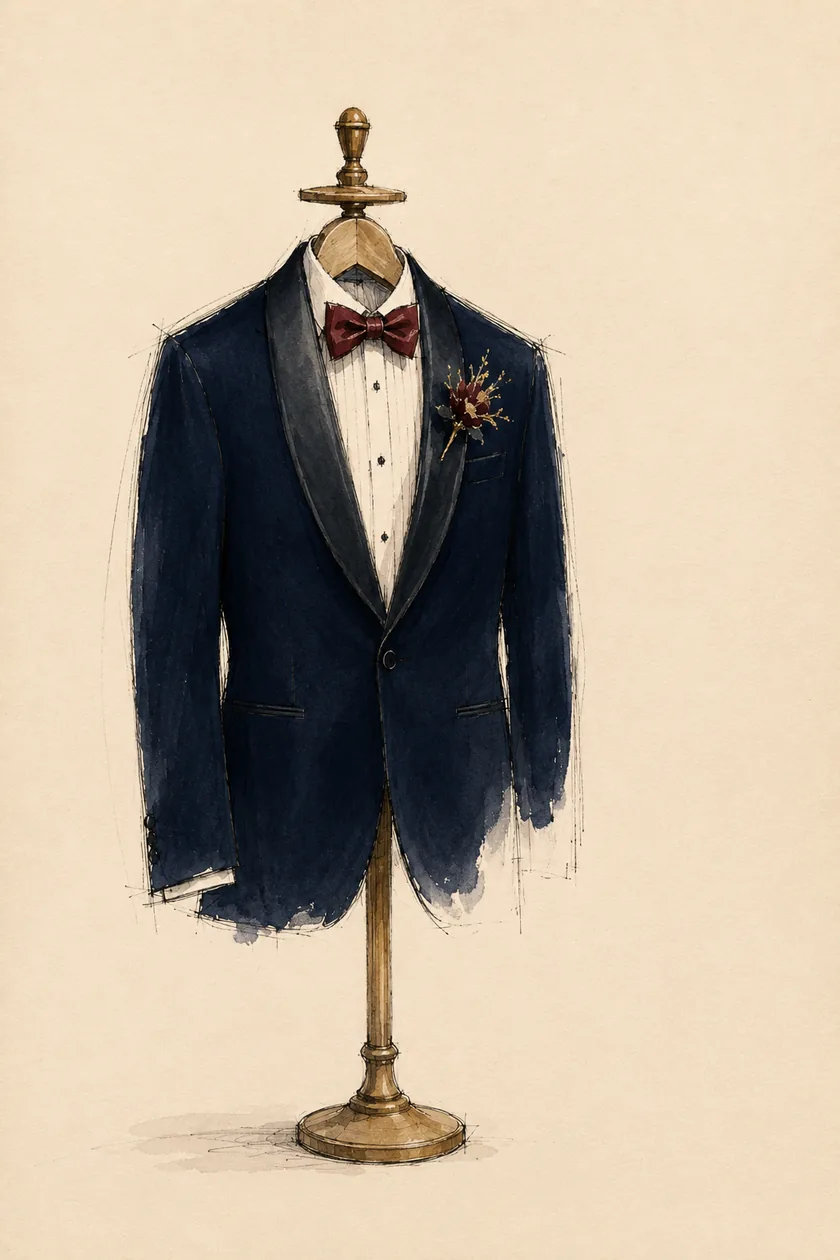
The navy and grey in your capsule already handle the day-to-day and the milestones. You only need something extra when the dress code is genuinely different: a tuxedo for black tie, or a real interview suit if you’re job-hunting hard. If you’re getting married, that’s its own conversation. See the wedding and groom’s suit guides.

For most professionals, the business capsule is enough. You’re not building a costume department. You’re building three suits you reach for without thinking.

What fabric holds up best in a work rotation?

Wool, and specifically a mid-weight worsted. It presses well, resists wrinkles, breathes, and recovers its shape after a rest day, which is exactly what a rotation needs.

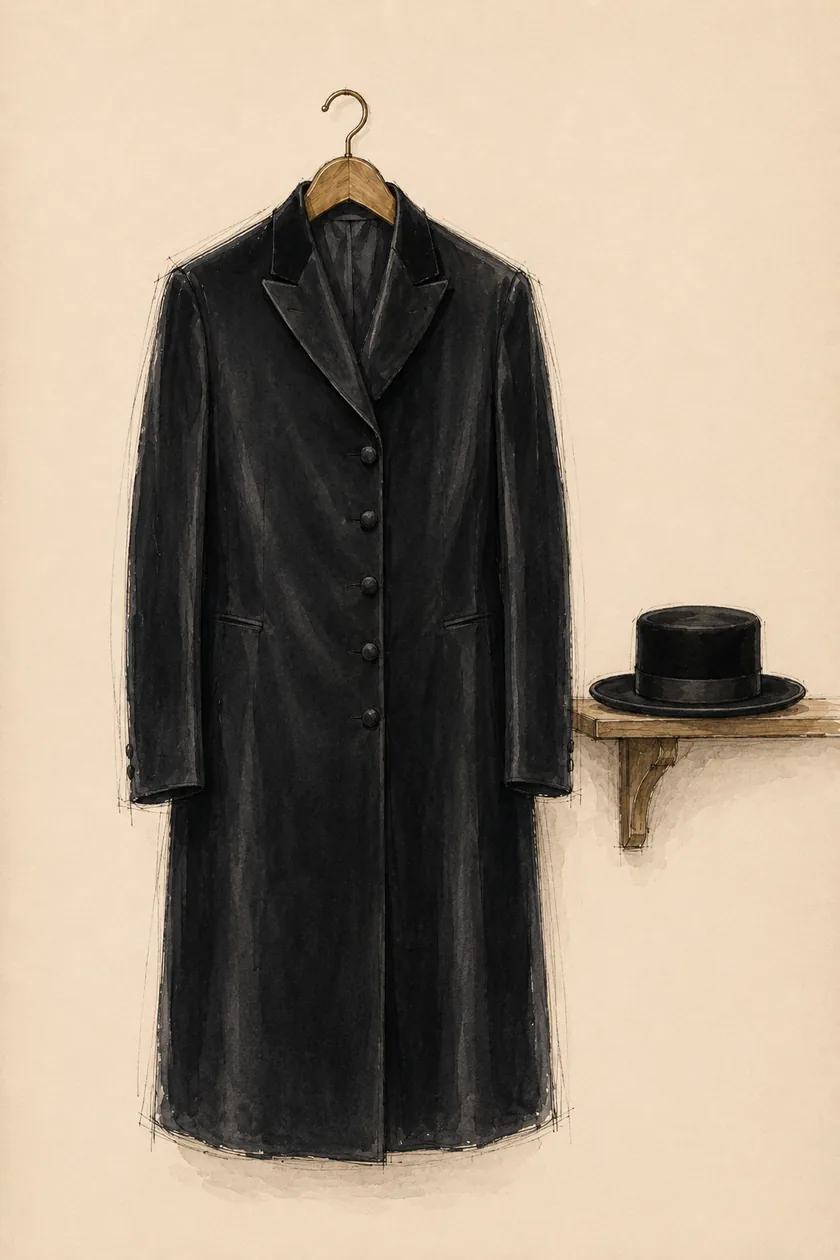
Go too lightweight and it wrinkles and wears through fast. Too heavy and you’re sweating three seasons of the year. A four-season worsted in the 250–290g range is the workhorse. It’s what most of our cloth library is built around for a reason. For a traditional wardrobe with its own considerations, the Jewish wardrobe guide covers the specifics.

Once you’ve got the fabric right, the rotation almost takes care of itself.


Three suits, rested and rotated, will out-dress a closet full of the wrong ones. If you’re not sure what your three should be, book a fitting and bring the suits you already own; we’ll sort keepers from retirees and map the capsule from there. Or start online and design your suit whenever you’re ready.

Common questions

While we're here.

Straight answers
How much does a custom suit cost in Toronto?

It depends on the cloth and the construction, and I would rather quote your garment than a stranger's. I keep cloth across three price shelves and I show you all three on the first visit, then give you one firm number for the exact garment you have chosen before anything is cut. Alterations are part of that price, not an extra. The first consultation costs nothing, so you can get the real figure without committing to a thing.

Why does a custom suit cost more than one off the rack?

You're paying for a pattern cut to your body, better cloth, hand-work, and fittings, not a factory average plus a brand markup. A good custom suit also lasts and re-fits for years, so the cost per wear is often lower than chasing cheap suits that never quite fit.

Is a bespoke suit actually worth it?

Yes, if you have a hard-to-fit body, a wedding coming, or you wear a suit weekly. For a suit you'll wear twice a year, made-to-measure is the smarter spend, and I'll tell you so. I'd rather you buy the right tier once than overspend to impress me.

Do you have options for smaller budgets?

Always. I keep cloth across three price shelves and I never push the top one. My reviews say it plainly: I don't upsell. Tell me the number you're comfortable with and we'll build the best suit inside it.

What makes one suit more expensive than another?

Three things: the cloth (a Super 150s or a mohair costs more than a house worsted), the construction (full canvas and hand-work over fused), and the detail (working cuffs, hand-finished buttonholes, bespoke lining). We decide together where the money is worth it for you.

Do you take a deposit?

Half at the start, half on delivery. The first half covers the cloth, which is cut to you and can't be resold. Nothing is ordered until you have the full price in front of you and you're happy with it.

What makes the best custom-tailored suit?

The best custom-tailored suits share four things: a pattern drafted to your own body rather than an adjusted factory size, full or half floating canvas instead of fused construction, cloth chosen for how you actually live, and hand-finished details. Just as important is a tailor who keeps your measurements on file and re-fits the suit as your body changes. That's how I work in Vaughan.

Are custom suits worth it?

Yes, if you have a hard-to-fit body, a wedding coming, or you wear a suit weekly. For a suit you'll wear twice a year, made-to-measure is the smarter spend, and I'll tell you so. I'd rather you buy the right tier once than overspend to impress me.

Should I just buy off-the-rack and have it altered?

Sometimes, yes, and I'll tell you when. If a rack suit fits your shoulders and balance, alterations can finish the job for less. If it doesn't, no alteration will save it, and made-to-measure is the right answer. Bring your build; I'll give you the truth in five minutes.

I only need a suit for interviews and the occasional wedding. What should I spend?

Then don't overspend. One well-fitted suit in navy or charcoal covers both, and fit matters far more than price tag. Tell me your number and I'll build the best suit inside it. A modest suit that fits beats an expensive one that doesn't, every time.

What's the difference between bespoke, made-to-measure and off-the-rack?

Off-the-rack is cut to an average and altered toward you. Made-to-measure adjusts a factory's existing pattern to your numbers. Bespoke starts with no pattern at all: a fresh one is drafted for your body alone. Different price, different fit, different life.

Which one do I actually need?

Most men don't need the most expensive option, just the right one for the occasion and budget. A weekly-worn wardrobe or a tricky fit leans bespoke; an occasional suit leans made-to-measure. That's the first conversation we have, before any cloth.

Do you make bespoke or made-to-measure?

Both routes, so I can meet whatever budget you bring. When the fit or the occasion calls for the full-custom treatment we go that way; when made-to-measure is the smarter spend, I'll say so. You get the truth about which suits you, not a hard sell.

What is the difference between made-to-measure and bespoke?

Off-the-rack is cut to an average and altered toward you. Made-to-measure adjusts a factory's existing pattern to your numbers. Bespoke starts with no pattern at all: a fresh one is drafted for your body alone. Different price, different fit, different life.

Can you just fix a suit I already own?

Often, yes. Sleeves, hems, waist, and trouser work are straightforward, especially for existing clients. Some suits are worth altering; some are cheaper to replace than to rescue. Bring it in and I'll tell you straight which one you've got.

First suit: off-the-rack or made-to-measure?

If standard sizes fit your shoulders, off-the-rack plus good alterations is a fine first suit. If they never quite have (athletic drop, long arms, short rise), made-to-measure costs a little more and ends the struggle. The first consultation is free either way, so ask me before you buy anything.

What does 'fully canvassed' mean, and do I need it?

The canvas is the inner layer that gives a jacket its shape. Fused jackets glue it; canvassed ones float it, so the cloth drapes and moulds to you over the years instead of bubbling. I don't fuse suits. Half canvas is my default, and full canvas goes into the dearer cloths where you'll feel the difference.

Another tailor altered my suit badly. Can you fix it?

Often, yes. Bring it in and I'll tell you what can be recovered. Some work can be reversed or re-done; some can't, especially if cloth was cut away. Either way you'll leave knowing exactly where you stand, at no charge for the look.

The next step

Begin with a conversation.

A first fitting costs nothing. Come sit with Sam, or design your suit first.